Saudi Arabia’s Voluntary Carbon Market Fuels the Shift to a Low-Carbon

Under UAE President’s directives, UAE launches urgent relief response for Ghana flood victims

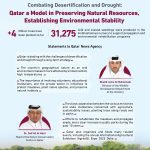
Combating Desertification and Drought: Qatar a Model in Preserving Natural Resources, Establishing Environmental Stability
UAE allocates US$30 million for emergency humanitarian response in El Obeid, calls for civilian protection, safe humanitarian aid access in Sudan

Amman, Oct. 25 (Petra) – The Kingdom’s therapeutic industries and medical supplies sector boasts a “high” production capacity of JD1.6 billion per year.
The sector’s products, manufactured within Jordanian industrial companies, provide human, therapeutic, and veterinary medicines, medical preparations and disinfectants, dental supplies, laboratory reagents, medical devices, multi-use medical and therapeutic materials, nutritional supplements, and others.
According to the sector’s representative at the Jordan Chamber of Industry (JCI), Dr. Fadi Atrash, the therapeutic industries and medical supplies sector is “one of the key strategic” industrial sectors contributing to the national economy.
Atrash added that the sector is characterized by its “diverse” expertise and its connectivity with several other industries related to healthcare and medical supplies in the Kingdom.
In a statement to “Petra” he said the sector is “capital- and technology-intensive,” boasting specialized scientific workers, mainly chemists, biologists, and technicians, and also contributes to supporting national exports due to the high quality and tangible contributions of these industries.
Atrash added that the sector, which includes 151 operating establishments nationwide, is classified as one of the largest economic activities in terms of value-added creation, as the sector is divided into three main subsectors: Human pharmaceuticals, veterinary medicines, and medical supplies.
Atrash added that the value-added rate of total production within the sector amounts to 51%, contributing approximately 3% of the gross domestic product (GDP), while its share to the total current production of manufacturing industries amounts to 11.
Atrash noted the sector is considered key locally in terms of employment and job creation, with the total number of workers within it reaching approximately 10,000, as 95% of whom are local workers, with women constituting 35%, one of the highest rates of female participation among industrial sectors.
Atrash said the sector boasts “significant” exports and rapid growth, reaching JD612 million last year, a growth rate of 15%, compared to previous years, which is compared to JD353 million from the beginning of this year until the end of July, a growth rate of 7%, he pointed out.
According to Dr. Atrash, exports of therapeutic industries and medical supplies reach 80 markets worldwide, mainly Saudi Arabia, Iraq, Algeria, the United Arab Emirates, and the United States, as these countries collectively account for approximately 71% of total exports.
Economic Modernization Vision has included the pharmaceutical sector among the high-value industries focused on within the economic growth axis, and has set several ambitious targets for the sector over the next ten years, aimed to advancing it to become a regional hub for pharmaceutical products, he pointed out.
Atrash stated these goals aim to increase exports to more than JD2.1 billion by 2033, achieving added value of approximately JD1.7 billion, increase the number of workers in the sector to 16,000, and attract investments into the sector amounting to approximately JD1.1 billion through 11 sector initiatives.
Additionally, he highlighted the important role played by the Jordan Food and Drug Administration in supporting and developing the pharmaceutical industry in the Kingdom through continuous monitoring and the introduction of modern and contemporary systems and legislation that have contributed to developing this industry to higher levels.
//Petra// AG
25/10/2025 11:44:02