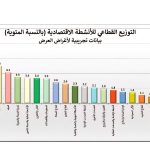
Jordan’s Q2 2026 GDP Expands 3.0%, Outperforming Regional Headwinds, International Forecasts
ENV-KUWAIT-SUSTAINABLITYKuwait strengthens environmental sustainability through strategic initiativesBy Zahra Al-Kadhmi

HLT-KUWAIT-SURGERYKuwait advances health sector with robotic, remote surgeryBy Mohammad Al-Moseb

Saudi Arabia’s Voluntary Carbon Market Fuels the Shift to a Low-Carbon

Growing Turkish Interest in Translating
Arabic Poetry: An Ascendant Cultural Phenomenon
Ankara, 8 Dec 2025 (ONA) —Türkiye has witnessed a notable surge in interest in Arabic poetry and its translation
into Turkish over the past two decades, driven by cultural, historical and literary
motivations.
Arabic literature was a fundamental
cultural source for poets in Anatolia during the Ottoman era, particularly
within religious and Sufi domains. Many eminent Turkish poets such as Yunus
Emre and the Mevlevis were influenced by Arabic literature and the Arabic
language. However, with the establishment of the Republic of Türkiye in 1923
and the adoption of modern Turkish, official interest in Arabic literature
diminished for decades.
İbrahim Bazan, a professor of Ottoman
History at Istanbul University, stated in a comment to the Oman News Agency
(ONA): “Since the beginning of the new millennium, interest in Arabic
literature, especially poetry, has re-emerged to claim a new space in Türkiye.
Turkish universities have begun teaching Arabic literature more
extensively.”
He clarified that poems by poets such
as Nizar Qabbani and Mahmoud Darwish have become among the most translated and
best-selling works in Turkish bookstores and are widely circulated on social
media platforms, particularly among the youth. Concurrently, Turks have grown
more interested in Ottoman history and relations with the Middle East, which
has directly reflected on the literary translation movement; Turkish cultural
pages now witness high engagement with translated Arabic quotations.
It is noted that the Turkish embrace
of translating Arabic poetry is no longer merely an academic phenomenon. It has
evolved into a growing cultural hallmark reflecting a societal desire for
rapprochement with the Arab world and a re-examination of the shared heritage
between Anatolia and the Arab world.
— Ends/Khalid