

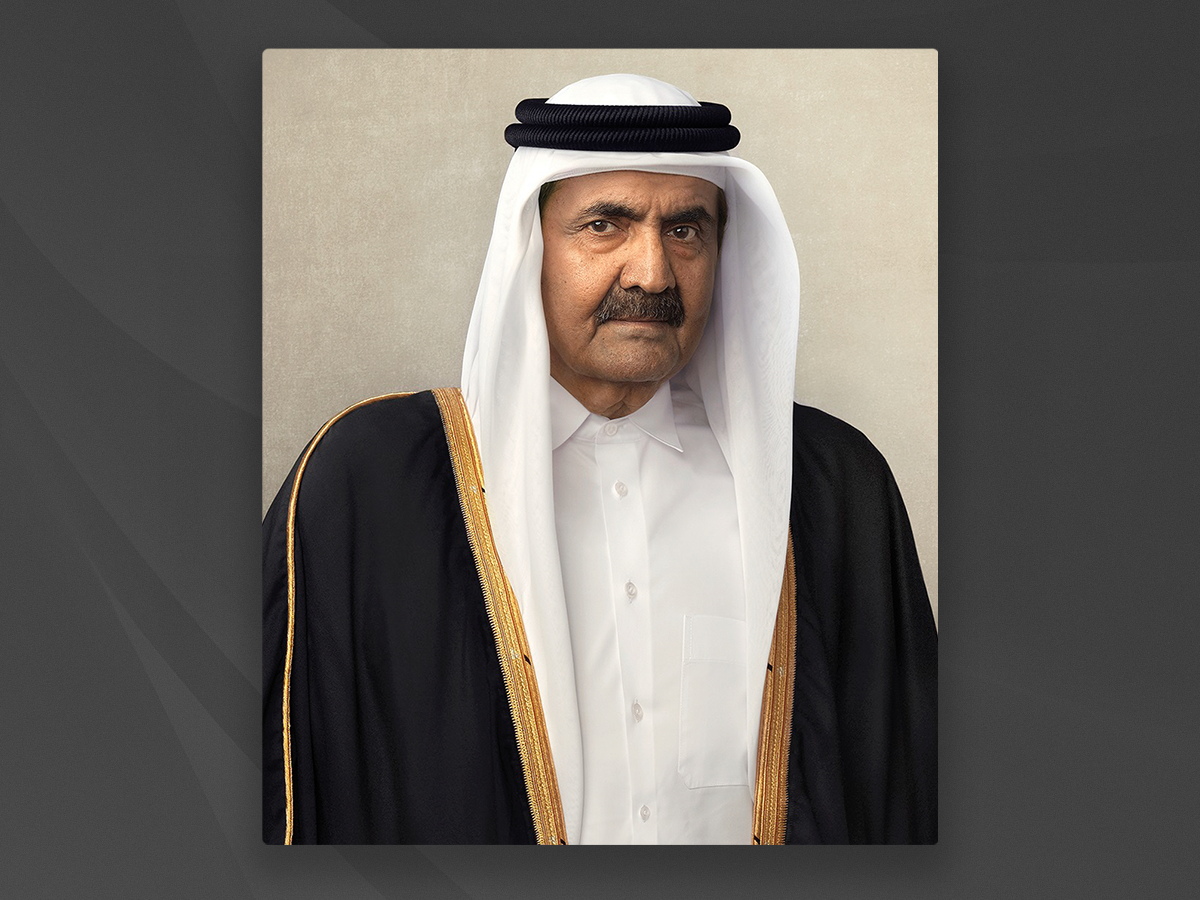
The success achieved by Qatar in developing its energy sector was the result of extensive national efforts, ambitious aspirations and bold decisions led with wisdom and determination by HH the late Father Amir Sheikh Hamad bin Khalifa Al-Thani. These efforts required overcoming numerous challenges.
The 1980s witnessed a sharp decline in oil production due to the aging of oil fields, with output falling from 500,000 barrels per day in the 1970s to 300,000 barrels per day in 1987. However, the intensive efforts undertaken by the state since His Highness assumed power raised production to 680,000 barrels per day in 2000 and 760,000 barrels per day in 2005.
The first shipment of liquefied natural gas (LNG) was exported in late 1996, ushering in a major economic breakthrough, which became evident in 2006 when Qatar became the world’s largest liquefied natural gas exporter and in 2010, when its production capacity reached 77 million tons of liquefied natural gas annually. At a ceremony held in Ras Laffan Industrial City, His Highness said, “Qatar is celebrating the achievement of one of its historic goals with a feat that will be forever etched in the history of the international gas industry as the day when Qatar officially became the world’s leading producer of liquefied natural gas.”
Currently, Qatar exports gas to markets in Asia, Europe, the Americas and Africa.
In 1989, HH the late Father Amir decided to establish the Ras Laffan Industrial City as a center for the gas industry in Qatar to export liquefied natural gas. At the time, he was faced with two choices either establishing an industrial city in Mesaieed or in Ras Laffan, he chose the latter for its proximity to gas fields, which allows it to be in line with Qatar’s goals of gas production. Ras Laffan Port is now the largest facility of its kind in the world. On the other hand, Mesaieed is the second largest industrial city in Qatar housing many industrial facilities.
The state has converted gas to liquids for the sake of having an integrated system for gas production and exportation to benefit from the opportunities in the world markets; and to that end has set up the Oryx and Pearl projects. Launched in 2006, the Pearl began its export activities in 2011 and boasts the world’s largest GTL plant.
The development of the energy sector also included projects in oil and petrochemicals based on partnerships with international oil companies through oil production sharing agreements and through joint venture agreements with specialized companies in the field of petrochemicals.
The development of the northern fields gave additional impetus to the expansion of the petrochemical industry. Additional quantities of methane increased the production capacity of ammonia and urea and enabled the state to move to downstream industries.
Additional quantities of ethane also contributed to the addition of new ethylene plants and the emergence of new industries such as the production of low- and high-density polyethylene, and many other products.
Among the most notable achievements during the tenure of HH the late Father Amir, was Qatar’s transformation in the field of communications and media, which had a profound impact locally, regionally and internationally.
Censorship of the local press was lifted in October 1995 and Law No. (25) of 1995 was issued on the protection of intellectual works and copyright.
In 1996, Al Jazeera News was established, ushering in a new era in the region. In 2006, it expanded to become Al Jazeera Media Network with several channels under its umbrella.
On May 3, 1997, His Highness established the Qatar General Authority for Radio and Television, which on March 18, 2009, became the Qatar Media Corporation. It governs all audiovisual media in the state.
On March 30, 1998, His Highness abolished the Ministry of Information to make room for the freedom of the media and the press. In 2004, the Supreme Council for Information and Communication Technology (ICT) was established to organize the ICT sector, build a knowledge-based society and create a sophisticated technological infrastructure.
On October 6, 2010, His Highness established the Qatar eGovernment Steering Committee to ensure the highest performance rates in governmental electronic transactions.
In the education sector, human development was the central pillar of the strategy of HH the late Father Amir as affirmed by Qatar National Vision 2030.
The State of Qatar has launched a wide educational renaissance characterized by an increase in the number of schools and universities, the development of curricula and teaching methods, the provision of modern educational means, and the openness to international experiences in education.
Specialized colleges and technical schools have emerged; Education City was inaugurated in 2003 and includes several educational, scientific, research and cultural institutions. As per Decree Law No. 24 of 2008, 2.8 percent of government revenues in the state budget were allocated to support scientific research.
In 1995, Qatar Foundation for Education, Science and Community Development was established. As a cultural and educational institution, its mission is to nurture the future leaders in the state of Qatar and develop their capabilities through the consolidation of the culture of excellence and innovation in society. Now Qatar Foundation houses a number of leading international universities and research centers, among them is the Hamad Bin Khalifa University established in 2010.
Under the leadership of HH the Father Amir Sheikh Hamad bin Khalifa Al-Thani, the State of Qatar has paid great attention to developing the health sector and bolstering its performance. The number of hospitals in the country increased from only four in 1998 to 13 in 2012: Al Khor Hospital (opened 2005), Al Amal Hospital (2006), the Heart Hospital (2011), Cuban Qatari Hospital (2012) and Al Wakra Hospital (2012). Aspetar Hospital is considered the first hospital in the region specialized in orthopedic and sports medicine. It includes highly skilled international experts in the field of sports medicine and orthopedics. It was chosen as FIFA Medical Centre of Excellence in 2008.
HH the late Father Amir’s tenure also witnessed numerous achievements in the health sector, including the implementation of the comprehensive health insurance system for citizens in 2011. Development of Hamad Medical Corporation to provide the best health services. It was the first hospital in the Middle East to obtain institutional accreditation from the American Accreditation Council for Graduate Medical Education (ACGME-1). The Sidra Center for Medicine and Research was launched in 2004 to enhance and promote health care throughout the country and to provide opportunities in the field of medicine, research and education. The inauguration of the Weill Cornell Medicine- Qatar in 2002. WCM-Q is a college renowned for the use of technology in medical research.
Infrastructure projects also advanced significantly during the late Father Amir’s reign, with numerous projects implemented across various sectors. These included opening the way for the construction of high-rise towers in the West Bay district to provide a business environment suited to the country’s diverse sectors, as well as the construction of Hamad International Airport, one of the largest airports in the region. Construction began in 2005, and the airport commenced operations in April 2014.
On June 6, 2011, His Highness established the Qatar Railways Steering Committee (Rail) which later on became Qatar Rail. It is a mega project comprising three major projects: Doha Metro, Lusail Light Transit, and the Long Distance Rail for the transport of people and goods.
In 2007, the late Amir ordered the launch of the New Doha Port project and allocated QR 27 billion for its construction. The mega-project, considered one of the world’s largest green infrastructure projects, covers more than 26 square kilometers in a strategic area south of Doha. It includes the New Doha Port, a new base for the Emiri Naval Forces, and the Third Economic Zone. The project was inaugurated on Feb. 26, 2015, and named Hamad Port.
In December 2011, the Qatar National Convention Centre, the largest of its kind in the Middle East, was inaugurated.
Another landmark project was Lusail City, whose construction began in December 2005. Designed according to the highest international standards, it was envisioned as the world’s largest city built in accordance with sustainability principles and as a realization of Qatar National Vision 2030 in the field of real estate development.
Another flagship infrastructure project was Msheireb Downtown Doha, for which His Highness laid the foundation stone in January 2010. Inspired by Qatar’s architectural heritage, the real estate development aims to revitalize Doha’s historic commercial district. It is regarded as the world’s first sustainable downtown regeneration project, with a value of QR 20 billion and covering an area of 31 hectares in the heart of Doha.
Economically, the development of the energy sector was the primary driver of growth during the late Amir’s reign. The hydrocarbon sector’s contribution to gross domestic product increased from 37 percent to 54 percent, while its value added rose from about QR 11 billion to approximately QR 403 billion, representing annual growth of 22.2 percent at current prices. Growth at constant 2004 prices reached 11.4 percent.
The scale of this contribution had a significant impact on other economic indicators. Gross domestic product at current prices increased from about QR 30 billion to approximately QR 735 billion—24.5 times its level at the beginning of the period—representing annual growth of 19.5 percent over the same period. At constant prices, GDP grew to more than seven times its initial level, with annual growth of 11.7 percent. Per capita GDP also rose from about QR 60,000 to approximately QR 370,000, an annual increase of 10.6 percent. This substantial rise made Qatar’s per capita GDP one of the highest in the world, far exceeding comparable levels in developed countries.
The cultural sector also featured prominently among Qatar’s development priorities during the reign of the late HH the Father Amir Sheikh Hamad bin Khalifa Al-Thani. Under his leadership, the country sponsored numerous cultural festivals and intellectual forums while establishing a broad network of cultural and heritage institutions dedicated to preserving, revitalizing, and showcasing Qatar’s history and rich cultural heritage.
Among the most prominent cultural projects undertaken during his reign was Souq Waqif, one of Qatar’s leading heritage, tourism, and commercial landmarks. Originally established as a traditional marketplace and gathering place for Qataris in the 1920s, the souq stands as a testament to the country’s pearling era. It was carefully restored in a manner that harmoniously blends authentic architectural heritage with modern functionality, preserving its historic character while reinforcing its position as one of Qatar’s premier cultural destinations.
Another landmark achievement during his reign was the establishment of Qatar Museums in 2005 to oversee and develop the country’s museum sector. This initiative paved the way for the opening of the Museum of Islamic Art in 2008, one of the region’s defining architectural landmarks. It also spearheaded the redevelopment of the National Museum of Qatar, a landmark cultural project that celebrates Qatar’s heritage while connecting its past with its present. Designed by renowned French architect Jean Nouvel, the museum draws inspiration from the desert rose and is built around the historic palace of Sheikh Abdullah bin Jassim Al-Thani, grandfather of the late Father Amir, which served as the family’s residence and the seat of government for 25 years.
His reign also witnessed the establishment of several landmark cultural institutions, including Mathaf: Arab Museum of Modern Art, which opened in 2010, and Katara Cultural Village, established in 2005. As one of the country’s largest cultural projects, Katara was created to advance Qatar’s cultural landscape, foster creativity, and provide a vibrant platform for artistic expression and intellectual dialogue.
The non-hydrocarbon economy also witnessed remarkable expansion during the Father Amir’s reign. Underpinned by robust hydrocarbon revenues, the sector’s contribution to gross domestic product (GDP) at current prices rose from approximately QR18.7 billion at the beginning of his reign to nearly QR332 billion by its conclusion, representing an average annual growth rate of 17.3 percent at current prices and 12 percent at constant prices.
Between 1995 and 2013, key non-hydrocarbon industries recorded sustained and broad-based growth. Manufacturing expanded at an average annual rate of 9.4 percent at constant prices, while the construction sector emerged as one of the fastest-growing segments of the economy, posting annual growth of 17.8 percent. The wholesale and retail trade, hotels, and restaurants sectors also delivered strong performance, with average annual growth reaching 18 percent at current prices and 13.1 percent at constant prices.
The transport and communications sector also maintained robust growth, recording an average annual growth rate of 17.6 percent at constant prices.
During the same period, final government consumption expenditure rose from approximately QR9 billion to around QR99 billion, representing an average annual increase of 14.3 percent at current prices. Final household consumption expenditure likewise increased significantly, climbing from nearly QR8 billion to approximately QR102 billion, with an average annual growth rate of 15.2 percent.
The country’s rapid economic expansion was accompanied by significant growth in foreign trade and a substantial increase in its trade surplus. Exports of goods and services rose from approximately QR13 billion to around QR538.5 billion, representing an average annual growth rate of 22.9 percent. This increase was driven primarily by the expansion of liquefied natural gas (LNG) production, higher crude oil output, and rising global energy prices.
Imports of goods and services also increased markedly, climbing from approximately QR12.8 billion to around QR214.6 billion, with an average annual growth rate of 17 percent, reflecting higher imports of consumer goods and materials required for the country’s major development projects. As a result, the merchandise trade surplus expanded from QR1.7 billion to nearly QR387 billion, recording an average annual growth rate of 35 percent.
On the social front, Qatar witnessed major advances during the reign of the late HH the Father Amir Sheikh Hamad bin Khalifa Al-Thani. Among the most notable achievements was a 50 percent increase in social security benefits in 1996 for eligible groups, including widows, divorced women, families in need, persons with disabilities, orphans, individuals unable to work, senior citizens, families of prisoners, deserted wives, and families of missing persons.
As part of the vision to build a prosperous society, pension benefits were increased by 40 percent in 2006. Civilian public-sector employees also received salary increases equivalent to 40 percent of their basic pay. This commitment to enhancing citizens’ welfare continued in 2011, when the salaries of civilian government employees were increased by 60 percent, while military personnel received salary increases of 120 percent.
In 2007, the Father Amir established the Ministry of Labor and Social Affairs, replacing the Ministry of Civil Service and Housing Affairs. The ministry was tasked with formulating labor policies and workforce planning strategies, managing the labor market, developing an integrated labor market information system, resolving labor disputes in accordance with the law, contributing to national workforce localization policies and employment programs, providing social welfare services, administering social security benefits to eligible beneficiaries, and overseeing the distribution of social assistance.
In 2010, the Social and Sport Contribution Fund (Daam) was established to support sports, cultural, social, and charitable initiatives by providing grants and financial assistance to government entities, institutions, associations, and organizations operating in these sectors.
During his reign, Qatar’s youth and sports sector witnessed remarkable development, particularly in sports infrastructure. The country hosted a succession of major regional and international sporting events that set new benchmarks for organizational excellence and reinforced Qatar’s position as a leading sports destination in the region.
These included the World Table Tennis Championships in 2004, the World Weightlifting Championships in 2005, the 15th Asian Games Doha 2006, the IAAF World Indoor Championships Doha 2010, the AFC Asian Cup Qatar 2011, the 12th Pan Arab Games Doha 2011, and the 9th World Conference on Sport and the Environment, also held in 2011.
In 2008, Aspire Zone was established to provide a world-class sporting environment, enhance athletic performance, and develop talent across a wide range of sports disciplines to meet Qatar’s evolving needs and advance its sporting ambitions at both the regional and international levels.
Perhaps the most significant sporting achievement of his reign came in 2010, when Qatar won the bid to host the FIFA World Cup Qatar 2022, marking a historic milestone for both the nation and the wider Middle East.
The investment sector also featured prominently among the State’s priorities during the reign of the late HH the Father Amir Sheikh Hamad bin Khalifa Al-Thani. In 2000, the Supreme Council for the Investment of State Reserves was established to oversee the management and investment of the State’s reserve funds. This was followed on Oct. 23, 2001, by the establishment of the Supreme Council for Economic Affairs and Investment, which was mandated to oversee matters related to the economy, energy, and investment, while formulating national policies in the economic, financial, commercial, and energy sectors.
On June 23, 2005, HH the Father Amir established the Qatar Investment Authority (QIA), operating under the Supreme Council, to manage and invest the State’s reserve funds and other assets entrusted to it by the Council. On Feb. 20, 2011, he also established the Qatar Authority for the Development of SMEs to encourage the establishment of new enterprises, support the development of existing ones, and increase the contribution of small and medium-sized enterprises to the country’s gross domestic product (GDP). The Authority was subsequently incorporated into Qatar Development Bank.
The achievements realized during the reign of the late HH the Father Amir Sheikh Hamad bin Khalifa Al-Thani laid the foundations for Qatar’s comprehensive development and transformed the country into a modern state with a diversified economy, advanced infrastructure, and growing regional and international influence. His visionary leadership established the pillars upon which Qatar has continued to build its progress across the political, economic, social, cultural, educational, and sporting spheres. (QNA)