Mother of the Nation Endowment for Orphans’ initiative raises AED3.3bn during Ramadan; launches AED1 bn ‘Mother of the Nation City’ project

UAE sends 30 tonnes of food aid to support drought-affected communities in Kenya

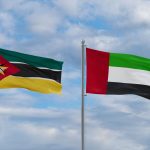
UAE provides urgent relief to support flood-affected communities in Mozambique
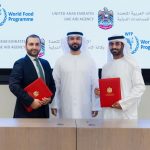
UAE signs cooperation agreement with UN World Food Programme to support humanitarian efforts in sudan
HM The Sultan,
Indian Premier Welcome Signing of Comprehensive Economic Partnership Agreement
Muscat,
18 Dec 2025 (ONA) — His Majesty Sultan Haitham bin Tarik and Narendra Modi,
Prime Minister of the Republic of India, issued a joint statement welcoming the
signing of the Comprehensive Economic Partnership Agreement. They affirmed that
it represents a significant milestone in bilateral economic relations and
stated that it will generate substantial opportunities across major economic
sectors, foster economic growth, and enhance the flow of investments between
the two countries.
The
following is the full text of the joint statement issued on the occasion of the
official visit of the Prime Minister of India to the Sultanate of Oman on 17-18
December 2025.
“At
the gracious invitation of His Majesty Sultan Haitham bin Tarik, Sultan of
Oman, Narendra Modi, Prime Minister of the Republic of India, paid an official
visit to the Sultanate of Oman from 17 to 18 December 2025. His Majesty
received the Prime Minister at Al Barakah Palace and the Prime Minister also
met with a number of senior Omani officials.
The
visit is of particular significance as it coincides with the 70th anniversary
of the establishment of diplomatic relations between the two countries. The
Prime Minister’s visit follows the landmark State Visit of His Majesty Sultan
Haitham bin Tarik to the Republic of India in December 2023.
His
Majesty the Sultan and the Prime Minister of India held official talks. They
expressed satisfaction with the excellent state of bilateral relations spanning
diverse fields, especially trade, investment, defence, security, technology,
education, energy, space, agriculture, culture, and people-to-people ties. They
reviewed initiatives and ongoing cooperation in the areas outlined in the Joint
Vision document adopted during His Majesty the Sultan’s visit to India in
December 2023.
Both
sides noted that the relationship between the two nations is historical and has
matured into a multi-faceted strategic partnership. The Indian side expressed
admiration for the economic diversification and sustainable development
achieved by the Sultanate of Oman under ‘Oman Vision 2040’. The Omani side
commended India’s sustained economic growth and its national goal, ‘Viksit Bharat’,
of becoming a developed nation by 2047. Both sides noted that trade and
commerce form a cornerstone of bilateral cooperation and affirmed the potential
for further growth and diversification. They highlighted the vast potential to
enhance trade in numerous areas, including textiles, vehicles, chemicals,
equipment, and fertilisers.
Both
sides welcomed the signing of the Comprehensive Economic Partnership Agreement
(CEPA) as a major step forward in economic relations. The leaders encouraged
the private sector to utilise its provisions. They stated that the CEPA will
boost bilateral trade by reducing barriers, establishing a sustainable
framework, creating opportunities across economic sectors, spurring economic
growth, and increasing investment flows between the two friendly countries.
Both
sides expressed keen interest in exploring investment opportunities in priority
sectors of mutual interest, including infrastructure, technology,
manufacturing, food security, logistics, hospitality, and others.
Recognising
the successful track record of the Oman-India Joint Investment Fund, both sides
saw significant potential to expand and facilitate investments. The leaders
took note of discussions on exploring mechanisms to facilitate bilateral trade
in local currencies.
They
also welcomed the steady progress on the Bilateral Investment Treaty and noted
its potential to bolster economic cooperation and create a robust,
investor-friendly environment. The two sides discussed ways to strengthen their
bilateral partnership in the energy sector. While expressing satisfaction with
the growth of bilateral trade in this area, they agreed on the immense
potential for further enhancement.
Both
sides affirmed their commitment to supporting their respective companies in deepening
energy cooperation. This includes collaboration on exploration and production
opportunities in India and globally, as well as cooperation in new and
renewable energy, specifically in green ammonia and green hydrogen.
The
two sides noted the synergy in their sustainable energy goals and suggested
pursuing joint investments, technology transfer, and long-term cooperation.
Both
sides commended the depth of their defence cooperation and agreed to continue
working together through joint exercises, training, and high-level visits to
achieve shared objectives and contribute to regional security and stability.
They also agreed to undertake joint initiatives to combat maritime crime and
piracy by enhancing maritime domain awareness and facilitating continuous
information exchange.
During
the visit, the two sides adopted a Joint Vision Document on Maritime
Cooperation, reflecting their shared commitment to regional maritime security,
the blue economy, and the sustainable use of ocean resources.
The
two sides highlighted health cooperation as a vital pillar of their partnership
and expressed interest in strengthening it further. They took note of ongoing
discussions and initiatives, including a proposal to establish a Chair of
Ayurveda at the National University of Science and Technology and the creation
of an information cell to facilitate cooperation in traditional medicine.
Both
sides reaffirmed their commitment to agricultural cooperation and welcomed the
signing of Memoranda of Understanding in agriculture and related sectors to
enhance collaboration in agricultural sciences, animal husbandry, and
aquaculture. They also agreed to promote cooperation in millet cultivation
through training and scientific exchange.
Both
sides acknowledged the growing cooperation in technology, including IT
services, digital infrastructure, and space applications. They expressed
satisfaction with the deepening cultural cooperation and strengthening of
people-to-people bonds, welcoming the joint exhibition titled “Legacy of
Oman-India Relations”. They also took note of ongoing discussions on
initiatives for the digitalisation of culture.
They
further noted the initiative to establish an Indian Council for Cultural
Relations (ICCR) Chair for Indian Studies at Sohar University, which would
enhance cultural relations and student exchange.
Both
sides welcomed the signing of a Memorandum of Understanding on Maritime
Heritage and Museums, enabling cooperation between museums, including the
organisation of joint exhibitions and research. They noted the upcoming maiden
voyage of the Indian sailing vessel “INSV Tarini” to Oman, focusing on shared maritime
traditions.
The
two sides noted their continuing cooperation in education and scientific
exchange, including the envisaged Knowledge Dialogue between Oman and India.
The MoU on Higher Education will be instrumental in facilitating faculty and
student exchanges, institutional collaboration, and joint research.
They
also noted the ongoing capacity-building initiatives, including those under the
Indian Technical and Economic Cooperation (ITEC) Programme. The Omani side
expressed interest in cooperation in the aviation sector and air traffic
management, including increasing destinations and codeshare provisions, and the
Indian side noted this interest.
Both
sides observed that the centuries-old people-to-people ties form a bedrock of
the historical relationship between Oman and India. India expressed its
appreciation for Oman’s consistent care and support for the 675,000-strong
Indian community residing in the Sultanate of Oman. The Omani side acknowledged
the contributions of the Indian community to Oman’s development.
The
two sides exchanged views on regional and international issues of mutual
interest. The leaders condemned terrorism in all its forms and manifestations
and reiterated that no justification can ever be acceptable for such acts. They
also emphasised the importance of continued cooperation in this field.
The
leaders expressed profound concern over the humanitarian situation in Gaza and
called for the timely and safe delivery of humanitarian aid to civilians. They
welcomed the signing of the first phase of the Gaza peace plan and reaffirmed
their support for it.
The
leaders also affirmed their support for efforts to restore peace and stability,
underscoring the necessity of a just and lasting solution through dialogue and
diplomacy, including the establishment of an independent, sovereign Palestinian
state.
During
the visit, the following documents were signed and exchanged: The Comprehensive
Economic Partnership Agreement (CEPA), A Memorandum of Understanding on
Maritime Heritage and Museums, A Memorandum of Understanding on Agriculture and
Related Sectors, A Memorandum of Understanding on Cooperation in Higher
Education, A Memorandum of Understanding between the Oman Chamber of Commerce
and Industry and the Confederation of Indian Industry, The Joint Maritime
Vision Document and An Executive Programme for Cooperation in Millet
Cultivation in the Sultanate of Oman
The
Prime Minister of India expressed his sincere gratitude to His Majesty Sultan
Haitham bin Tarik for the warm reception and generous hospitality extended to
him and his delegation. He extended an invitation to His Majesty the Sultan to
undertake an official visit to India at a mutually convenient time.”
—
Ends/Khalid