Saudi Arabia’s Voluntary Carbon Market Fuels the Shift to a Low-Carbon

Under UAE President’s directives, UAE launches urgent relief response for Ghana flood victims

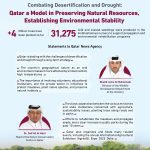
Combating Desertification and Drought: Qatar a Model in Preserving Natural Resources, Establishing Environmental Stability
UAE allocates US$30 million for emergency humanitarian response in El Obeid, calls for civilian protection, safe humanitarian aid access in Sudan


Amman, Dec. 3 (Petra) – The 25th National Olive Festival presents exhibits that go beyond traditional product displays, resembling pages of a book that reveal stories of women, young people, and artists redefining rural work and the green economy.
Across the festival’s pavilions at Mecca Mall, the aroma of olives blends with the atmosphere of creativity, as small corners serve as platforms for innovative projects and expressions rooted in heritage.
Participants shared their experiences with the Jordan News Agency (Petra), reflecting diverse initiatives that combine tradition, art, and sustainable development.
From Salt, Thaera Arabiyat said her pavilion is not merely a showcase of tassel embroidery, but a demonstration of how threads can form a complete narrative. She underlined that tassels are more than decoration, explaining that her signature designs on traditional garments reflect the heritage of previous generations. She noted that fringe has long served as a cultural language for women in villages, with each style carrying a specific meaning, including bridal, special-occasion, travel, and hospitality fringe.
Arabiyat said preserving this legacy through handmade garments strengthens the link between generations, adding that demand for fringe has risen in recent years, turning the craft from a household activity into an economic project that supports families, particularly women who are primary providers. She highlighted her aspiration to establish a specialized training center in Salt, noting that she is now a certified instructor in fringe weaving.
Visual artist Walid Ayasrah from Jerash showcased sculptures and paintings crafted not from conventional materials but from repurposed olive waste. He said he has long been captivated by wood and discovered the aesthetic potential of broken trunks and pruning remnants from olive mills. Through his pieces, he aims to demonstrate that materials often considered waste can be transformed into art with practical value.
Ayasrah detailed that he produces tables, plates, bases, home décor, and small accessories, explaining that his project integrates art with environmental sustainability by reducing waste and giving diseased or damaged trees renewed purpose. He added that the initiative also supports farmers, who can now sell their waste rather than burn or discard it, creating additional income streams. He underscored his ambition to establish an art workshop in Jerash dedicated to training individuals in recycling olive waste into artistic products.
From Madaba, Ebaa Awamleh of the al-Thilal Cooperative said the idea of cultivating fresh turmeric began as a small experiment before expanding into a line of food, health, and beauty products, driven by turmeric’s anti-inflammatory and immune-boosting qualities. The cooperative now produces more than 15 varieties, including turmeric jam, natural soap, therapeutic drinks, medicinal powders, and ready-to-cook blends.
She said fresh turmeric has proven effective in alleviating joint inflammation, supporting immunity, enhancing vitality, and improving skin texture when used in soap.
The cooperative’s manager, Jamal Bawari, stated that al-Thilal employs women through flexible work arrangements, providing sustainable income for several families, while also engaging young people who combine traditional production with modern organizational and marketing approaches.
The Olive Festival has evolved beyond a marketplace for products into a platform for rural innovation, highlighting how heritage can form an economic foundation, how art can convey environmental messages, and how the land continues to inspire new forms of creative and sustainable enterprise.
//Petra// AJ
03/12/2025 15:12:26