ENV-KUWAIT-SUSTAINABLITYKuwait strengthens environmental sustainability through strategic initiativesBy Zahra Al-Kadhmi

HLT-KUWAIT-SURGERYKuwait advances health sector with robotic, remote surgeryBy Mohammad Al-Moseb

Saudi Arabia’s Voluntary Carbon Market Fuels the Shift to a Low-Carbon

Under UAE President’s directives, UAE launches urgent relief response for Ghana flood victims
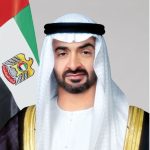
Robust Vision Leads Oman Towards a Prosperous Economic FutureMuscat, 10 Jan 2026 (ONA) — The Sultanate of Oman welcomes the anniversary of the eleventh of January, marking the day His Majesty Sultan Haitham bin Tarik assumed power in the country, while achieving financial and economic accomplishments that reflect the resolve and sublime vision to establish Oman as an attractive investment environment supported by clear and favorable legislation, through plans, programs, and efforts from all parties to realize these achievements.Furthermore, the launch of the Eleventh Five-Year Development Plan (2026-2030) at the beginning of this year, representing a bridge for transitioning from the recovery phase to the stage of economic growth and expansion, supported by a clear vision and integrated legislative and regulatory foundations, confirms that the Sultanate of Oman is on a promising path towards a prosperous and sustainable economic future under the leadership of His Majesty the Sultan.Non-oil sectors in the Sultanate of Oman continue to enhance their role in supporting economic growth and achieving financial sustainability, registering a gradual increase in their contribution to the Gross Domestic Product, reflecting the effectiveness of economic diversification policies and progress towards the targets of “Oman Vision 2040.” The contribution of non-oil sectors to the Gross Domestic Product at constant prices rose to 73.3% by the end of the third quarter of 2025, compared to 72.5% in 2024.The Sultanate of Oman also maintained the 58th position globally in the 2025 Economic Freedom Index, thanks to reforms that enhanced the business environment and elevated regulatory efficiency.The Gross Domestic Product of the Sultanate of Oman at constant prices recorded a growth of 2.2% by the end of the third quarter of 2025, reaching approximately RO 28.693 billion compared to the end of the corresponding quarter of 2024. This is primarily attributed to a 3.4% increase in the value-added of non-oil activities, recording around RO 21.45 billion. Meanwhile, the value-added of oil activities recorded a slight growth of 0.3%, amounting to RO 8.946 billion.Furthermore, the Gross Domestic Product at current prices increased by 1.5% by the end of the third quarter of 2025, recording RO 31.071 billion compared to the end of the corresponding quarter of 2024. This is mainly due to a 3.5% increase in the value-added of non-oil activities, recording around RO 21.409 billion, versus a 2.2% decrease in the value-added of oil activities, recording approximately RO 10.645 billion.The trade balance of the Sultanate of Oman recorded a surplus of RO 4.690 billion by the end of October 2025. The total value of merchandise exports reached RO 19.359 billion, while the total recorded merchandise imports amounted to RO 14.669 billion.Meanwhile, the volume of foreign direct investment in the Sultanate of Oman by the end of the second quarter of 2025 recorded a growth rate of 12.8%, reaching approximately RO 30.279 billion.The inflation rate in the Sultanate of Oman stabilized at a moderate and significantly low level compared to the actual economic growth rate achieved during the Tenth Five-Year Development Plan (2021-2025). The average inflation rate reached about 0.9% until November 2025, which is a significant achievement demonstrating the Omani economy’s ability to continue growing and overcoming challenges while implementing the targets of “Oman Vision 2040” and the economic diversification strategy to elevate growth rates and support the performance of various economic sectors.Muscat Stock Exchange witnessed distinguished performance during 2025, reflecting the strength of the national economy and the success of government programs aimed at enhancing market efficiency and investment attractiveness. The market value increased by about 60% from its 2020 indicators to exceed RO 32.2 billion, while the trading value during 2025 increased by 1013% compared to 2020, surpassing RO 5 billion, driven by initiatives that contributed to enhancing liquidity and confidence among local and international investors. These included launching the Capital Market Development Program, inaugurating the Alternative Investment Market, and improving the legislative environment to accommodate more companies and provide diverse opportunities for investors.In 2025, the government implemented its financial and economic policies aimed at entrenching sustainability and enhancing the robustness of the state’s fiscal position. This positively reflected on the credit rating of the Sultanate of Oman, as the three major credit rating agencies elevated Oman’s rating to investment grade, contributing to boosting investor confidence and Oman’s attractiveness as an investment destination.Standard & Poor’s classified Oman’s credit rating at investment grade (BBB-) with a “stable” outlook, according to two reports it issued in April and September 2025.Meanwhile, Moody’s elevated Oman’s credit rating in July 2025 from (Ba1) to investment grade (Baa3) with a “stable” outlook. Similarly, Fitch elevated Oman’s credit rating in December 2025 from “BB+” to investment grade (BBB-) with a “stable” outlook.In the field of artificial intelligence, several government entities and private institutions implemented a package of pilot projects related to AI applications in a number of vital sectors, including health, judiciary, tenders, cybersecurity, open data, and education, within the targets of the National Programme for Artificial Intelligence and Advanced Technologies. These projects embody Oman’s commitment to adopting artificial intelligence as a strategic tool to improve service quality, enhance government performance efficiency, and strengthen partnerships with the private sector, supporting the achievement of “Oman Vision 2040” targets and consolidating Oman’s position as an attractive environment for innovation and advanced technologies.Statistics indicate that the number of promising Omani technology and innovation-based startups reached 205 establishments, with a market value of approximately RO 395 million US dollars, providing 549 job opportunities for Omani youth in various economic activities.The Sultanate of Oman achieved progress in all global indicators related to the digital economy, such as the Government AI Readiness Index (ranking 45th globally), the E-Government Development Index (ranking 41st globally), the Cybersecurity Readiness Index (where it came in the first category globally), and the Network Readiness Index (ranking 50th globally). It aims to be among the top 20 countries in all these indicators and targets raising the digital economy’s contribution to the Gross Domestic Product to reach 10% by 2040, with the contribution rate expected to approach 3% by the end of 2025.Regarding government investments, Oman Investment Authority contributed to economic growth by restructuring government companies and managing domestic and foreign investments. The Authority’s assets grew to reach approximately RO 21 billion by the end of 2025, and its investment portfolio diversified across about 50 countries, forming economic and investment alliances that bring direct and indirect benefits to the development of specialized Omani human cadres and the transfer of knowledge and technology to Oman for utilization and localization in multiple fields, in addition to contributing with more than RO 4.4 billion to the state’s general budget during the Tenth Five-Year Plan.Furthermore, Future Fund Oman directly contributed to attracting several investments, supporting private sector institutions, and accelerating the growth pace of startups and small and medium enterprises locally and abroad. The total investments approved by the Fund until the end of 2025 reached nearly 164 projects with a financial commitment of RO 462 million, including RO 104 million in investments for startups and small and medium enterprises.Regarding governorate development, the total amounts approved for all governorates of the Sultanate of Oman until the end of 2025 reached RO 983 million, compared to the amount approved in 2021, which was RO 285 million.The year 2025 represented a pivotal milestone in the journey of special economic zones, free zones, and industrial cities, through updating the regulating legislative framework, expanding the establishment of new economic zones, alongside achieving notable growth in investment volume and workforce numbers.The cumulative total investment volume in special economic zones, free zones, and industrial cities reached about RO 22 billion by mid-2025, distributed across strategic sectors including manufacturing, metals, energy, petrochemicals, logistics, and others.The ports and logistics sector in the Sultanate of Oman forms one of the main pillars of economic diversification efforts and achieving the targets of “Oman Vision 2040.” Asyad Group, as a key partner for the sector, leads determined efforts to consolidate Oman’s position as a global logistics center. This role was reflected in the group’s strong financial performance, recording revenues of RO 493 million in 2024 and net profits reaching RO 52.8 million, with a profit growth rate of 13%. This performance coincided with a notable strategic expansion, including the group’s first international acquisition, expanding its presence in over 90 locations worldwide, in addition to its role in attracting foreign direct investments worth RO 2.41 billion in free and economic zones.Growth in the ports sector is accelerating through major infrastructure projects supervised by Asyad and its partners, such as increasing Salalah Port’s capacity to 6.5 million TEUs, expanding A’Suwaiq Port, and commencing the operation of international shipping lines at Duqm Port, which enhances Oman’s connectivity to global markets and is accompanied by a steadfast commitment to sustainability by reducing the carbon emissions of the maritime fleet and launching strategic projects to prepare the logistics network for the green hydrogen economy.The Omani industrial sector witnessed a qualitative leap, both through increased industrial output and the attraction of specialized industries based on advanced technologies. Industrial output recorded an annual growth of 7%, industrial exports exceeded nearly RO 7 billion by the end of 2024, while the volume of foreign direct industrial investments reached about RO 2.8 billion.The tourism sector in Oman witnessed noticeable growth during 2025, supported by increased investments and international promotion efforts. Investments in the sector amounted to approximately RO 2.59 billion as part of the Tenth Five-Year Plan (2021-2025). The total revenues of hotel establishments reached RO 293.4 million by the end of September 2025.The direct value-added of the tourism sector reached RO 873 million, and the total tourism output reached RO 1.99 billion by the end of September 2025, representing 2.7% of Oman’s Gross Domestic Product. The total number of visitors arriving in Oman reached 2.83 million by the end of the third quarter of 2025, reflecting the growing activity of domestic and seasonal tourism thanks to local events and festivals.As for the mining sector, it witnessed positive developments and growth features during 2025, represented by offering new investment opportunities in 4 concession mining areas with promising potential for metallic and non-metallic minerals, and signing new exploration and mining agreements as part of a comprehensive strategy to develop the sector and increase its contribution to the Gross Domestic Product.In recent years, the Sultanate of Oman has witnessed notable growth in increasing reliance on renewable energy through the inauguration of a number of projects in the fields of solar and wind energy, including: Dhofar 1 Wind Power Plant, Ibri 2 Solar Power Plant, and Manah 1 and Manah 2 Solar Power Plants. This aims to support national energy transition plans and raise the contribution of renewable energy to electricity production, with the share of renewable energy in electricity production reaching 11.5%.Renewable energy projects contribute to supporting economic diversification plans and enhancing sustainable energy, which Oman adopts by diversifying its sources, preserving the environment, and reducing harmful emissions. There is an emphasis on developing renewable energy projects across various governorates and enhancing their contributions to 30% of energy production by 2030.Under the wise leadership and sound vision of His Majesty the Great Sultan, the Sultanate of Oman steadily advances towards achieving ambitions, overcoming challenges, and charting a promising path for sustainable development, turning aspirations into tangible achievements. The harvest of implementing the Tenth Five-Year Development Plan (2021-2025) was fruitful in achieving the national priorities included in the plan, linked to the pillars of “Oman Vision 2040” and sustainability and diversification targets.—- Ends/AH