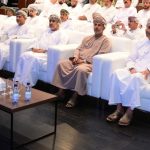
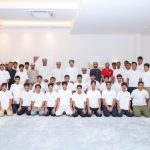
Saudi Arabia’s Voluntary Carbon Market Fuels the Shift to a Low-Carbon

Under UAE President’s directives, UAE launches urgent relief response for Ghana flood victims

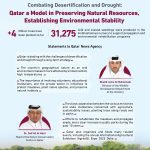
Combating Desertification and Drought: Qatar a Model in Preserving Natural Resources, Establishing Environmental Stability
UAE allocates US$30 million for emergency humanitarian response in El Obeid, calls for civilian protection, safe humanitarian aid access in Sudan

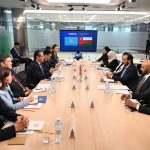
Khartoum, Feb. 8, 2026 (SUNA) – The High Committee for Preparing the Return to Khartoum State, chaired by Member of Transitional Sovereignty Council (TSC) and Assistant Commander-in-Chief of the Armed Forces Lt. Gen. Engineer Ibrahim Jabir, held its 30th meeting with the attendance of TSC Member Dr. Nuwara Abu Mohamed Tahir, several ministers, the Wali of Khartoum State, and security officials.Following reports from the Committees on Projects, Productive Families, and Higher Education & Scientific Research, Lt. Gen. Ibrahim Jabir urged accelerating efforts to accommodate returning citizens. He emphasized prioritizing projects that create real job opportunities, including training programmes for skilled workers, industrial apprenticeship graduates, and engineers, given current labour market needs. He also stressed the importance of effective project management and fostering international and regional partnerships to secure additional funding. Lt. Gen. Engineer Ibrahim Jabir also emphasized the need for an effective and specialized management structure to oversee productive projects, aiming to establish international and regional partnerships to secure additional funding. He added that higher education institutions form the backbone of the country’s desired development, noting that a full return of citizens requires the stability of higher education. He directed the Ministry of Higher Education and Scientific Research to improve working conditions and encourage the return of expatriate university professors, while calling on the Ministry of Foreign Affairs to activate the Cultural Affairs Department to advance international relations and create opportunities for training Sudanese professionals abroad. He also stressed the importance of maintaining the quality of higher education and aligning graduates with labor market needs, praising the Central Bank of Sudan’s policy of funding university tuition as a service that supports low-income and disadvantaged families in educating their children and promotes equity in access to education.At the conclusion of the meeting, the High Committee approved the report of the Productive Projects Committee, chaired by Minister of Trade and Industry Mahasin Yagoub, selecting 10 productive projects aimed at supporting approximately 4 million beneficiaries, including productive families and graduates. Higher Education and Scientific Research Minister Prof. Ahmed Modawi reported that Sudanese higher education institutions have returned stronger in terms of quality and relevance, according to the National Roadmap for the Return of Higher Education Institutions. BH/BH