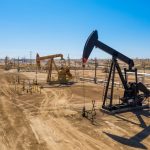
Saudi Arabia’s Voluntary Carbon Market Fuels the Shift to a Low-Carbon

Under UAE President’s directives, UAE launches urgent relief response for Ghana flood victims

Combating Desertification and Drought: Qatar a Model in Preserving Natural Resources, Establishing Environmental Stability

UAE allocates US$30 million for emergency humanitarian response in El Obeid, calls for civilian protection, safe humanitarian aid access in Sudan

Singapore, March 18 (QNA) – The US dollar weakened on Wednesday as crude oil prices declined, with improving risk sentiment ahead of a series of key monetary policy decisions by major central banks.
The dollar index, which measures the greenback against a basket of six major currencies, fell 0.04% to 99.51, extending losses for a third consecutive session.
The euro rose 0.04% to $1.1543, marking its third straight daily gain, ahead of a two-day European Central Bank meeting.
The Japanese yen strengthened by 0.21% to 158.64 per dollar, while the British pound advanced 0.1% to $1.3368.
The dollar had previously climbed to a 10-month high late last week, supported by safe-haven demand amid escalating tensions in the Middle East and a surge in oil prices.
Among other currencies, the Australian dollar rose 0.21% to $0.7117, while the New Zealand dollar gained 0.19% to $0.5868.
Despite the recent pullback, the dollar remains broadly supported since the onset of the US-Israeli military campaign against Iran nearly three weeks ago, which had driven investors toward US assets.
Oil prices, which had surged on geopolitical tensions, retreated by more than $2 per barrel following the resumption of crude exports from Iraq’s Kirkuk oilfields to Turkiye’s Ceyhan port.
Attention is now firmly on central bank policy decisions, with the US Federal Reserve expected to announce its interest rate decision later today, followed by the European Central Bank, the Bank of England, and the Bank of Japan on Thursday.
Markets widely anticipate that rates will remain unchanged, while closely watching for signals on inflation trends and the economic outlook amid ongoing geopolitical uncertainty. (QNA)