
Jordan’s Q2 2026 GDP Expands 3.0%, Outperforming Regional Headwinds, International Forecasts
ENV-KUWAIT-SUSTAINABLITYKuwait strengthens environmental sustainability through strategic initiativesBy Zahra Al-Kadhmi

HLT-KUWAIT-SURGERYKuwait advances health sector with robotic, remote surgeryBy Mohammad Al-Moseb

Saudi Arabia’s Voluntary Carbon Market Fuels the Shift to a Low-Carbon

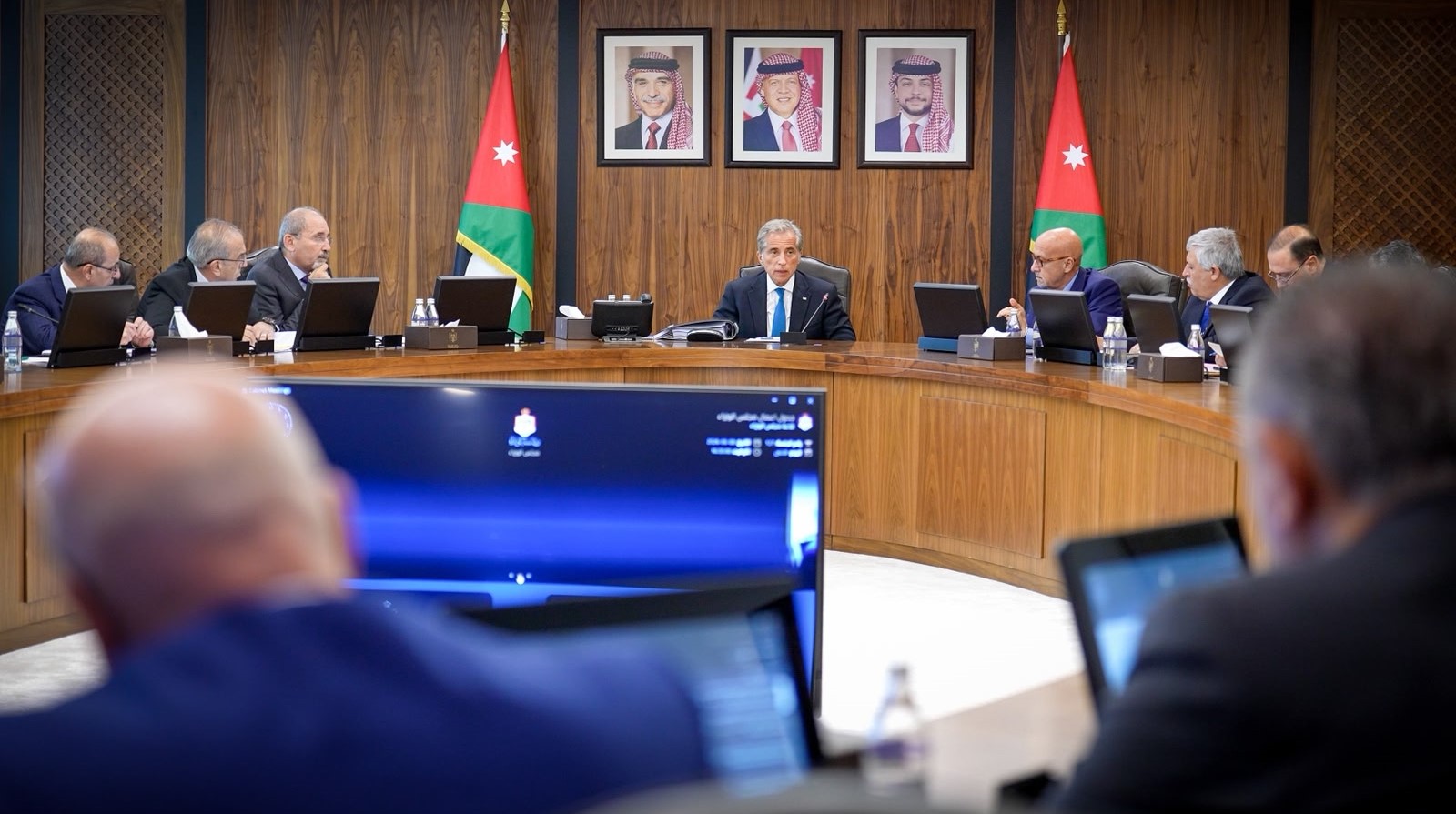
Amman, June 8 (Petra) – The Cabinet decided to increase the price
preference granted to Jordanian industrial products in government
tenders to 20% instead of 15% to support national industry, enhance
competitiveness and increase its contribution to economic growth.
Under the decision, all ministries, government departments, public
institutions, universities, municipalities, joint service councils,
the Greater Amman Municipality (GAM) and companies fully or
majority-owned by the government are required to apply the 20% price
preference in public tenders and procurement, provided that Jordanian
products comply with approved technical and engineering
specifications.
This means Jordanian industrial products will be given priority even
if their price is up to 20% higher than imported alternatives,
provided they meet technical requirements.
Exceptions may be made in cases where the application of the
preference is not feasible or where technical or operational
justifications exist, subject to coordination with the Ministry of
Industry, Trade and Supply and proper justification.
The Cabinet said the measure is intended to strengthen reliance on
local products, increase demand for national industries and enable
factories to expand production capacity and competitiveness, thereby
creating more job opportunities and supporting industrial investment.
The decision aligns with the Economic Modernisation Vision,
particularly in relation to boosting the industrial sector’s
contribution to GDP, expanding exports and strengthening local supply
chains and added value.
Support for Tourism Transport Sector
The Cabinet approved extending previous support measures and
facilities for the tourism sector to include specialised tourist
transport companies.
The decision follows earlier measures in March tasking the Central
Bank of Jordan (CBJ) with coordinating with commercial banks to
enable tourism establishments to access financing to cover operating
costs, including salaries, with government support covering interest
costs and restructuring obligations until December 31, 2026.
Officials said specialised tourist transport companies are a key
component of the tourism system and have been affected by regional
developments. The support aims to ensure business continuity,
preserve jobs and maintain operational readiness of the tourism
transport fleet.
There are 26 licensed specialised tourist transport companies in
Jordan, operating around 1,100 buses and small and medium-sized
vehicles and employing approximately 2,500 workers.
Draft Law on Accreditation and Quality Assurance
The Cabinet approved the draft Accreditation and Quality Assurance
Authority Law for 2026, to be submitted to the House of
Representatives.
The draft law establishes a comprehensive national system for
accreditation and quality assurance covering general education,
higher education and vocational and technical training, in line with
the Economic Modernisation Vision and public sector modernisation
roadmap.
A key feature of the law is the inclusion of school education within
the national quality assurance system, granting the authority
responsibility for accrediting kindergartens and public and private
schools.
The draft provides for a preparatory phase to develop technical and
institutional frameworks, including accreditation tools, assessor
training and awareness programmes to promote a culture of quality in
education.
It transfers the responsibilities of the Education Quality and
Accountability Unit from the Ministry of Education to the new
authority and centralises recognition, equivalency and certification
functions under a unified body.
The authority would manage accreditation of higher education and
vocational training institutions and programmes in all formats, as
well as oversee the National Qualifications Framework, including
recognition of prior learning and alignment of educational outputs
with labuor market needs.
Professional Work Regulation Law
The Cabinet approved the draft Professional Work Regulation Law of
2026 to be enacted alongside the accreditation law.
The law aims to regulate vocational and technical professions,
improve oversight of training providers and strengthen professional
licensing systems under the supervision of the Ministry of Labour.
It seeks to involve the private sector in updating training and
occupational standards to meet labour market demands.
Arbitration Law Amendments
The Cabinet approved the justifications for an amendment to the
Arbitration Law of 2026, to be referred to the Legislation and
Opinion Bureau.
The amendment seeks to strengthen the legal framework for arbitration
in line with international standards, promote Jordan as a regional
arbitration hub and establish a specialised international arbitration
centre with legal personality.
Institutional and Regulatory Reforms
The Cabinet approved several administrative and regulatory measures,
including:
An amendment to the Ministry of Industry, Trade and Supply’s
organisational bylaw to establish a Competition Protection Department
in line with the amended Competition Law No. 8 of 2026.
A bylaw for the Cooperative Development Institute to strengthen
training, capacity building and advisory services for the cooperative
sector.
A Cooperative Fund regulation to provide sustainable financing for
cooperatives, support productive projects and enhance governance and
oversight.
A draft law repealing the Civil Consumer Corporation Law of 2026,
paving the way for the merger of the Civil and Military Consumer
Corporations to improve efficiency, pricing stability and food
security.
Housing and Social Support
The Cabinet approved housing support for eligible families under the
Housing Finance Support Programme, with funding totaling JD3.25
million for 2026.
The programme aims to reduce interest rates on housing loans and
expand access to affordable housing for low- and middle-income
Jordanians. It includes land development projects offering plots at
reduced prices in several governorates.
Health Sector Financing
The Cabinet approved a $400 million financing agreement with the
World Bank for the Results-Based Health Sector Reform Programme,
running until 2030.
The programme aims to improve health service quality, strengthen
governance in hospitals, expand primary healthcare, enhance early
disease detection and accelerate digital transformation in Health.
Funding would be tied to measurable performance indicators under a
results-based financing model.
Appointments
The Cabinet decided to retire Mahmoud Shaalan, Secretary-General of
the Economic and Social Council, and appoint Nadhir Awamleh as his
successor.
//Petra// AK