Jordan’s Q2 2026 GDP Expands 3.0%, Outperforming Regional Headwinds, International Forecasts
ENV-KUWAIT-SUSTAINABLITYKuwait strengthens environmental sustainability through strategic initiativesBy Zahra Al-Kadhmi

HLT-KUWAIT-SURGERYKuwait advances health sector with robotic, remote surgeryBy Mohammad Al-Moseb

Saudi Arabia’s Voluntary Carbon Market Fuels the Shift to a Low-Carbon

UNESCO
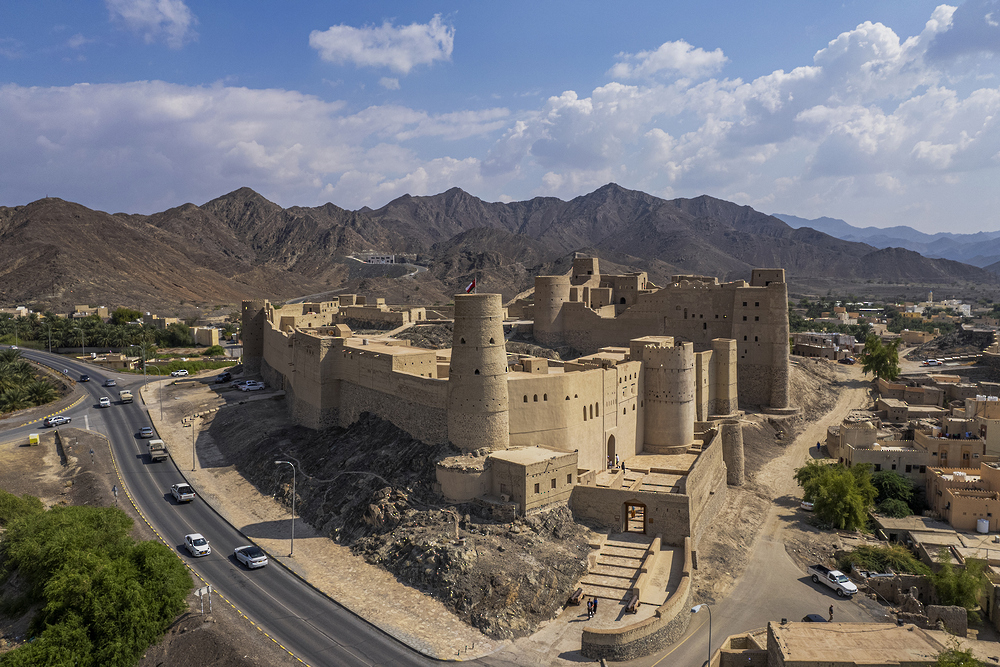
Adopts “Cultural Property” Initiative at Bahla Fort Site
Paris,
5 Aug 2026 (ONA) — The United Nations Educational, Scientific and Cultural
Organization (UNESCO) has adopted the “Cultural Property” initiative
for pottery, copper, metal, and woodworking crafts submitted by the Bahla
Volunteer Team, a local community organization, at the historic Bahla Fort site
in A’Dakhiliyah Governorate.
The
Ministry of Heritage and Tourism participated in the initiative for the first
time in cooperation with the Oman National Commission for Education, Culture
and Science, as part of the World Heritage Volunteers (WHV) 2026 campaign under
the slogan “Working on the Future,” organized by the UNESCO World
Heritage Centre. This step reflects the role of the Sultanate of Oman in
preserving and managing registered World Heritage sites of Outstanding
Universal Value.
The
World Heritage Volunteers initiative was established in 2008 within the
framework of the World Heritage Education Programme to promote a culture of
volunteerism and engage youth and community institutions in protecting and
promoting heritage globally. Its membership comprises 200 organizations from 84
countries and more than 10,000 national and international volunteers.
The
Sultanate of Oman’s participation in this initiative marks it as the second
country in the Arab region after the Kingdom of Morocco, owing to its
significant role in preserving global cultural heritage. The initiative
represents a model of partnership between the Ministry of Heritage and Tourism
and local community institutions in line with the Operational Guidelines for
the Implementation of the World Heritage Convention, thereby enhancing
community participation in protecting and managing sites of Outstanding
Universal Value and embodying the concept of effective partnership in heritage
conservation.
This
participation aims to highlight the Sultanate of Oman’s efforts in preserving
World Heritage, as well as preserving traditional craft knowledge and skills
and transmitting them to future generations—particularly in pottery, copper and
metalworking, and woodworking crafts, as these crafts constitute true pillars
for the artistic, technical, economic, and social sustainability of society.
Moreover,
this participation also aims to involve youth in preserving World Heritage
through tangible on-site projects, enabling them to learn essential
preservation and maintenance skills and techniques, building their capacities
as future decision-makers and active global citizens, strengthening sustainable
cooperation between community institutions and the Ministry of Heritage and
Tourism, raising awareness among youth, volunteers, and relevant entities
regarding the need to protect and promote World Heritage, and identifying best
practices by developing non-formal education tools to facilitate the
involvement of community stakeholders in World Heritage education.
The
implementation of the initiative submitted by the Bahla Volunteer Team will
begin from 3 to 13 September at the Bahla Fort site in A’Dakhiliyah
Governorate. It is organized by the Ministry of Heritage and Tourism in
cooperation with the Ministry of Education—represented by Oman National
Commission for Education, Culture and Science—and the Ministry of Culture,
Sports and Youth, with the participation of the SMEs Development Authority “Riyada”
and the Bahla Volunteer Team, as well as international and local volunteers
representing several countries, thereby enhancing cultural exchange and the
sharing of expertise and experiences in heritage preservation.
Ali
Said Al Adawi, Acting Director of the Bahla Fort Site, said that the Ministry
of Heritage and Tourism’s participation in the World Heritage Volunteers 2026
initiatives, “Working for the Future,” contributes to raising
awareness among youth, volunteers, and stakeholders about the need to protect
World Heritage, highlighting the Sultanate of Oman’s efforts in this area, and
establishing crafts as cultural property that must be preserved from
extinction.
Al
Adawi added that participating projects must be located at a site inscribed on
the World Heritage List or the Tentative List, build effective partnerships
with the local community and relevant entities to enhance project impact and
the sustainability of its outputs, include awareness activities and workshops,
have a legally registered applicant in the country, and be implemented on a
non-profit basis.
He
explained that selected initiatives will receive financial support to empower
them to implement their projects. The World Heritage Centre will also grant
official international recognition to the organizing entity and volunteers, and
UNESCO will promote successful initiatives by publishing their content on the
organization’s official website and presenting them at international
conferences, positively contributing to the tourism sector and introducing the
sites globally.
For
his part, Sultan Nasser Al Nabhani, Head of the Bahla Volunteer Team, stated
that this initiative will yield results that benefit the heritage site—Bahla
Fort—which was inscribed 40 years ago as the first Omani site on the World
Heritage List. He pointed out that this initiative represents the team’s first
international experience, with hopes of benefiting from other global
experiences in the field of voluntary work.
—Ends/AG