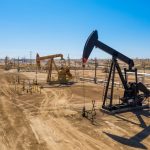
Saudi Arabia’s Voluntary Carbon Market Fuels the Shift to a Low-Carbon

Under UAE President’s directives, UAE launches urgent relief response for Ghana flood victims

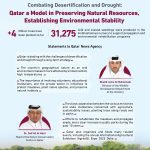
Combating Desertification and Drought: Qatar a Model in Preserving Natural Resources, Establishing Environmental Stability
UAE allocates US$30 million for emergency humanitarian response in El Obeid, calls for civilian protection, safe humanitarian aid access in Sudan

The State Minister at the Ministry of Finance, Mohamed Nour Abdel Daim, chaired on Thursday a roundtable session on “Strengthening Resilience to Shocks in the Horn of Africa,” held on the sidelines of the 51st annual meetings of the Islamic Development Bank (IsDB) Group in the Azerbaijani capital, Baku. In his remarks, the State Minister noted that the Horn of Africa faces interlinked challenges, including the impacts of climate change, protracted displacement, armed conflict, and economic pressures, which have led to rising humanitarian needs and widening development financing gaps. He stressed the importance of adopting practical and financeable initiatives to strengthen resilience, support climate adaptation and early recovery, and enhance coordination between humanitarian action, development, and peacebuilding efforts. He also outlined the profound economic and humanitarian impact of the war in Sudan, noting a sharp decline in agricultural production, disruption of supply chains, damage to infrastructure and basic services, the displacement of millions, and increased pressure on host communities. He further highlighted the impact on key sectors, including health, education, energy, and the broader economy, with worsening food insecurity, rising poverty levels, and expanding humanitarian and development needs. He affirmed that Sudan is adopting a comprehensive vision for recovery and reconstruction based on transitioning from emergency humanitarian response to early recovery and sustainable development, through the rehabilitation of water, energy, and education sectors, the revival of agricultural and productive projects, and the implementation of economic, financial, and institutional reforms aimed at strengthening stability and national capacity-building. The vision also includes banking sector reform, addressing debt arrears, enhancing transparency and accountability, combating corruption, expanding financial inclusion, and accelerating digital transformation. Regarding displacement, he said Sudan’s national strategy focuses on supporting host communities and strengthening basic services in displacement areas through expanding access to water, electricity, health, and education, in addition to providing Islamic microfinance programmes to empower displaced families to establish small productive projects and shift from aid dependency to active participation in the local economy. Abdel Daim called on development partners and regional and international financial institutions to support the establishment of innovative financing mechanisms, including dedicated trust funds for recovery and reconstruction programmes, and to develop debt restructuring initiatives linked to development goals and resilience-building efforts. He stressed that recovery, reconstruction, and resilience-building pathways must proceed in parallel and in an integrated manner to build more efficient institutions, stronger infrastructure, and greater capacity to withstand crises and achieve sustainable development and long-term stability. The session witnessed wide participation from finance ministers, IsDB governors, and representatives of member states, including Somalia, Djibouti, and Uganda, as well as international and regional institutions such as the World Bank, the United Nations Development Programme (UNDP), and the Intergovernmental Authority on Development (IGAD). Participants discussed climate, displacement, and economic shock challenges in the Horn of Africa, stressing the importance of expanding investments in climate adaptation, early recovery, infrastructure, and basic services, and strengthening coordination and joint financing for priority projects. The session concluded with an emphasis on the need to move from dialogue to practical implementation through the development of a package of financeable projects and strengthening regional and international partnerships to support resilience and development efforts in the region.BH/BH