
Saudi Arabia’s Voluntary Carbon Market Fuels the Shift to a Low-Carbon

Under UAE President’s directives, UAE launches urgent relief response for Ghana flood victims

Combating Desertification and Drought: Qatar a Model in Preserving Natural Resources, Establishing Environmental Stability

UAE allocates US$30 million for emergency humanitarian response in El Obeid, calls for civilian protection, safe humanitarian aid access in Sudan

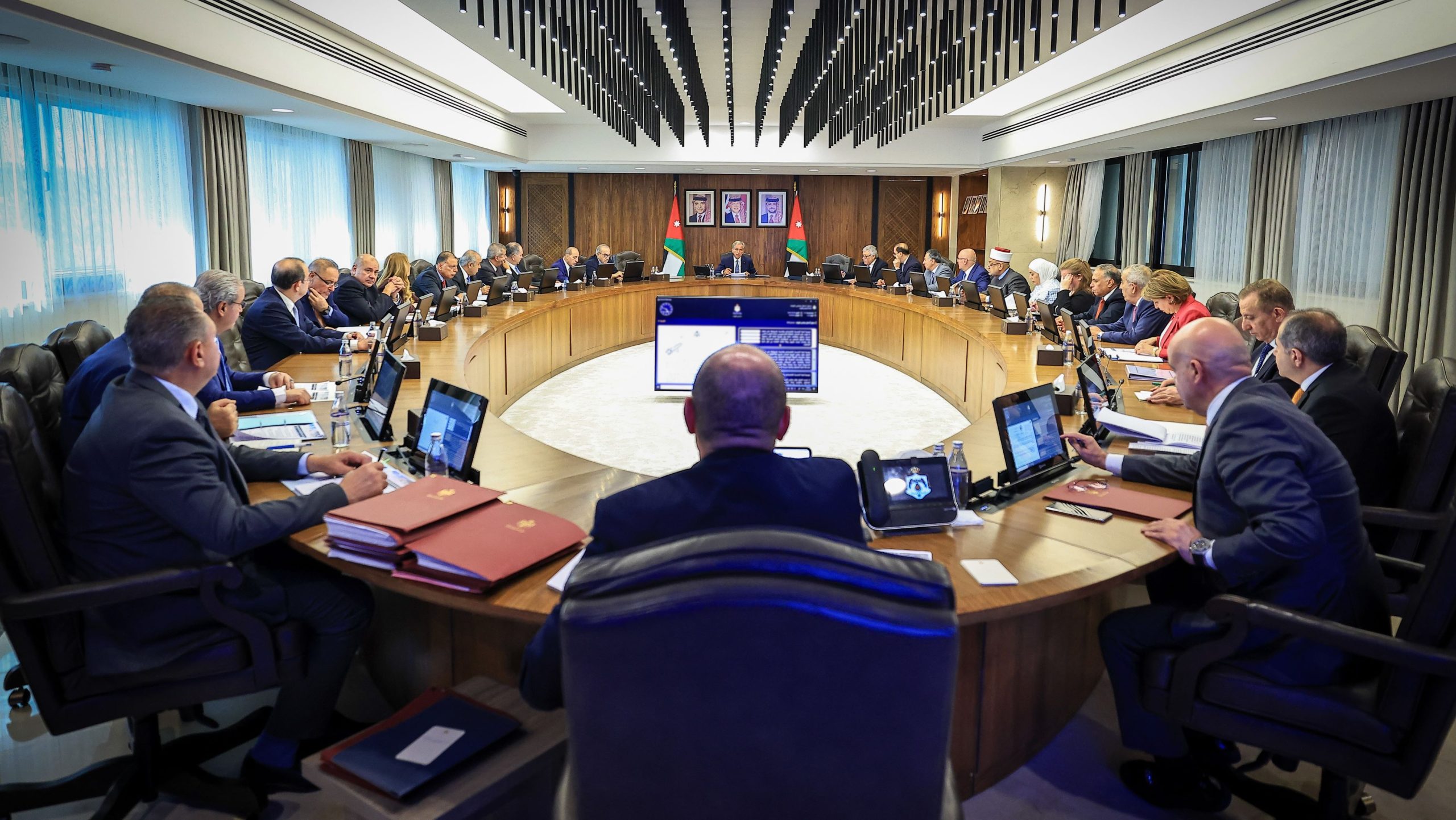
Amman, August 2 (Petra) – The Cabinet approved on Sunday a package of
investment incentives, tax exemptions, regulatory reforms, and public
relief measures to boost industrial investment, support key sectors,
and advance the Economic Modernization Vision (EMV).
To boost industrial competitiveness and attract high-value
investments, the Cabinet granted the Rawda Industrial Zone in the
Ma’an Development Area (MDA) special incentives equivalent to those
provided to Karak and Tafilah Industrial Zones.
Under the decision, industrial investments will receive a five-year
sliding discount on electricity rates, starting at 75% for the first
two years, 50% for the next two years, and 25% in the fifth year,
alongside inclusion in small-and-medium enterprise power support
programs.
The area will also join the Ministry of Labor’s Productive Branches
Program, providing local employment support through partial salary
subsidies, social security coverage, or transportation allowances for
three years.
Exported goods originating from Rawda will benefit from a 50%
discount on container handling fees at Aqaba Port for three years,
while land purchase prices have been slashed to JD7.5 per square
meter for plots exceeding 20 dunams.
Land-price reduction incentives in Madaba, Tafilah, and Salt
Industrial Zones were also extended for three years for up to 15
qualifying companies per city, fully funded through existing
government grants.
In a bid to position the Kingdom as a regional technology hub, the
Cabinet approved sales tax and customs duty exemptions for imports
and local purchases of inputs used in semiconductor manufacturing.
The Ministry of Digital Economy and Entrepreneurship will oversee
technical evaluations and process exemption applications.
To safeguard the insurance sector, ministers approved the main
principles of a draft amendment to the Policyholders and Insurance
Beneficiaries Guarantee Fund Regulation for 2026. Supervised by the
Central Bank of Jordan, the policy shifts the sector toward a
preventive model by offering contribution discounts to solvent
insurers that merge with financially weaker firms, reducing the risk
of corporate liquidations.
The government also rolled out financial relief measures to ease
economic burdens on Jordanians. Drivers who committed traffic
violations before March 27 can receive a 30% discount on outstanding
fines if paid in full within 60 days.
For the agricultural sector, debtors of the Jordan Cooperative
Corporation are granted a 50% waiver on accumulated fines and legal
interest if they settle their principal loan balances by the end of
the year. Collected funds from the JD4.6 million loan portfolio will
be funneled into the newly established Cooperative Development Fund
to finance new rural programs.
Ministers updated the administrative structure of the Ministry of
Foreign Affairs and Expatriates, splitting operations and consular
affairs into distinct directorates, creating a dedicated unit to
oversee more than 800 local mission staff abroad, and establishing an
accomplishment and compliance unit to monitor strategic projects
across diplomatic posts.
//Petra// HA