Saudi Arabia’s Voluntary Carbon Market Fuels the Shift to a Low-Carbon

Under UAE President’s directives, UAE launches urgent relief response for Ghana flood victims
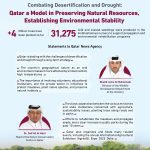
Combating Desertification and Drought: Qatar a Model in Preserving Natural Resources, Establishing Environmental Stability
UAE allocates US$30 million for emergency humanitarian response in El Obeid, calls for civilian protection, safe humanitarian aid access in Sudan

Academic and industrial experts have agreed that integrating scientific research with the industrial sector is an important approach to addressing economic challenges and boosting domestic production, particularly amid the growing need for innovative solutions in energy, transport and manufacturing. In this context, the Sudan University of Science and Technology and Giad Engineering Industries Group recently organized a workshop on electric vehicles in Khartoum. The workshop served as a platform for bringing the academic sector closer to the needs of industry, directing scientific research toward addressing practical challenges and supporting sustainable economic development. Experts affirmed that the workshop represents a practical model of such integration, offering opportunities to reduce fuel consumption, lower demand for foreign currency and cut transportation costs by utilizing academic expertise to develop industry and translate research and studies into applications that serve the national economy. Vice-Chancellor of the Sudan University of Science and Technology Professor Issa Bashir Mohamed Al-Tayeb stressed the importance of strengthening partnerships between universities and industrial institutions and linking research outputs to industrial needs, thereby contributing to addressing industrial challenges and transforming Sudanese universities into institutions that generate knowledge and innovation. He said the workshop represents a distinctive model of cooperation between industry and academia, bringing together Giad Engineering Industries Group and the Sudan University of Science and Technology. He pointed to a gap between the academic and industrial sectors, explaining that universities produce large volumes of research and studies published at various levels, but a significant portion does not find its way into practical application. He noted that the industrial sector faces challenges that universities can help address by directing research toward actual industrial needs, adding that the electric vehicles workshop could provide an opportunity to identify existing industrial challenges and transform them into research topics within universities. He stressed that cooperation should encompass all Sudanese universities, enabling them to become institutions that generate knowledge, scientific research and innovation and compete regionally and globally. He further noted that unifying efforts between universities and national industrial institutions could contribute to advancing Sudanese industry while simultaneously raising the standard of universities and strengthening their ability to join the ranks of world-class universities. For his part, economic expert Dr. Mohamed Al-Nayir stressed the importance of expanding the manufacture and use of electric vehicles in Sudan, noting their role in reducing the fuel import bill and demand for foreign currency, as well as lowering transportation costs and consequently having a positive impact on the prices of goods and services. Dr. Al-Nayir said the partnership represents an important step toward linking applied scientific research with industry and benefiting from the university’s engineering capabilities and Giad’s industrial expertise. He explained that launching electric vehicles in different sizes and specifications represents an important transition toward making electric cars a reality in Sudan. The economic expert Dr. Al-Nayir called on the state to facilitate procedures for importing and manufacturing electric vehicles and reduce their costs through exemptions and incentives to encourage their wider adoption.He added that providing solar-powered charging sources could significantly reduce demand for US dollars and the fuel import bill, potentially bringing about a positive transformation in the economic situation, noting that that future expansion in the use of electric trucks and other modes of transportation could reduce the cost of transporting goods, thereby contributing to lower prices of goods and services and enhancing economic efficiency. He stressed that the success of the electric vehicle initiative requires integrated efforts by scientific research institutions, industry and the state to ensure the provision of the necessary charging infrastructure and encourage investment in clean energy and sustainable transportation. Within the framework of the workshop, Executive Director of Giad Engineering Industries Group Abdullah Abdel-Maarouf said the electric vehicle project was launched more than a year before the outbreak of the war, adding that the unveiling of the vehicle marks the beginning of a new path in Sudan’s vehicle industry. He affirmed Giad’s readiness to finance scientific research related to electric vehicles and solar energy and support students and researchers working in these fields. He called for the adoption of legislation and policies supportive of electric vehicles, noting the possibility of introducing approximately 100,000 electric vehicles annually and distributing them across broad segments of society. Abdel-Maarouf added that expanding the use of electric vehicles could help address part of the vehicle, fuel and spare-parts import bill.He affirmed that the group is working to develop electric models of rickshaws, alongside expanding into other environmentally friendly products, in line with the global shift toward transportation options that consume less fuel and generate less pollution.BH/BH