Saudi Arabia’s Voluntary Carbon Market Fuels the Shift to a Low-Carbon

Under UAE President’s directives, UAE launches urgent relief response for Ghana flood victims

Combating Desertification and Drought: Qatar a Model in Preserving Natural Resources, Establishing Environmental Stability

UAE allocates US$30 million for emergency humanitarian response in El Obeid, calls for civilian protection, safe humanitarian aid access in Sudan

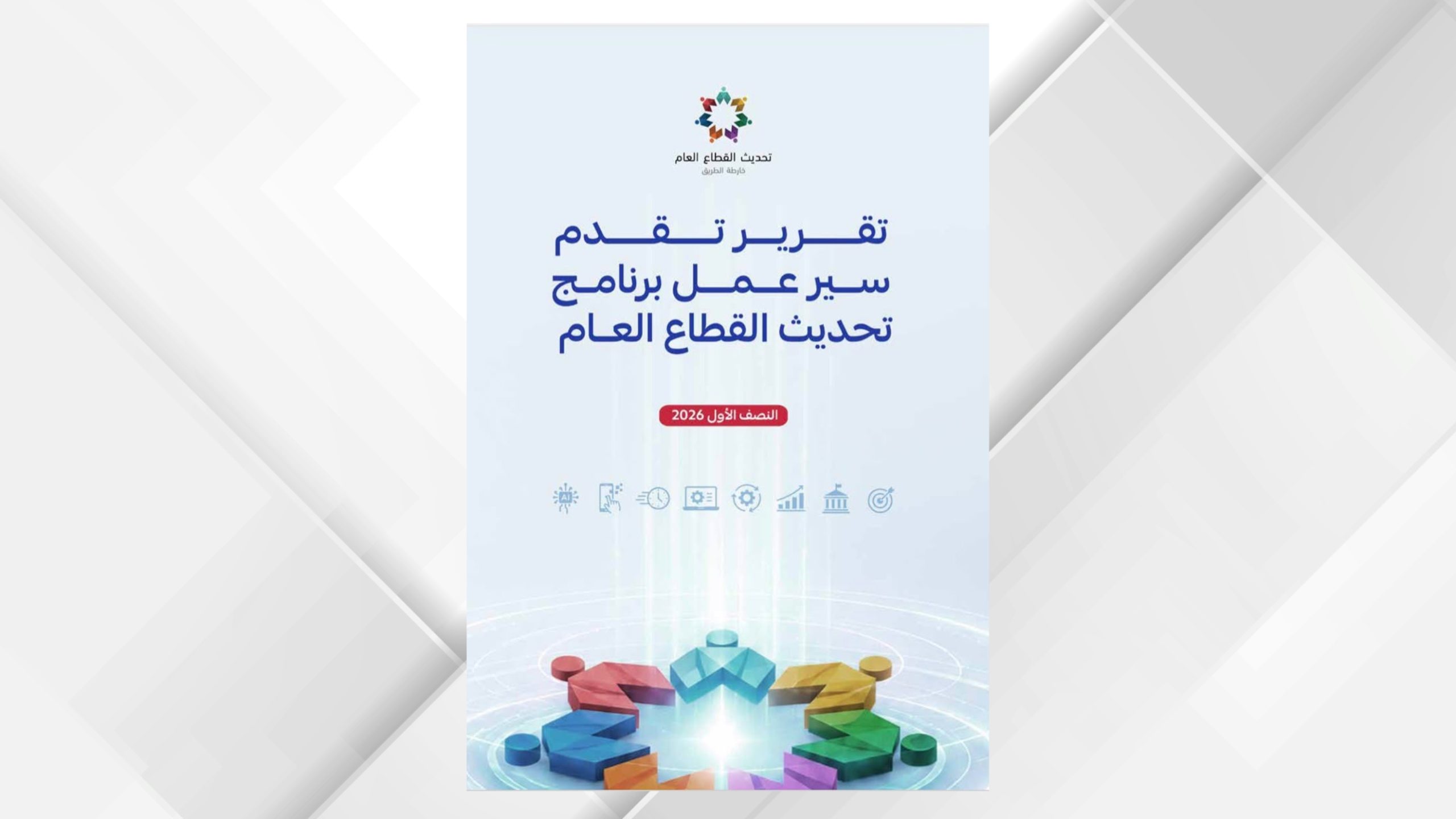
Amman, August 15 (Petra) – Prime Ministry has released a progress
report for the 2nd executive program to modernize the public sector
for the first half of 2026, revealing 92% of the targets for this
period were achieved, as 78 out of 85 axes were completed.
The report’s publication coincides with launch and development of
national projects in the areas of government services, human
resources, performance measurement, digital transformation, data, and
artificial intelligence.
These enterprises represent a “new” phase of implementation, focusing
on translating the developed enablers and systems into tangible
results that would “broadly” impact quality of government services,
performance efficiency, and the tangible benefits citizens will
experience.
As for its goals, this phase aims to develop performance indicators
to serve as national evaluation tools, with the results being
published periodically for public access.
In the area of government human resource development, the report
highlighted the launch of the Jordanian Academy of Public
Administration as a national entity for leadership development and
capacity building, and the legal successor to the Institute of Public
Administration.
The report also noted completion of the development of 12 competency
frameworks that define skills and requirements for various positions,
and the continued expansion of merit-, competency-based, and
competitive recruitment processes.
Progress also emerged in developing tools to enhance government
efficiency and strengthen inter-institutional integration, mainly
transition to paperless government, steps to develop systems to link
individual and institutional performance, expand use of e-government
procurement systems, and continue to develop operational models and
shared services to improve resource deployment.
In the smart and innovative government track, work is underway to
develop 5 priority use cases for artificial intelligence agents in 5
public entities, as well as completing data maturity assessments in
ministries and training 23 government data teams.
The government also completed the unified digital map of legislation,
which features at least 28,000 laws, regulations, and administrative
decisions in searchable and readable digital formats, as well as
supporting the development of a “more integrated” system for managing
legislation and policies.
The report showed the government continued to expand digitization of
services and streamline access to them. The number of digital public
services rose to 2,060, representing 85.8% of digitizable services.
Meanwhile, the number of activated digital identities through the
“Sanad” application and various activation channels reached 2.8
million.
The comprehensive government service center network also expanded to
cover 16 facilities, as part of a move to orchestrate service
delivery standards and facilitate citizen access.
The report noted that the number of users of the vehicle license
renewal package under the new electronic procedures exceeded 614,000
beneficiaries.
This effort follows integration of several service-related procedures
into a unified process that includes paying fines, obtaining
mandatory insurance, and renewing the license.
During the second half of the year, the program will focus on
expanding impact of developed projects on improving services provided
to citizens, completing the digitization of priority services and
re-engineering their procedures.
The government will also widen “Hearing the Citizen’s Voice” system
at the national level, continue the transition to a paperless
government, expande application of competency framework, and roll out
the first phase of programs to enhance use of artificial intelligence
in targeted government entities.
The report noted the next phase represents a “shift” from building
enablers to optimizing their impact.
Progress in Jordan’s public sector modernization will not be measured
“solely” by the number of implemented projects and axes, but also by
their ability to create sustainable institutional transformation that
enhances government efficiency, improves service quality, and
“tangibly” improves citizen experience.
//Petra// AG