Saudi Arabia’s Voluntary Carbon Market Fuels the Shift to a Low-Carbon

Under UAE President’s directives, UAE launches urgent relief response for Ghana flood victims

Combating Desertification and Drought: Qatar a Model in Preserving Natural Resources, Establishing Environmental Stability
UAE allocates US$30 million for emergency humanitarian response in El Obeid, calls for civilian protection, safe humanitarian aid access in Sudan

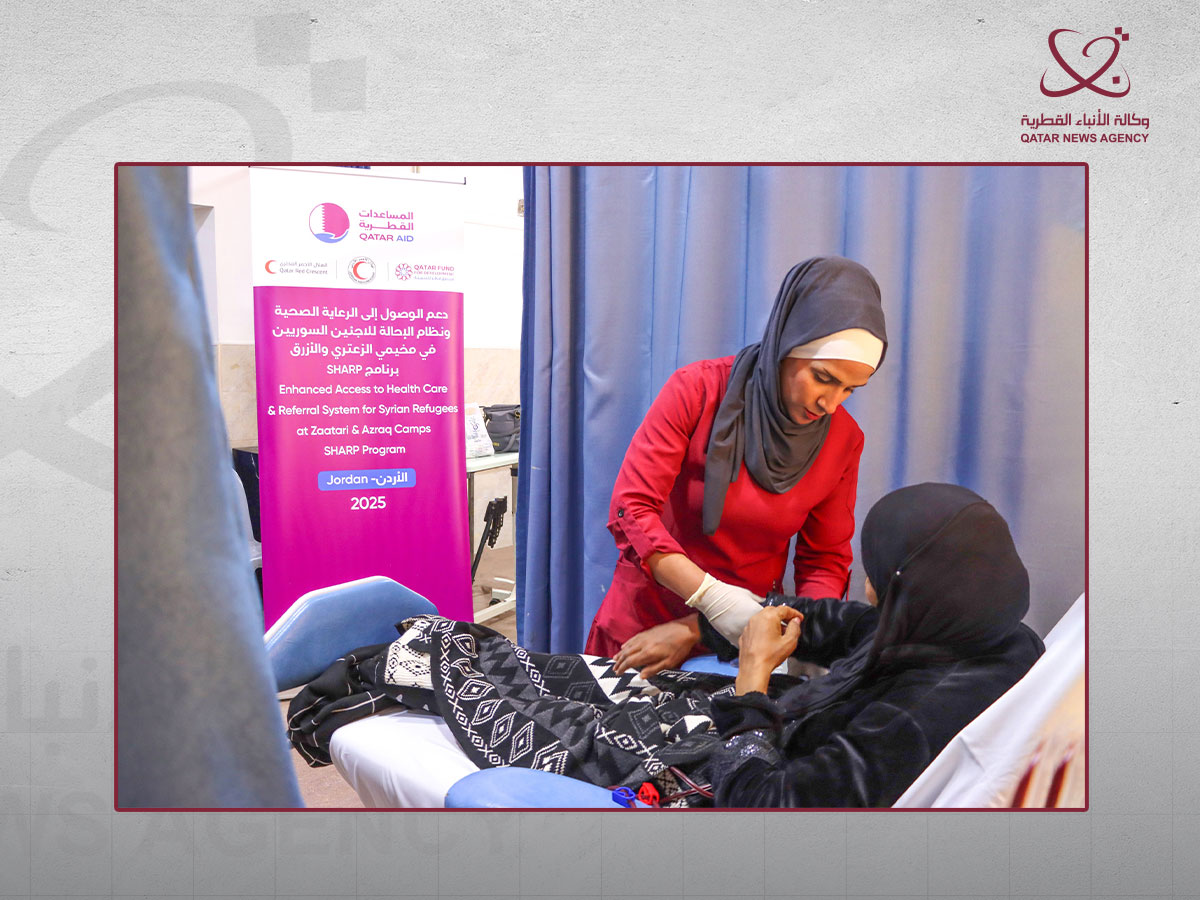
Amman, August 17 (QNA) – Qatar Red Crescent Society (QRCS) and the Office of the United Nations High Commissioner for Refugees (UNHCR) have implemented the Supporting Health Access and Referral Pathways (SHARP) project for Syrian refugees in Jordan, with support from Qatar Fund for Development (QFFD).
The project aims to ensure that refugee patients residing in the Zaatari Camp (Mafraq Governorate) and Azraq Camp (Zarqa Governorate) have access to specialized, emergency, and life-saving health care services, in line with the principles of universal health coverage and free access to care.
In a statement today, QRCS announced the completion of the first component of the project, which focused on supporting dialysis services for Syrian patients in the two camps through an executive partnership between QRCS and Jordan National Red Crescent Society (JNRCS).
Over six months, a total of 2,424 dialysis sessions were provided for 36 patients with kidney failure, with the aim of reducing mortality rates and serious health complications among the most vulnerable groups, ensuring continuity of treatment for chronic conditions requiring long-term interventions, and promoting equitable access to specialized health care services.
QRCS also noted that secondary health care services were provided to 136 refugee patients residing in the two target camps over nine months, including necessary surgeries in general surgery, pediatric surgery, ENT surgery, ophthalmology, urology, and orthopedic surgery.
In coordination with the Jordanian Ministry of Health (MoH) and specialized medical centers, UNHCR completed the second component of the project, which focused on supporting emergency referrals to Jordan’s secondary and tertiary health care system.
UNHCR secured life-saving health care services for 9,022 Syrian refugees, including emergency obstetric and neonatal care, support for patients with chronic diseases facing life-threatening complications, and priority emergency reproductive health interventions. (QNA)