Saudi Arabia’s Voluntary Carbon Market Fuels the Shift to a Low-Carbon

Under UAE President’s directives, UAE launches urgent relief response for Ghana flood victims

Combating Desertification and Drought: Qatar a Model in Preserving Natural Resources, Establishing Environmental Stability

UAE allocates US$30 million for emergency humanitarian response in El Obeid, calls for civilian protection, safe humanitarian aid access in Sudan

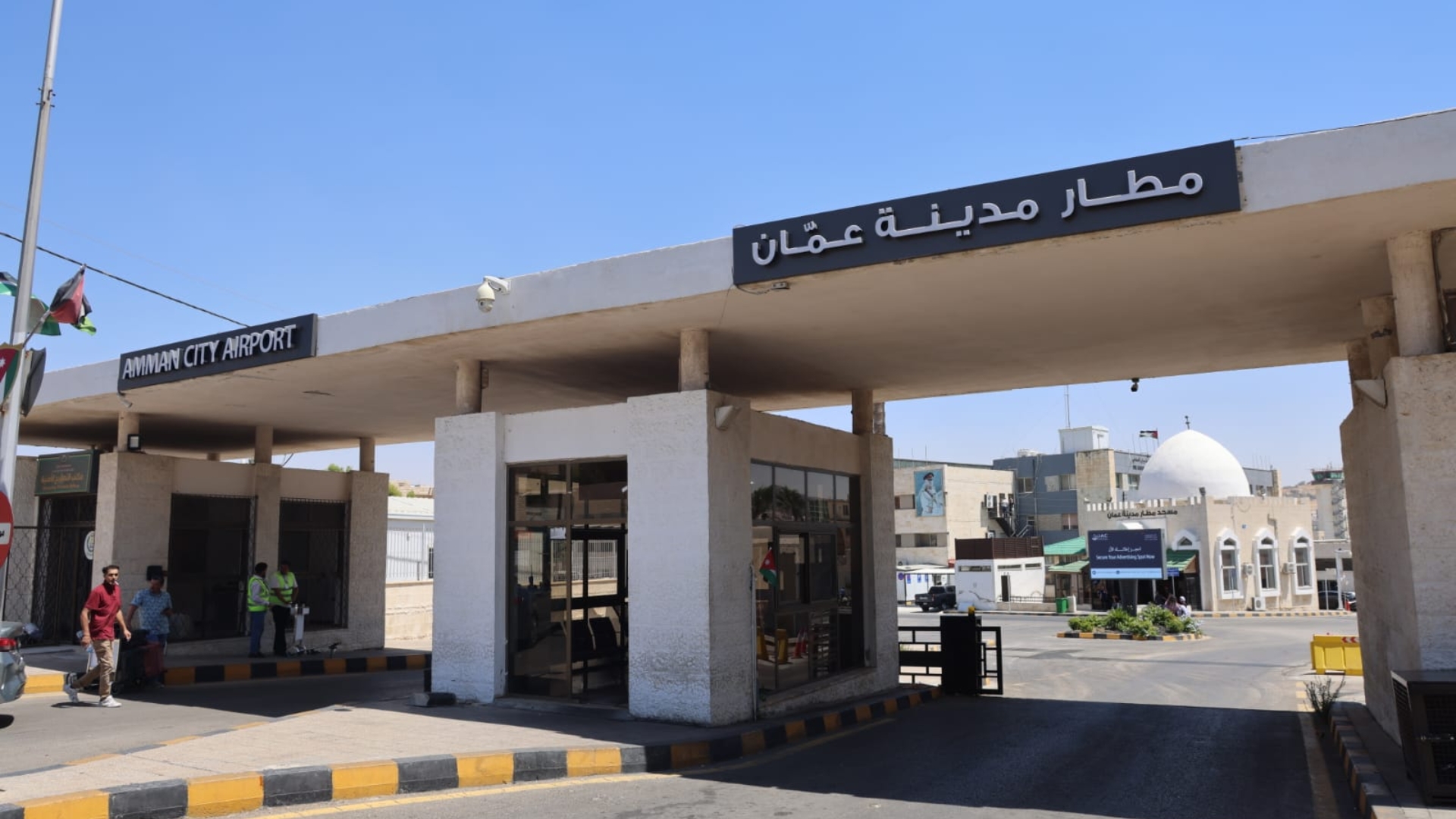
Amman, Aug. 18 (Petra) — The Amman City Airport has resumed
commercial operations, providing additional air travel options
between Jordan and more than 15 Arab and international destinations
through low-cost airlines. Since flights resumed at the beginning of
this year, the airport has handled around 200,000 passengers.
The airport has received 1,650 commercial flights operated by eight
local, Arab and foreign airlines, with operations progressing toward
a target of two million passengers in the second phase of its
development.
Located near central Amman and serving as an alternative to the Queen
Alia International Airport, the Amman City Airport provides
additional travel options between Amman, countries in the region and
Europe through low-cost carriers.
The Jordan Airports Company (JAC) CEO Ahmad Azzam said the airport’s
commercial operations are important for supporting tourism and the
national economy.
Speaking to the Jordan News Agency (Petra), Azzam said the resumption
of regular commercial flights was part of efforts to strengthen the
air transport system, diversify travel options and support tourism
and the national economy.
He said the use of an existing national asset, along with its
location and infrastructure, is consistent with efforts to improve
the efficiency of government investments and make greater use of
existing resources. He added that the commercial operation of the
airport aims to support tourism and the economy and expand low-cost
air travel options.
Azzam identified the airport’s proximity to central Amman as one of
its main advantages, as it reduces travel time to and from the
airport and makes travel more convenient, particularly for short-haul
and regional flights.
He said measures had been taken to encourage operations, including
reducing the departure tax from JD 40 to JD 10, following the
airport’s classification as a secondary airport and as part of
efforts to encourage tourism.
The presence of low-cost airlines, he said, increases competition and
provides citizens and tourists with more options in terms of fares.
It may also help attract travelers whose decisions are significantly
influenced by ticket prices.
Azzam said the aim was to gradually expand the airport’s network
rather than focus on a single destination or market, with priority
given to Gulf and other Arab countries before expanding into
additional markets, including Europe, depending on commercial demand
and operating agreements.
He said Jordan Airports Company had contacted more than 17 low-cost
airlines since operations began, with most expressing interest in
operating flights to and from the airport.
Work is continuing to attract more airlines and diversify
destinations, he said, noting that the airport’s infrastructure
allows for the introduction of new direct destinations in the future,
as well as increased frequencies on some existing routes. This would
provide Jordanian travelers with more options in terms of fares,
destinations and travel times.
Azzam said development and rehabilitation works at the Amman City
Airport had covered both airside and ground facilities. The work
included rehabilitating the approximately 3.3-kilometer runway and
aircraft stands. The airport is also equipped to handle aircraft
commonly used by low-cost airlines, including the Airbus A320 family
and Boeing 737.
He added that departure and arrival halls had been equipped to handle
two fully loaded flights at the same time. Duty-free facilities,
along with basic services and facilities required by passengers and
airlines, are also available.
On the airport’s role during regional disruptions and the closure of
neighboring airports, Al-Azzam said its presence as an additional
civilian airport within Jordan’s airport system provides additional
operational capacity and supports the flexibility and continuity of
the aviation sector. Its use can be determined according to
operational and security requirements and regulatory decisions.
He said recent regional developments had highlighted the importance
of countries having more than one air gateway, particularly as some
airports in the region had experienced temporary suspensions or
restrictions on operations.
The presence of the Amman City Airport alongside the Queen Alia
International Airport and the King Hussein International Airport
enhances Jordan’s ability to manage and distribute air traffic and
respond to regional developments, he added.
Azzam said the resumption of operations reflected official attention
to the airport’s role in supporting the national economy and tourism,
within the framework of the Economic Modernisation Vision launched by
His Majesty King Abdullah II.
He noted that the airport had met the safety and security
requirements and standards required by airlines and passengers,
enabling it to resume operations.
The airport aims to reach two million passengers in the second phase
of its development following further expansion of its airside and
ground facilities, he said.
The Civil Aviation Regulatory Commission had previously announced the
granting of an official license to the Amman City Airport to operate
civil flights, in line with government plans and the Economic
Modernisation Vision to develop infrastructure and strengthen
Jordan’s role as a regional center for logistics and air transport.
Established in 1950, the airport receives low-cost airlines and
short-haul flights from countries in the region and Europe, with
aircraft carrying around 200 passengers.
Amman City Airport Executive Director Mohammad Al-Amayreh said the
airport underwent an initial phase of commercial operations during
the first half of this year, involving a gradual transition to
regular flights while maintaining stable and safe operations.
The period also saw gradual growth in the number of flights, airlines
and destinations, reflecting increased air traffic and the confidence
of airlines in the airport’s ability to accommodate and operate
flights efficiently, he said.
Al-Amayreh added that the airport had demonstrated its ability to
manage airside and ground operations and coordinate among the various
parties involved, while continuing to develop procedures, support
services and operational efficiency.
Regarding passenger services, he said the airport had provided an
organized travel environment through its halls, facilities and basic
services, while facilitating departure and arrival procedures and
providing passengers with guidance and assistance.
He said the first half of the year established a basis for expansion
during the second half through increased air traffic, attracting
additional airlines and destinations, and improving services and
operational efficiency.
Transport Ministry spokesperson Mohammad Al-Duwairi said the
resumption of airport operations supports Jordan’s role in regional
air traffic and aviation activities, while contributing to
competitiveness and the efficiency of civil aviation infrastructure.
He stressed the airport’s importance and strategic role in supporting
Jordan’s aviation sector.
Air transport and strengthening the role of Jordanian airports are
among the government’s priorities under the Economic Modernisation
Vision, which aims to strengthen Jordan’s position as a regional
center for air transport, he said.
//Petra//WH