Saudi Arabia’s Voluntary Carbon Market Fuels the Shift to a Low-Carbon

Under UAE President’s directives, UAE launches urgent relief response for Ghana flood victims
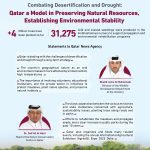
Combating Desertification and Drought: Qatar a Model in Preserving Natural Resources, Establishing Environmental Stability
UAE allocates US$30 million for emergency humanitarian response in El Obeid, calls for civilian protection, safe humanitarian aid access in Sudan

Sudan’s Permanent Representative to the United Nations, Al-Harith Idris, addressed the UN Security Council in New York on Monday, outlining a number of requirements for supporting efforts to protect civilians and create suitable conditions for the return of internally displaced people (IDP) and refugees to their areas of origin. Idris stressed that the return of displaced people and refugees—numbering 5 million according to UN figures—and the fact that none have returned to areas under militia control, in itself demonstrates that the Armed Forces do not kill civilians. He stressed the need to resettle returnees and improve the efficiency of water, health, education, and electricity services in areas receiving returnees. The envoy called on the international community to support the security of return areas by strengthening the police and the infrastructure of public prosecution offices and courts, as well as contributing to efforts to clear landmines and unexploded ordnance deliberately planted by the Rapid Support Forces (RSF) militia to prevent civilians from returning to their areas. He also called for an end to the flow of United Arab Emirates (UAE) weapons supporting the militia, which he said are being used to kill civilians, stressing that such support is the main factor obstructing civilian protection and perpetuating human rights violations. On the humanitarian front, Idris called for increased support for the delivery of aid through designated routes, border crossings, ports, and airports, noting that these channels are sufficient and adequate. He also called for support for disarmament, demobilization, and reintegration (DDR) programs. He urged the Council to pressure the militia to release detainees held in Shala and Daqris prisons, refrain from expanding the scope of Resolution 1591, and lift the sanctions imposed on Sudan as well as unilateral sanctions. Idris also stressed the need to end the presence of mercenaries and any foreign forces in Sudan supporting the militia, and to halt neighboring countries’ support for the militia and mercenaries and their attacks on civilians in safe areas. He called for support for the National Reconciliation and Social Peace Conference, as well as stronger efforts to protect women and girls from sexual violence by the militia. He emphasized the importance of implementing UN Security Council Resolution 1325 (2000) on women, peace and security; Resolution 1460 (2003) on children in armed conflict; and Resolutions 1265 (1999) and 1296 (2000) concerning the protection of humanitarian aid workers and UN personnel.BH/BH