Saudi Arabia’s Voluntary Carbon Market Fuels the Shift to a Low-Carbon

Under UAE President’s directives, UAE launches urgent relief response for Ghana flood victims

Combating Desertification and Drought: Qatar a Model in Preserving Natural Resources, Establishing Environmental Stability
UAE allocates US$30 million for emergency humanitarian response in El Obeid, calls for civilian protection, safe humanitarian aid access in Sudan

Balqa, Aug. 27 (Petra) – The National Agricultural Research Centre
(NARC) continued to strengthen its scientific and technical
cooperation with the International Atomic Energy Agency (IAEA) under
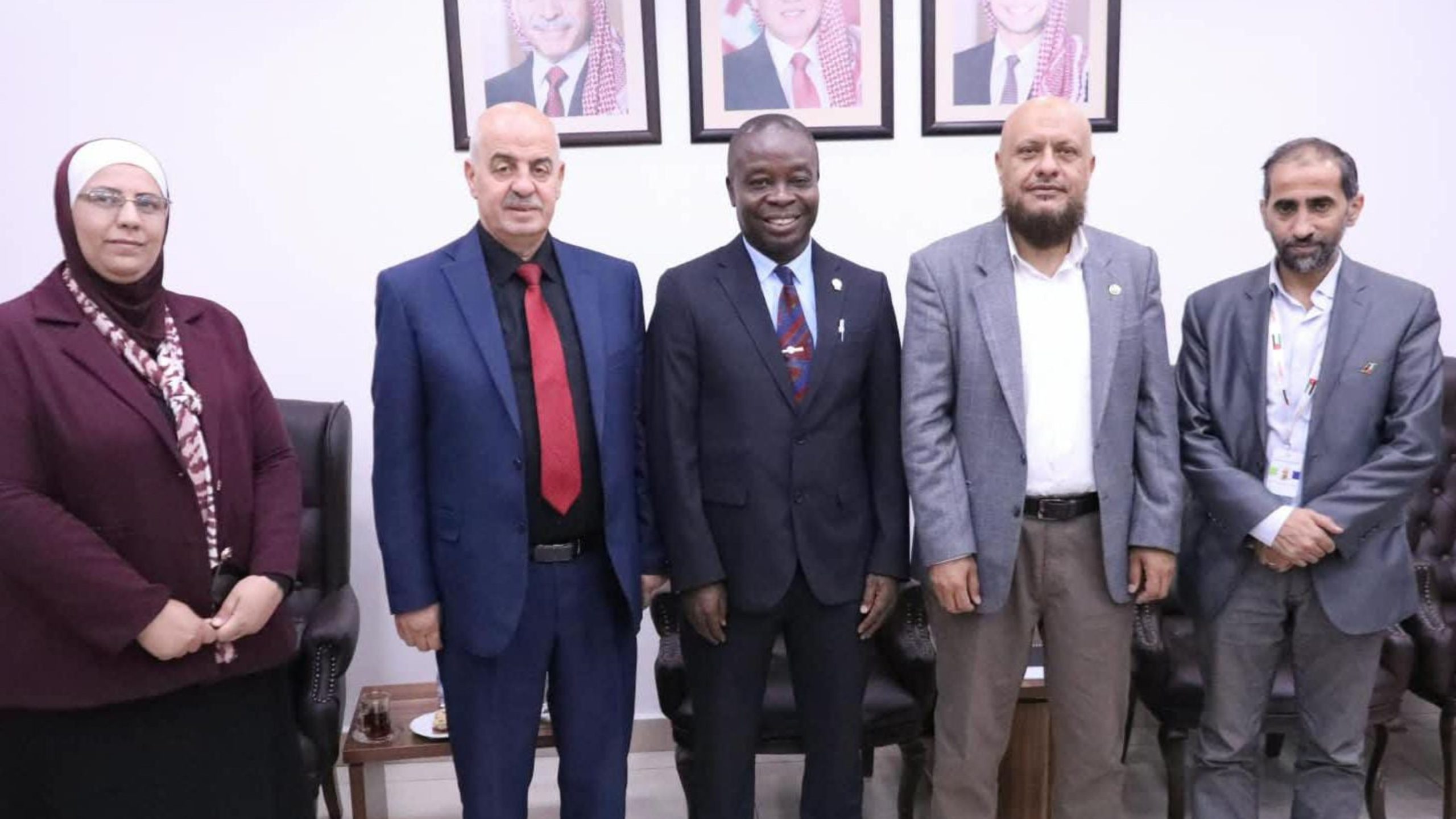
a visit made by Dr. Kofi Bimpong, Technical Officer in IAEA’s Project
Management Department.
During his visit to the center’s headquarters Thursday, Dr. Bimpong
reviewed the progress and achievements of the national project:
“Enhancing Food Security and Safety Using Nuclear Technologies in
Agriculture.”
Dr. Bimpong met with NCAR Director General Dr. Zakaria Musallam, in
the presence of the project coordinator, Dr. Mohammad Rifai.
The two sides discussed the project’s activities, research findings,
and the potential applications of nuclear technologies in developing
agricultural production and enhancing food security, particularly in
facing drought and salinity challenges.
The project, which is currently implemented during 2026 and 2027 in
cooperation with the Jordan Atomic Energy Commission, the Ministry of
Agriculture, the Jordan Food and Drug Administration, and NCAR, aims
to increase crop productivity by using minimal inputs and developing
more resilient varieties.
To combat drought and salinity, the center utilizes physical and
chemical mutation techniques.
In a statement, the center confirmed the project’s activities have
been 100% completed to date.
The center noted the cultivation and evaluation of “advanced”
mutations and strains of wheat, rice, and sesame, referring to the
progress in developing local wheat strains and a salt-tolerant
triticale crop, which has reached the third generation of mutations.
As another achievement, an expert in smart agriculture was hosted in
June 2026 to support research efforts and exchange expertise in
modern agricultural technologies.
According to the statement, the visit aimed to strengthen the mutual
scientific and technical partnership, exchange expertise in nuclear
technologies and their agricultural applications, and explore the
development of the national seed bank into a regional bank for Arab
countries.
The visit would also support development of the biological control
laboratory by providing equipment and training during the project’s
next phase.
//Petra// AG