Saudi Arabia’s Voluntary Carbon Market Fuels the Shift to a Low-Carbon

Under UAE President’s directives, UAE launches urgent relief response for Ghana flood victims

Combating Desertification and Drought: Qatar a Model in Preserving Natural Resources, Establishing Environmental Stability
UAE allocates US$30 million for emergency humanitarian response in El Obeid, calls for civilian protection, safe humanitarian aid access in Sudan

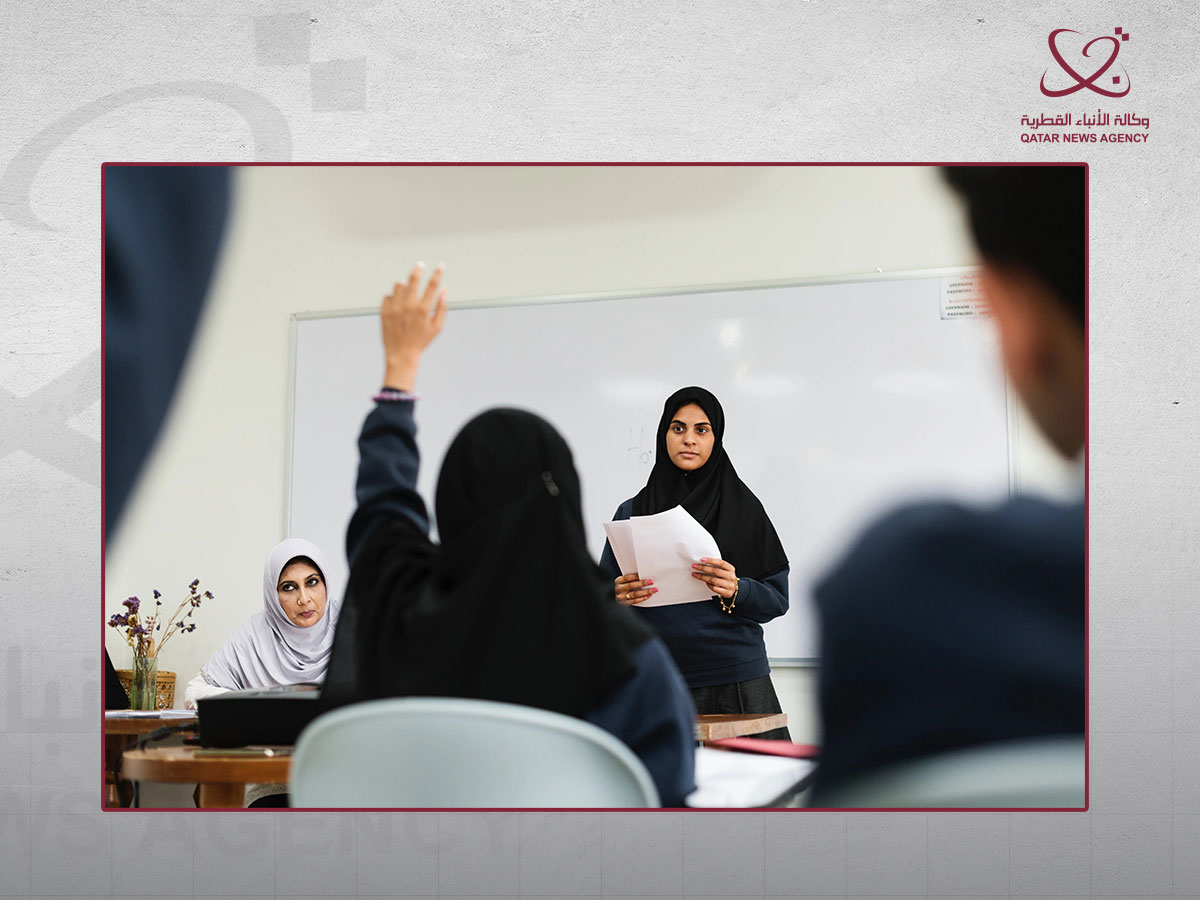
Doha, August 28 (QNA) – Under a legislative and institutional system that has consolidated the status of Qatari women, the journey of empowering them has become a model that reflects investment in human beings and their role in building society and achieving sustainable development, as long as the laws and constitutions guarantee women’s rights to education, work and active participation in various fields, while providing a supportive environment to achieve a balance between their family role and their contribution to national development.
Feminist models have gained educational and academic paths full of achievement and transformation, through which women have moved from learning and specialization positions to the fields of scientific research, academic leadership and knowledge creation, benefiting from the opportunities of education, higher education, scholarships and professional development that have contributed to building national competencies capable of contributing in various sectors.
The supportive environment provided to Qatari women in the education sector enabled them to overcome all the challenges that stood in their way, and they began to occupy important administrative positions in the education sector, through which they achieved a tangible impact, because from their point of view education is not just teaching, but a message, a responsibility, a profession, a behavior evaluation, and leaving a real impact.
Official studies and statistical bulletins issued by the Department of Educational Planning, Policies and Innovation at the Ministry of Education and Higher Education (MOEHE) pointed out that 4,031 female Qatari teachers taught in government schools and more than 30 taught in private schools.
The same studies showed that the number of Qatari women working in the educational administrative sector amounts to 5,176 in government schools and more than 50 in private schools. This highlights Qatari women’s standing and their ability to manage educational institutions that offer the best educational models, in light of educational experiences and tools.
In this regard, Assistant Undersecretary for Educational Affairs at MOEHE Maha Zayed Al Qaqaa Al Ruwaili affirmed that the presence of Qatari women has been closely linked to the development of the educational system since the launch of formal education in the State of Qatar. She noted that they were among the first national cadres who contributed to building the modern school, and then their role expanded to include the fields of administration, guidance, supervision, research and development, reaching leadership and decision-making positions.
The Assistant Undersecretary said in a special statement to Qatar News Agency (QNA) that the arrival of women to lead the MOEHE represents one of the most prominent milestones in the journey of Qatari women in the education sector.
She noted that HE Sheikha Ahmed Al Mahmoud assumed the position of Minister of Education in 2003 as the first Qatari woman to hold a ministerial role, after a distinguished educational career that began in the educational field and progressed through a number of leadership positions.
She added that the presence of women in the leadership of the ministry continued with HE Buthaina bint Ali Al Jabr Al Nuaimi assuming the position in 2021, followed by HE Lolwah bint Rashid bin Mohammed Al Khater in 2024, reflecting the continuity of the role of women in assuming the highest executive positions in the education system.
Al Ruwaili explained that the importance of this journey is not limited to women assuming the position of minister, but extends to the broad female presence at various leadership levels within the ministry, where women occupy a large number of leadership and supervisory positions, including assistant undersecretaries, department directors, heads of sections, mentors and supervisors.
This active female presence confirms the pivotal role of women in leading and developing the educational process, and participating in shaping its directions and making its decisions.
She noted that the 2025/2026 academic year witnessed a remarkable growth in the number of female students joining the scientific and specialized tracks in government schools, as the number of students enrolled in the scientific track reached 6,541, an increase of 4.2% compared to the previous academic year, while the number of female students in specialized schools reached 376, with a growth rate of 12.2%.
Al Ruwaili emphasized that these indicators reflect the growing trend of female students towards scientific and specialized paths, and the success of the ministry’s efforts in expanding quality educational options for them, which enhances their presence in the fields of science, technology and specializations related to future needs, and supports the building of more diverse academic and professional paths that are responsive to national development priorities.
She explained that investing in women also involves the participation of female talents in leading, supervising, and teaching specialized educational, technical, and banking institutions, including Qatar Technical Secondary School for Girls, Qatar School of Banking and Business Administration for Girls, and Qatar Schools of Science and Technology for Girls, which contributes to providing integrated specialized educational environments that open up promising horizons for female students in the fields of science, technology, innovation, and the financial sector.
The Assistant Undersecretary for Educational Affairs affirmed that empowering women in Qatar’s education sector is a strategic development priority and a long-term investment in human capital. She noted that every teacher, educational leader, researcher, innovator and student given an equal opportunity to pursue a field of study aligned with future needs adds value to the country’s human capital.
She said women continue to play a vital role in Qatar’s education landscape through their diverse contributions to teaching, leadership, research, innovation and driving change. Women remain key partners in preparing an educated and creative generation capable of advancing the country’s development and contributing to Qatar’s aspirations for a knowledge-based society and sustainable development.
Concluding her remarks to QNA, Al Ruwaili stressed that empowering women in education means empowering society as a whole. She added that enabling women to contribute their talents and expertise to the advancement of education brings fresh perspectives and helps create greater opportunities for progress and prosperity.
In a related context, President of Pre-University Education at Qatar Foundation Abeer Al Khalifa said Qatari women continue to play a pivotal role in shaping the future of education and preparing generations capable of contributing to the nation’s advancement. She said their academic qualifications, professional expertise and leadership capabilities reflect Qatar’s vision of investing in human capital.
Speaking to QNA, she said indicators from Qatar Foundation’s Pre-University Education sector reflect the growing and influential presence of Qatari women across educational and administrative levels. Eighty percent of Qatari female employees hold higher academic qualifications, while women account for 66% of Qatari educational leaders. Qatari women also represent 75% of the sector’s total Qatari workforce.
She explained that these figures are more than statistical indicators; they demonstrate the strong commitment of Qatari women professionals to excellence and professional development. They also underscore the success of the inclusive and supportive educational environment provided by Qatar Foundation, which empowers women and creates opportunities for them to grow, advance and play an active role in leading education and innovation.
Al Khalifa affirmed that Qatari women have been key partners in building an integrated education system at Qatar Foundation since its establishment, which was founded on a joint initiative and forward-looking vision of the late HH the Father Amir Sheikh Hamad bin Khalifa Al-Thani, and HH Sheikha Moza bint Nasser, Chairperson of Qatar Foundation.
She noted that Qatari women today continue to play pivotal roles as teachers, leaders, education specialists, researchers and change-makers, contributing actively to the development of the education system and preparing generations equipped to meet the demands of the future.
Al Khalifa stressed that investing in women’s education and empowerment is a strategic investment in Qatar’s future and the sustainability of its development. She added that the achievements of Qatari women in education are a source of pride and inspiration for future generations, while underscoring their role as key partners in advancing comprehensive national development and strengthening a knowledge- and innovation-based economy.
Meanwhile, Assistant Dean for Student Affairs at the College of Nursing at Qatar University Dr. Noof Al Kuwari highlighted another dimension of Qatari women’s empowerment, bringing together professional practice, academia and institutional leadership. She said her academic and professional journey has been guided by a commitment to lifelong learning.
In remarks to QNA, Dr. Al Kuwari said her career began in clinical practice in 2014, when she became the first Qatari nurse to join Sidra Medicine. The experience strengthened her professional expertise and deepened her passion for nursing before she moved into academia eight years later, where she sought to contribute to the education and development of future Qatari nursing professionals.
She said her academic journey has included several significant milestones, including a bachelor’s degree in nursing from the University of Calgary in Qatar, followed by a master’s degree from the University of Glasgow in 2019 and a postgraduate certificate in pain management from the University of Edinburgh in 2021. In 2024, she became a Fellow of the Faculty of Nursing and Midwifery at the Royal College of Surgeons in Ireland.
She described her appointment as Assistant Dean for Student Affairs at Qatar University as an important leadership milestone in her career, adding that she hopes to pursue a doctoral degree as the next step in her academic journey.
Dr. Al Kuwari explained that academic work is a mission for her that goes beyond the boundaries of a job, combining teaching, scientific research, and community service, and offers a genuine opportunity to create a lasting impact that extends beyond the classroom.
She added that the role of a university professor is not limited to transferring knowledge, but also includes building students’ professional character, fostering critical thinking, and instilling values of responsibility, commitment, and excellence. She stressed her commitment to using scientific research to develop innovative solutions that advance education and healthcare practices, and emphasized that students’ success and achievements are an extension of the academic mission and a true investment in people.
Regarding the benefits of a supportive environment for women’s empowerment, Dr. Al Kuwari noted that the support provided by the wise leadership, along with the opportunities for equal access to education, scholarships, professional development, and leadership positions, played a pivotal role in enabling her pursuit of postgraduate studies, participation in scientific research, and assumption of leadership responsibilities within the university.
She added that graduating from the Qatar Leadership Centre in 2022 contributed to developing her leadership vision and refining her skills in institutional leadership and decision-making, and reinforcing the importance of innovation, empowering national talent, and creating a sustainable impact within institutions.
She also praised the academic environment provided by the healthcare sector at Qatar University, affirming that it has contributed to supporting scientific research, strengthening collaboration among various healthcare disciplines, and creating genuine opportunities to develop national leaders.
This, in turn, strengthened her ambition to contribute to the development of nursing education and the healthcare sector in the State of Qatar.
She also pointed out that the conducive institutional environment encouraged her to participate in national and international initiatives and represent the State of Qatar at academic forums, which strengthened her confidence in her ability to achieve further accomplishments and contribute to the advancement of health education in line with Qatar National Vision 2030.
Dr. Al Kuwari explained that scholarships, postgraduate studies, the support provided by national institutions, and working in distinguished academic and health environments all contributed to achieving her goals by honing her scientific and leadership skills.
She also praised the efforts of the wise leadership, particularly its strong emphasis on investing in people and empowering Qatari women, as well as the role of Qatar University and its academic environment in empowering national talent and promoting a culture of scientific research and innovation.
At the conclusion of her statements to QNA, Dr. Al Kuwari sent an important message to young Qatari women that ambition has no limits when coupled with determination and hard work, and that continuous learning is the true key to success.
On the applied academic side, Assistant Dean for Sciences and Applied Sciences at the College of Arts and Sciences at Qatar University Dr. Fatima Al Khayyat affirmed that her academic career has been a continuous journey of learning and development, beginning with a bachelor’s degree in zoology and culminating in a doctorate in medical entomology, which represented a pivotal stage in strengthening her research and scientific capabilities.
In similar statements to QNA, Dr. Al Khayyat said that moving into academia as a faculty member allowed her to interact with students and prepare a new generation of researchers. She explained that Qatari women have been able to achieve many of their academic and professional goals thanks to the support provided by the state in the fields of education, scientific research, and leadership. She highlighted the key advantages made available to Qatari women in the academic sector, including scholarships, particularly for postgraduate studies, research grants, an advanced scientific environment, modern laboratories, and training courses in leadership and the development of teaching methods, which have all shaped her academic journey.
She added that her research focuses on building the research capabilities of Qatar University students and developing environmentally friendly methods for pest control, thereby contributing to the protection of people and the environment and achieving sustainable development, in line with Qatar National Vision 2030. She explained that academic work, for her, represents more than just a job, but a mission and a responsibility toward society.