Jordan’s Q2 2026 GDP Expands 3.0%, Outperforming Regional Headwinds, International Forecasts
ENV-KUWAIT-SUSTAINABLITYKuwait strengthens environmental sustainability through strategic initiativesBy Zahra Al-Kadhmi

HLT-KUWAIT-SURGERYKuwait advances health sector with robotic, remote surgeryBy Mohammad Al-Moseb
Saudi Arabia’s Voluntary Carbon Market Fuels the Shift to a Low-Carbon

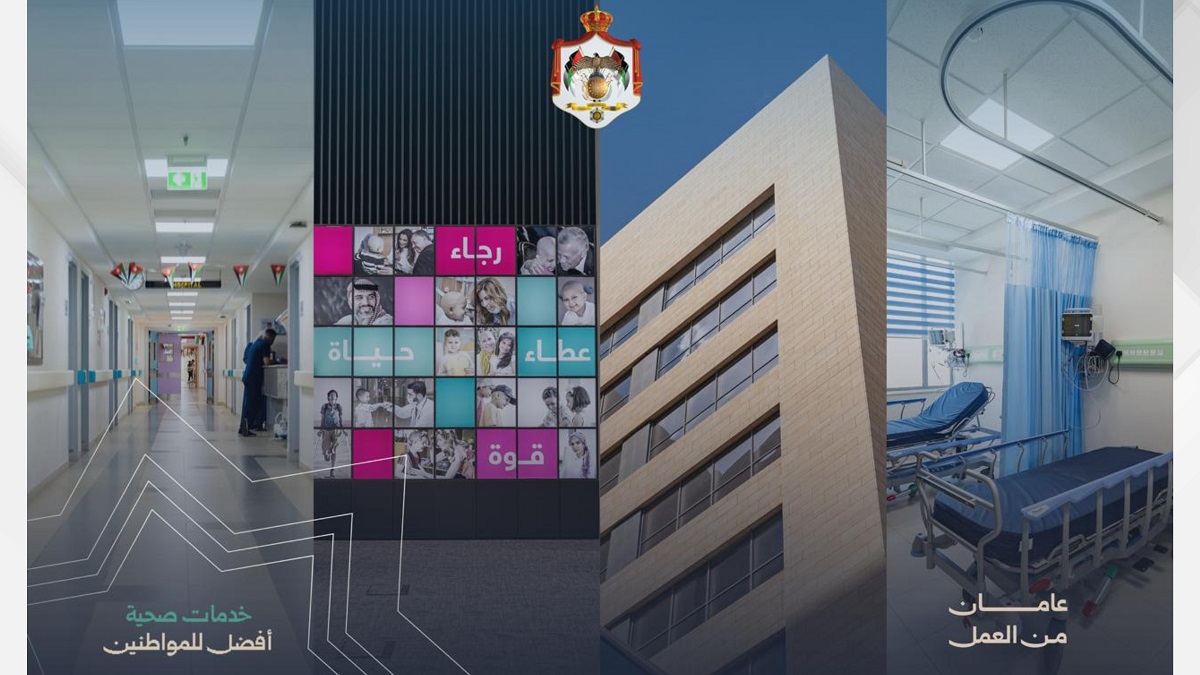
Amman, Sep. 19 (Petra) – Over the past two years, the Kingdom’s
health sector has witnessed a series of projects, decisions, and
programs aimed at expanding capacity of hospitals and health centers,
achieving better access of citizens to specialized services and
reducing waiting times and the need for travel between regions and
governorates.
Relevant efforts also focused on expanding digital health services,
improving quality of care and infrastructure, and enhancing the
capabilities and numbers of healthcare personnel.
According to sector data, a key aspect of this work focused on
developing Jordan’s hospitals and increasing their capacity to
provide specialized services, while simultaneously improving access
to healthcare nationwide and alleviating pressure on referral
hospitals.
In the north of the Kingdom, Princess Basma Hospital was opened and
developed with a capacity of 504 beds, which expanded the range of
health and specialized services provided to local residents.
As for Balqa, the first phase of the expansion and modernization of
Princess Iman Government Hospital was completed in seven months,
following a four-year delay.
This phase covered outpatient clinics and dialysis units, while work
continues on the second phase of the project.
In Madaba, the new Madaba Hospital project moved into the
implementation phase after a delay of nearly ten years, in a bid to
increase capacity and bring healthcare services closer to the
governorate’s residents.
As part of efforts to expand health coverage, “Reayah ” (Care)
program, designed to secure treatment for cancer patients, is set to
come into effect in early 2026. It will cover approximately 4.2
million citizens within eligible categories, including those under
the age of 19, others over the age of 60, and beneficiaries of the
National Aid Fund.
As for the program’s total cost of JD132 million, the government
covers JD124 million, while the King Hussein Cancer Foundation pays
JD8 million.
According to the data, the government has made two payments totaling
JD62 million and JD31 million, while the King Hussein Cancer Center
has treated approximately 2,000 patients covered by the agreement
since it came into effect.
Alongside the expansion of healthcare facilities, telemedicine
services have expanded through the Jordanian Digital Health Center,
aimed to bring specialized medical consultations closer to citizens
and reduce the need for travel between governorates.
The center offers a range of services, mainly specialized radiology
and consultations. Since its launch, and up to August 31,
approximately 49,488 patients have benefited from remote diagnostic
radiology services.
Additionally, 2,441 cases have benefited from remote intensive care
services, while 528 patients received remote cardiology care, 975
others received endocrinology care, and 111 received nutrition
services.
Furthermore, 625 patients benefit from remote dialysis services
monthly, as part of efforts to bring specialized services closer to
citizens.
Regarding primary healthcare, 14 new health centers have been
established, and 49 existing centers across the Kingdom’s
governorates have been rehabilitated and maintained, which expanded
service coverage and alleviated some of the pressure on hospitals.
//Petra// AG More…