HLT-KUWAIT-SURGERYKuwait advances health sector with robotic, remote surgeryBy Mohammad Al-Moseb
Saudi Arabia’s Voluntary Carbon Market Fuels the Shift to a Low-Carbon

Under UAE President’s directives, UAE launches urgent relief response for Ghana flood victims

Combating Desertification and Drought: Qatar a Model in Preserving Natural Resources, Establishing Environmental Stability

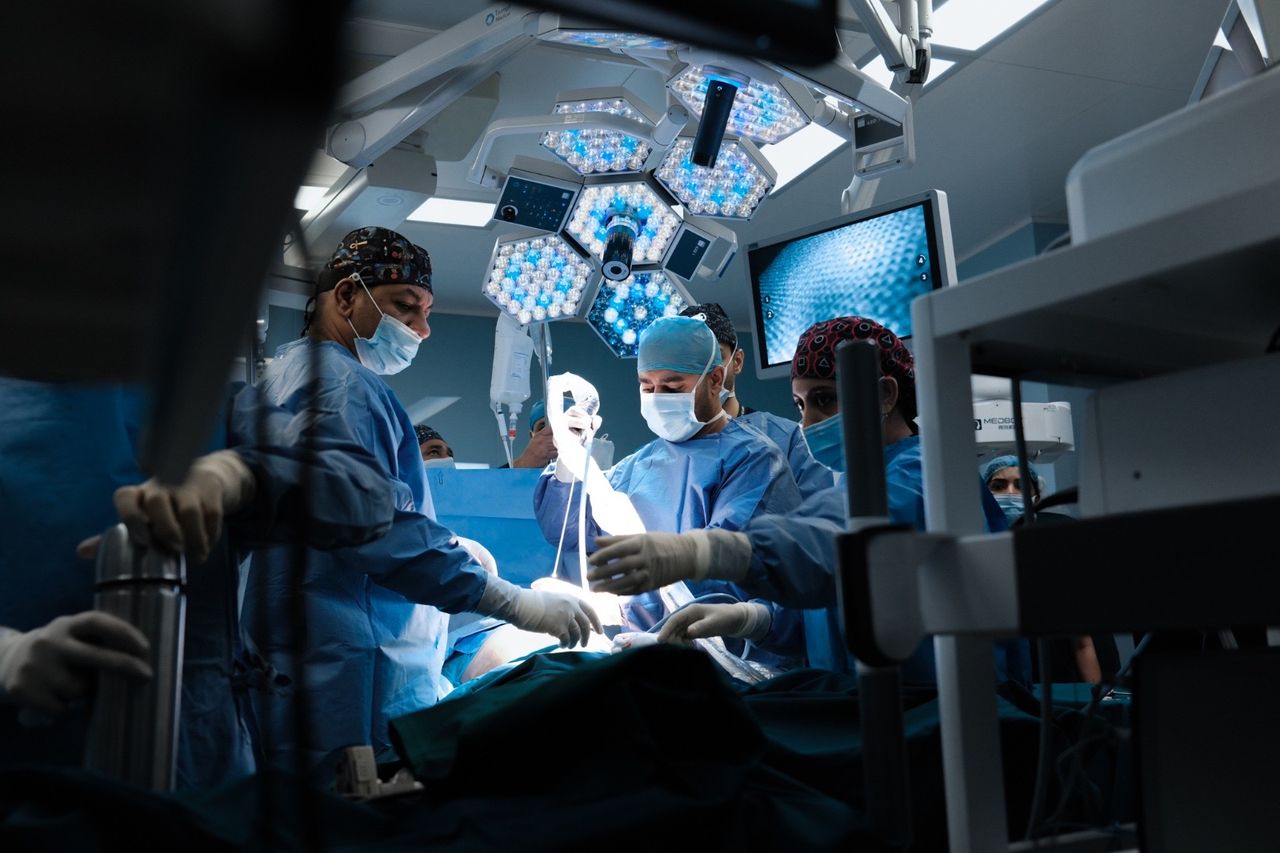
KUWAIT, Sept, Monday 21, 2026, (KUNA)(FANA) — Kuwait’s healthcare system has witnessed significant advances in recent years through the integration of modern and smart technologies, particularly robotic and remote surgery.Robotic surgery uses advanced control platforms that allow surgeons to perform highly precise procedures while providing high-definition, three-dimensional views of internal tissues.Undersecretary of the Ministry of Health Sheikh Dr. Salman Khalifa Al-Sabah told KUNA that developing surgical services depends on sustainable national capabilities combining medical expertise, quality equipment and safe practices.He stressed that medical progress should be measured by its contribution to healthcare quality and patients’ lives.He said robotic surgery is currently performed across several specialties at Sheikh Jaber Al-Ahmad, Farwaniya, New Jahra, Chest Diseases and Sheikh Sabah Al-Ahmad Urology centers.At Sheikh Jaber Al-Ahmad Hospital, the robotic surgery program began in 2019 and expanded across several specialties, reaching 1,145 procedures by Sept 4, 2026.The procedures covered urology, bariatric surgery, upper gastrointestinal surgery, hernia repair, colorectal and liver surgery, gynecology and obstetrics, and ear, nose and throat surgery.The hospital’s orthopedic surgery department began robot-assisted procedures in January 2024, with more than 115 cases performed using the technology.At New Jahra Hospital, the robotic surgery program began with its first procedure on April 27, 2025, reaching 155 operations by Sept 6, 2026.One hundred procedures were completed within six months of launching the program, reflecting growing expertise and coordination between surgical and nursing teams.At Chest Diseases Hospital, robotic technology has been used in thoracic and cardiac surgery, with 30 thoracic and 25 cardiac procedures performed.Al-Sabah said the technology can enhance visualization, instrument control and precision, and may enable less-invasive procedures for suitable cases.He noted that assessing its impact on hospital stays and recovery requires monitoring outcomes by procedure and patient condition against alternatives using clear scientific indicators.“Technology selection should be based on the patient’s interests, supported by documented and reviewed outcomes,” he said.The Ministry of Health has also expanded its experience into remote surgery, enabling specialized expertise to reach patients through connections between locations inside and outside Kuwait.The Sheikh Sabah Al-Ahmad Urology Center began remote robotic surgery on Dec 20, 2024, performing 15 successful procedures, including 12 international and three domestic operations.The international procedures included eight conducted remotely from Shanghai, China, two from Strasbourg, France, and one each from Muscat, Oman, and Padua, Italy.Patients remained at the center in Kuwait under the direct care of the medical team present alongside them.Among the documented cases was a radical prostatectomy led by a Kuwaiti surgeon from Strasbourg for a patient in Kuwait, broadcast during an international conference in July 2025.The procedure demonstrated national expertise while facilitating knowledge exchange on remote surgery applications.Al-Sabah said these experiences demonstrate the ability of national medical teams to use advanced connectivity to provide specialized surgical services while maintaining direct patient care.Cross-border cooperation also involved Sheikh Jaber Al-Ahmad Hospital and Scola Center at Cruz Vermelha Hospital in Brazil.A Kuwaiti medical team performed surgery on a patient in Brazil, an achievement documented by Guinness World Records on Sept 23, 2025, over a distance of 12,034.92 kilometers.The cooperation also included a procedure performed by a Brazilian team on a patient in Kuwait, demonstrating reciprocal cross-border surgical collaboration.Domestically, the gynecologic oncology unit at Sheikh Jaber Al-Ahmad Hospital and the obstetrics and gynecology department at Jahra Hospital conducted three remote procedures for uterine cancer patients in October 2025.In November 2025, Farwaniya Hospital’s surgery department cooperated with Sheikh Sabah Al-Ahmad Urology Center to treat a patient requiring gallbladder and left kidney removal.The gallbladder procedure was performed remotely from Farwaniya Hospital while the patient remained at the center, followed by kidney surgery by the center’s urology team.Al-Sabah said a surgeon from Farwaniya Hospital remained beside the patient to intervene if necessary, stressing the importance of clearly defined roles, emergency preparedness and team coordination.He described these achievements as the result of collective efforts and stressed the need for continuous training, scientific evaluation and stronger institutional cooperation.He said developing robotic surgery requires greater integration between healthcare services and digital infrastructure, while ensuring reliable connectivity, data protection and sustainable system operation.Investment assessments should cover equipment, training, maintenance and supporting infrastructure, with resources directed according to clinical needs, utilization efficiency and outcomes.Regarding regulation, he stressed the importance of clear requirements for training, professional responsibility and informed consent, particularly in cross-border surgery.He said continuous regulatory development is essential to protect patients’ rights and define the responsibilities of participating parties.Al-Sabah also emphasized progressive training, simulation, skills assessment and knowledge exchange involving surgeons, anesthesiologists, nurses and technical teams.Regarding equipment failures or communication disruptions, he said remote surgery programs should have clear emergency plans, qualified personnel beside the patient and the ability to switch to appropriate alternatives.He stressed the need to regularly test readiness and train teams in emergency response.Patient confidence, he said, begins with clearly explaining the surgeon’s role and control of the robotic system, as well as the benefits, risks and alternatives.He added that patients should receive clear information about the surgeon’s location and responsible care team, while their privacy and experiences must be respected.Al-Sabah affirmed Kuwait’s ambition to establish national medical capabilities combining science, expertise and responsibility, while using technology and cooperation to serve patients.He said the continued development of robotic surgery is supported by a strategic vision focused on investing in national medical personnel and training them to international standards.Through expanding remote surgical applications, Kuwait seeks to strengthen its position as a regional center for advanced medical services. (end)mnm.aai