Jordan’s Q2 2026 GDP Expands 3.0%, Outperforming Regional Headwinds, International Forecasts
ENV-KUWAIT-SUSTAINABLITYKuwait strengthens environmental sustainability through strategic initiativesBy Zahra Al-Kadhmi

HLT-KUWAIT-SURGERYKuwait advances health sector with robotic, remote surgeryBy Mohammad Al-Moseb

Saudi Arabia’s Voluntary Carbon Market Fuels the Shift to a Low-Carbon

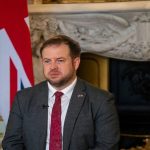
First Deputy Speaker of the House of Representatives Khamis Attiyeh,
chairing the first session, “Parliamentary Relations between Jordan
and the European Union,” said parliamentary diplomacy is essential to
deepening dialogue, exchanging expertise and strengthening links
between institutions and people.
Attiyeh said Jordan is continuing its political and democratic reform
process, including expanding participation and freedoms and
empowering women and youth.
He called for broader parliamentary dialogue with the European
Parliament on legislation, oversight, political parties and
parliamentary expertise. He said that stronger parliamentary ties
should form an integral part of the wider Jordan-EU partnership.
During the second session, “Bilateral Relations between Jordan and
the European Union,” Attiyeh said the partnership should move from
agreements to tangible projects and results.
He added that relations have evolved from the 1977 Cooperation
Agreement and the Association Agreement, which entered into force in
2002, to the comprehensive strategic partnership adopted in 2025.
He said the next phase should focus on investment and production,
noting that Jordan’s exports to the EU reached JD 632.7 million in
2025, compared with imports of approximately JD 3.33 billion.
Attiyeh discussed cooperation in water, energy and climate
adaptation, given Jordan’s severe water scarcity, saying such
projects could benefit Jordan while contributing to regional
stability.
He said Jordan seeks a long-term economic and development partnership
with Europe, while offering a stable gateway for European cooperation
with the region.
In the third session, “The Role of Jordan and the European Union in
Addressing Threats to Peace and Security,” Attiyeh said Jordan
continues to pursue diplomacy and dialogue while supporting the
Palestinian cause, protecting Jerusalem’s holy sites and working for
regional stability.
He added that Jordan would not become a battleground for other
conflicts, referring to recent Iranian attacks targeting the
Kingdom’s territory and airspace. “We reject any aggression against
the Kingdom’s territory, any violation of its airspace or any action
that endangers its citizens,” he said.
Attiyeh said the situation in Gaza, the continued occupation and
settlement expansion undermine prospects for peace.
He reiterated Jordan’s rejection of displacement, an alternative
homeland and the liquidation of the Palestinian cause, calling for an
independent Palestinian state with Jerusalem as its capital in
accordance with international law.
He urged preserving the historical and legal status quo in Jerusalem
under the Hashemite Custodianship and called on Europe to support the
political process, protect civilians, work to end the war and address
settlement-related activities.
Attiyeh praised the role of the Jordanian Armed Forces-Arab Army,
security agencies and national institutions in protecting the
Kingdom’s borders and sovereignty and highlighted Crown Prince Al
Hussein bin Abdullah II’s engagement on regional, youth and
development issues.
MPs Hala Jarrah, Maysoun Qawab’ah, Ayatollah Freihat, Haitham
Ziyadeen, Othman Makhadmeh and Amal Shaqran discussed the Palestinian
cause and the impact of regional developments.
They welcomed positions expressed by European peoples and parliaments
and called for greater EU support for international law and dialogue.
They discussed the role of Jordanian women and the challenges of
hosting refugees, particularly for infrastructure, education,
healthcare and water services.
The European delegation affirmed that the Palestinian cause remains
central to regional issues and that developments on the ground have
repercussions for regional security.
It reaffirmed Palestinians’ right to self-determination and an
independent state, while expressing concern over what it described as
declining respect for human rights and international law.
At the conclusion, Attiyeh described the EU as “a true partner in
this region and not merely an economic partner,” saying the
comprehensive strategic partnership and first Jordan-EU summit in
Amman earlier this year provide an opportunity to advance tangible
projects, investments and jobs in energy, water, technology and
transport.
He called for Europe to view the region not only through the lens of
crises but opportunities and discussed Jordan’s strategic location,
stable institutions and young population as assets that can support
cooperation in energy, water, food and economic security.
Attiyeh said that regional stability requires a just solution to the
Palestinian cause and warned that continued regional escalation,
including tensions involving Iran, threatens regional states, energy
security and economic corridors.
He called for a return to diplomacy, dialogue, respect for
sovereignty and international law.
He called for long-term partnerships in renewable energy and green
technology and greater international burden-sharing on migration and
refugees, noting Jordan’s significant responsibilities as a host
country and the EU’s role in supporting refugees and host
communities.
Attiyeh called for restoring trust in international institutions,
among nations and in the ability of law to provide protection.
//Petra// AK