Jordan’s Q2 2026 GDP Expands 3.0%, Outperforming Regional Headwinds, International Forecasts
ENV-KUWAIT-SUSTAINABLITYKuwait strengthens environmental sustainability through strategic initiativesBy Zahra Al-Kadhmi

HLT-KUWAIT-SURGERYKuwait advances health sector with robotic, remote surgeryBy Mohammad Al-Moseb

Saudi Arabia’s Voluntary Carbon Market Fuels the Shift to a Low-Carbon

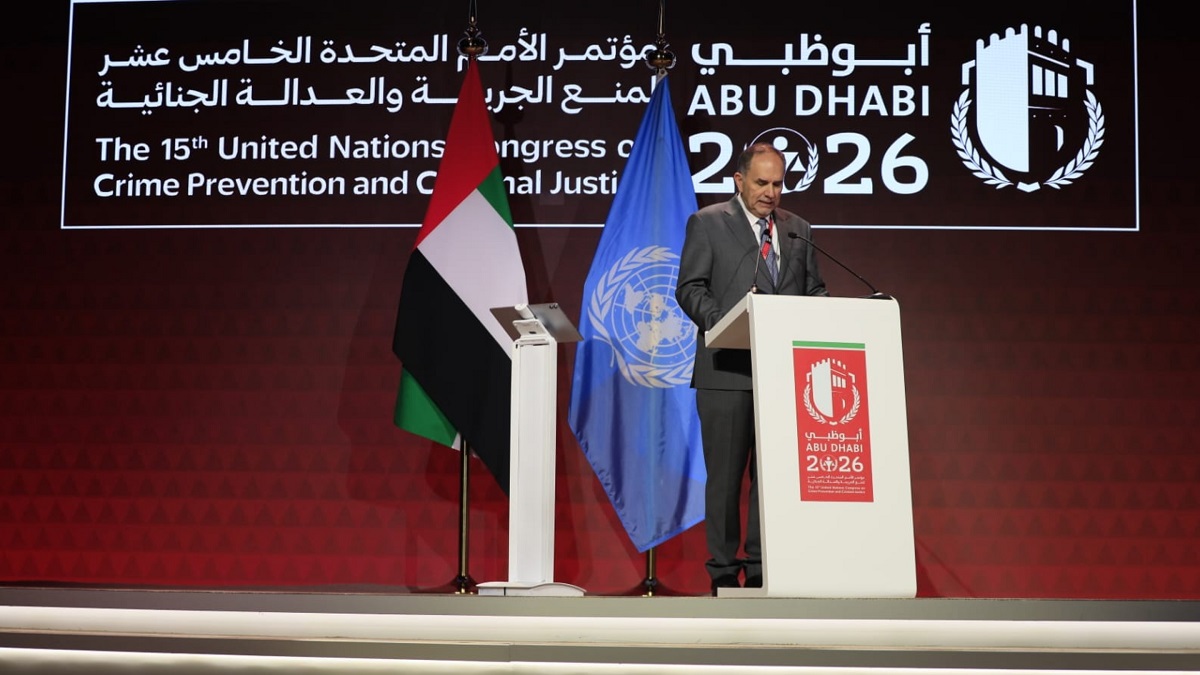
Amman, Sept. 27 (Petra) — Jordan presented its progress in
modernizing criminal justice, expanding digital court services and
improving access to legal aid at the 15th United Nations Congress on
Crime Prevention and Criminal Justice, underway in Abu Dhabi.
Justice Minister Bassam Talhouni, who heads the Jordanian delegation
to the Sept. 26-Oct. 1 conference, outlined the Kingdom’s reforms in
an address to representatives of UN member states, international and
regional organizations, and criminal justice experts.
Talhouni said strengthening criminal justice systems, upholding the
rule of law and improving international cooperation have become
increasingly important as countries confront evolving forms of crime
and more complex challenges to justice systems, according to a
Justice Ministry statement issued Sunday.
He said Jordan has pursued legislative, procedural and service
reforms aimed at making the justice system more efficient and
responsive to social, economic and technological change.
Digital transformation has been a major component of those efforts.
Jordan has expanded remote court proceedings and electronically
linked juvenile courts with care and rehabilitation facilities, while
correctional and rehabilitation centers have also been connected to
courts across the Kingdom.
More than 658,000 remote hearings involving correctional center
inmates have been conducted since 2019, Talhouni said.
Access to legal representation has also expanded through a dedicated
legal aid directorate and fund, which provide eligible beneficiaries
with representation before public prosecutors and courts. The number
of people receiving legal aid rose 56 percent in 2025 from the
previous year.
Talhouni said the ministry is also working to improve access to
justice for persons with disabilities through accessibility measures
and modifications to courthouses and other judicial facilities. More
than 80 percent of major buildings and courthouses have met
engineering accessibility requirements.
On family and juvenile protection, he highlighted the role of the
specialized Family and Juvenile Protection Department and
coordination among judicial, security, social and health authorities.
Jordan has simultaneously developed its legislative and institutional
frameworks governing family protection, children’s rights and
juvenile justice, he said.
Talhouni also addressed efforts to combat narcotics and transnational
organized crime, saying the number of drug cases and people using
drugs fell 19 percent in 2025 compared with 2024.
He said Jordan continues to work with regional and international
partners against organized crime, particularly through greater
cooperation and exchanges of information and expertise.
The minister also underscored Jordan’s commitment to protecting
refugees’ rights and ensuring access to legal protection and
essential services, while pointing to the pressures the Kingdom faces
as a host country.
Jordan is preparing a comprehensive national human rights plan that
will set out a roadmap for strengthening the rule of law, alongside
continued legislative reviews and work on related national
strategies, Talhouni said.
The Kingdom’s participation in the UN congress reflects a broader
drive to modernize its justice system through legislative reform,
technology and innovation, institutional capacity building and
stronger international cooperation.
Jordan’s delegation includes Ambassador to the United Arab Emirates
Majed Qatarneh, along with officials from the Justice Ministry and
the Jordanian Embassy in Abu Dhabi.
//Petra// RZ