
Jordan’s Q2 2026 GDP Expands 3.0%, Outperforming Regional Headwinds, International Forecasts

ENV-KUWAIT-SUSTAINABLITYKuwait strengthens environmental sustainability through strategic initiativesBy Zahra Al-Kadhmi

HLT-KUWAIT-SURGERYKuwait advances health sector with robotic, remote surgeryBy Mohammad Al-Moseb

Saudi Arabia’s Voluntary Carbon Market Fuels the Shift to a Low-Carbon

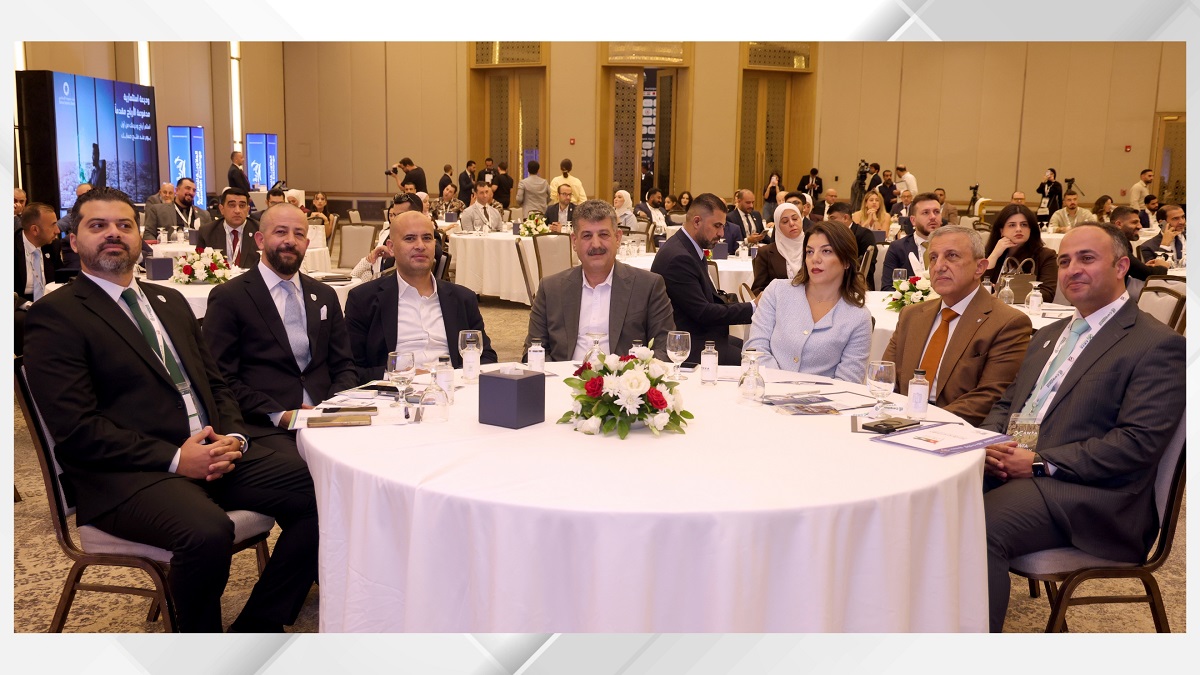
Amman, Sept. 30 (Petra) — The first Arab Worldwide Freight Alliance
(AWFA) conference opened in Amman on Wednesday, bringing together 100
freight and logistics companies from 18 Arab countries to forge
regional partnerships, improve supply-chain connectivity and open new
markets for member companies.
The conference will see the launch of the first Jordanian-Arab
platform connecting companies and institutions operating in freight
forwarding, customs clearance and logistics services in Jordan and
across the Arab region.
Its program includes discussions on Jordan’s Economic Modernisation
Vision and the Kingdom’s logistics position, the challenges and
opportunities shaping Arab supply chains, and the role of women in
the logistics sector. Bilateral business meetings are also being held
to develop partnerships among participating companies.
Jordan Maritime Commission Director-General Ahmad Asasleh, who opened
the conference on behalf of the ministers of transport and labor,
said efficient and resilient supply chains increasingly depend on
stronger integration across the transport and logistics industry.
Ports, freight forwarders, shipping lines, logistics zones, road
transport operators and regulators are no longer separate components,
he said, but interconnected parts of a single system in which
improvements at one point can raise efficiency across the entire
supply chain.
Asasleh said Jordan is working to strengthen the competitiveness of
Aqaba Port as the Kingdom’s maritime gateway and a key link in trade
and supply chains, while developing the surrounding business
environment to keep pace with regional and international changes in
transport and logistics.
The Jordan Maritime Commission, he added, is advancing digital
transformation, improving procedures and services, and strengthening
maritime safety and security in line with international standards.
Asasleh stressed that closer public-private cooperation is essential
to the sector’s efficiency and sustainability, combining the private
sector’s expertise, flexibility and capacity for innovation with a
regulatory environment that supports transparency and
competitiveness.
Senate Labor and Social Development Committee Chairman Issa Murad
said the conference comes as disruptions to global shipping and
supply chains underscore the need for stronger regional logistics
cooperation and more integrated transport networks.
Trade and logistics have been identified as priority sectors under
Jordan’s Economic Modernisation Vision, he said, adding that new
trade corridors and shifts in global commerce require deeper
coordination among Arab countries and companies.
Murad said importers and traders increasingly operate across multiple
markets and deal with numerous freight providers, reinforcing the
need for networks that connect different stages of the supply chain
and provide more efficient and flexible options.
Stronger logistics alliances, he added, could help reduce freight
costs, improve operational efficiency and delivery times, and support
the competitiveness of trade and the wider economy.
He also highlighted the role of the Ministry of Transport, Jordan
Customs, the association representing customs clearance and freight
companies, and the Jordan Shipping Association in addressing
challenges facing trade and maintaining the flow of goods.
AWFA founder and president Odeh Ramahi said the alliance was created
to bring together Arab freight and logistics companies that have
traditionally operated separately and turn their expertise, networks
and capabilities into shared commercial opportunities.
Rather than relying solely on established global networks, Arab
freight agents should be able to build their own interconnected
network and play a direct role in shaping its future, he said.
Ramahi said AWFA’s success would be measured by whether it can build
trust among members and translate business relationships into actual
transactions, particularly by helping smaller companies enter new
markets and find reliable partners in countries where they seek to
operate.
Changing shipping routes, market shifts, conflicts, corridor closures
and supply-chain disruptions have increased the need for dependable
networks and genuine partnerships, he added.
AWFA Vice President Tamer Abu Saadat said the alliance aims to go
beyond creating another industry network by establishing a practical
platform through which Arab companies can reach new markets, identify
trusted partners and turn cooperation into business and investment
partnerships.
The broader goal, he said, is to build an interconnected Arab
logistics network capable of competing, expanding internationally and
connecting regional companies more effectively with global markets.
//Petra// RZ