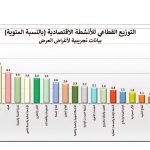
Jordan’s Q2 2026 GDP Expands 3.0%, Outperforming Regional Headwinds, International Forecasts
ENV-KUWAIT-SUSTAINABLITYKuwait strengthens environmental sustainability through strategic initiativesBy Zahra Al-Kadhmi

HLT-KUWAIT-SURGERYKuwait advances health sector with robotic, remote surgeryBy Mohammad Al-Moseb

Saudi Arabia’s Voluntary Carbon Market Fuels the Shift to a Low-Carbon


Khartoum, (SUNA) – Minister of Culture, Information, Antiquities and Tourism Khalid Al-Eisir said Sudan is pursuing what he described as “last-chance diplomacy” in dealing with the developments of the war and efforts aimed at achieving peace, stressing that Sudanese-Sudanese dialogue represents the path to lasting peace and that the government’s restraint does not reflect weakness, but rather constitutes a deliberate policy aimed at exhausting political, legal and diplomatic pressure tools.This came during an interview with the Egyptian English-language newspaper Ahram Online, which addressed a range of political, security and regional issues, as well as the government’s vision for the peace process and Sudanese-Sudanese dialogue, Sudan’s positions toward neighboring countries and issues of common concern, foremost among them the Grand Ethiopian Renaissance Dam (GERD) and Sudanese-Egyptian relations. The interview also addressed developments in the war in Sudan, the government’s position on initiatives and efforts aimed at ending it, its vision of the role of the international community and the UN Security Council, its position on the Rapid Support Forces (RSF) militia and the conditions for ending the war, as well as issues of social peace, Sudan’s unity and the future of the Sudanese state. Al-Eisir said the government does not impose conditions or a predetermined agenda for dialogue, noting that President of the Transitional Sovereignty Council (TSC) and Commander-in-Chief of the Armed Forces, General Abdel-Fattah Al-Burhan, is working to create the appropriate environment for dialogue. He said the government had closed the chapter on external initiatives, considering Egypt an important key to the success of the dialogue. He stressed that the government is doing everything in its power to preserve the dignity of the Sudanese people and safeguard national sovereignty, affirming that the legitimacy sought by the government is “from the people and for the people,” rather than from an elite speaking in their name from outside the country. He said the government is backed by popular will and broad support. Regarding the war, Al-Eisir said dialogue is the path that opens prospects for peace and brings the war to an end, rather than being an alternative to ending it. He stressed that if the RSF militia lays down its weapons and accepts the conditions set by the Commander-in-Chief of the Armed Forces, the war can end “today, not tomorrow.” The minister explained that restraint is a deliberate policy aimed at exhausting political, legal and diplomatic pressure tools, and is not an indication of Sudan’s weakness. He noted that Sudan is capable of responding, but places the security of the Red Sea and regional stability at the forefront of its considerations. On regional issues, Al-Eisir affirmed that Sudan and Egypt are aligned in their position on the Grand Ethiopian Renaissance Dam (GERD) and rejection of unilateral Ethiopian measures, stressing that Sudan’s water security is part of its national security and that any harm to the two downstream countries is unacceptable. He said Al-Fashaga issue concerns Sudanese territory “100 percent” and should not be used as a means of exerting pressure on Sudan. He also said there is no evidence of Sudan’s involvement in supporting the Tigray region, describing Ethiopian accusations in this regard as an attempt at justification and “throwing dust in the eyes.” The Minister of Culture, Information, Tourism and Antiquities affirmed that Sudan has not hosted organizations hostile to the governments of neighboring countries, out of adherence to the principle of good-neighborly relations and concern for regional security. He also stressed Sudan’s rejection of Ethiopia hosting RSF Commander Mohamed Hamdan Dagalo “Hemedti.” Regarding Sudanese-Egyptian relations, Al-Eisir described Egypt as “the warm embrace of the Sudanese,” affirming that Sudan counts on its supportive position toward Sudan’s national causes. The minister criticized the international community’s position toward Sudan, saying it had misjudged the Sudanese government and failed to listen to the voice of the street. He called for a reconsideration of its support for a limited group that, he said, lacks genuine popular backing. Regarding the UN Security Council, he said Sudan has friends within the Council who possess influence, including the ability to exercise the veto, noting that Western attempts to impose positions on Sudan within the Council had failed because they aligned with the positions of the rebellion. With regard to Sudan’s future, Al-Eisir affirmed that Darfur and Kordofan are emotionally, nationally and historically connected to the Sudanese state and reject secession. He also stressed that previous peace agreements were largely based on top-down and elite-driven ideas that failed to address societal issues, calling for the social vision of dialogue to emerge from the dialogue table itself and to be based on peace, integration, coexistence and the future of the Sudanese state.BH/BH