Jordan’s Q2 2026 GDP Expands 3.0%, Outperforming Regional Headwinds, International Forecasts

ENV-KUWAIT-SUSTAINABLITYKuwait strengthens environmental sustainability through strategic initiativesBy Zahra Al-Kadhmi

HLT-KUWAIT-SURGERYKuwait advances health sector with robotic, remote surgeryBy Mohammad Al-Moseb

Saudi Arabia’s Voluntary Carbon Market Fuels the Shift to a Low-Carbon

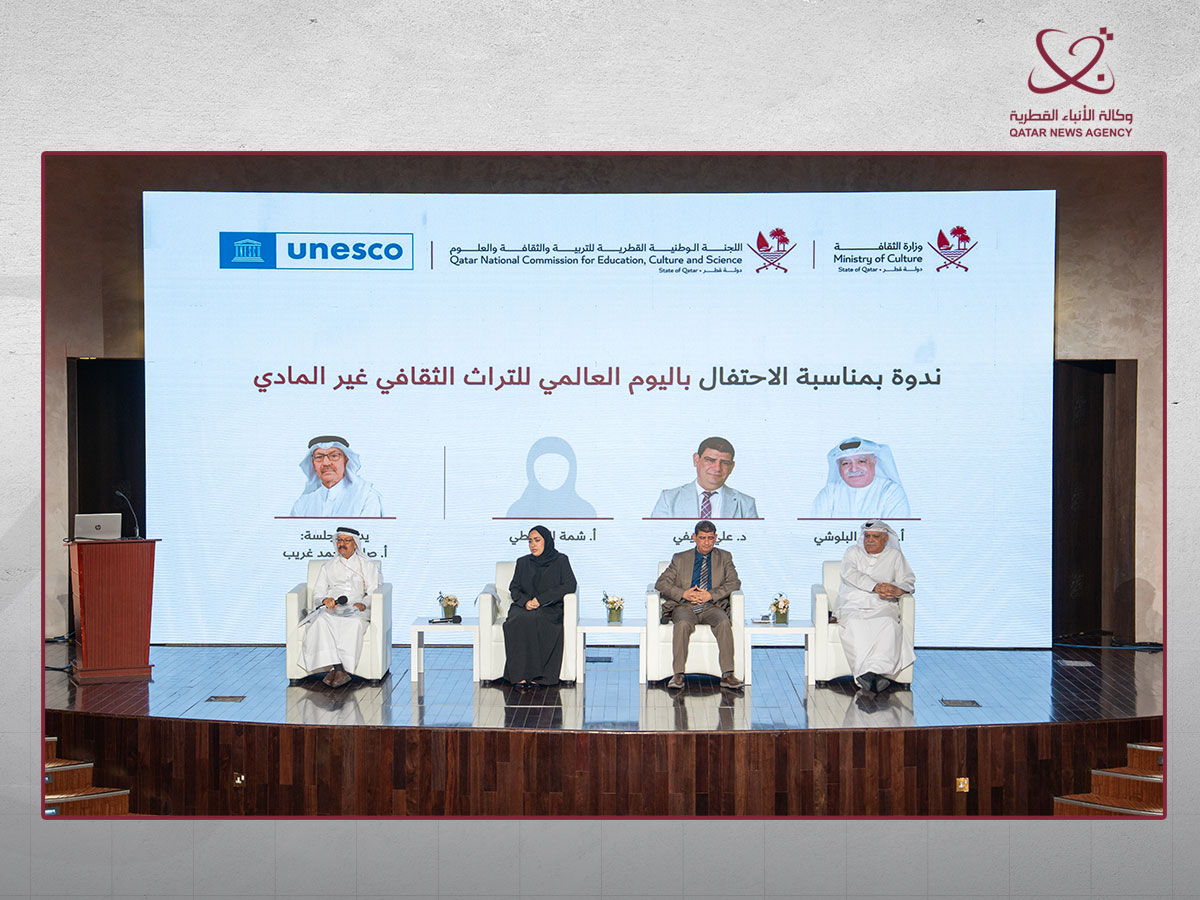
Doha, October 18 (QNA) – The State of Qatar, represented by the Ministry of Culture, celebrated the International Day of Intangible Cultural Heritage, observed annually on October 17, through a series of events organized in collaboration with the Qatar National Commission for Education, Culture and Science and the UNESCO Regional Office in Doha.
The celebration featured a live performance of Qatari Ardah (traditional dance), an art and heritage exhibition showcasing traditional crafts, and the presentation of authentic local cuisine. Additionally, a documentary film was screened, highlighting the State’s efforts to document and safeguard its intangible cultural heritage.
In her remarks on the occasion, Director of Heritage and Identity Department at the Ministry of Culture Sheikha Najla bint Faisal Al-Thani stated that cultural heritage in Qatar receives significant attention, rooted in a firm belief in the importance of preserving, documenting, and transmitting it to new generations. She noted that such heritage serves as a fundamental pillar for strengthening national belonging and consolidating cultural identity.
She pointed out that preserving this legacy is a collective responsibility, requiring the concerted efforts of cultural institutions, the local community, and the heritage bearers who serve as its living memory.
Sheikha Najla emphasized that safeguarding heritage extends beyond merely keeping records and documents; it encompasses the active practice, teaching, and integration of these traditions into daily life. This includes leveraging modern technology for documentation and dissemination, while ensuring the authenticity of the heritage is maintained and the specificities and rights of its bearers are fully respected.
For his part, Representative of the United Nations Educational, Scientific and Cultural Organization (UNESCO) to the Gulf States and Yemen, and Director of its Doha Office, Salah Khaled expressed in a statement to Qatar News Agency (QNA) his appreciation for the State of Qatar’s efforts in safeguarding intangible cultural heritage. He noted that this commitment extends beyond the national level to the broader Arab region, and the Gulf states in particular, while commending Qatar’s pivotal role in the successful inscription of “Bisht” as an element of this intangible heritage.
He emphasized UNESCO’s recognition of Doha’s efforts and its steadfast commitment to international conventions. This dedication was further demonstrated by Qatar’s leadership of the joint Arab bid to inscribe “Arab Bisht” on UNESCO’s Representative List of the Intangible Cultural Heritage of Humanity, an achievement that underscores the value of collective action in highlighting elements of our shared cultural legacy.
Meanwhile, Cultural heritage expert at the Ministry of Culture Hamad Saeed Al Baloushi highlighted the successes achieved by the State in this field. He affirmed that Qatar’s leadership of the joint Arab initiative, which led to the inclusion of “Arab Bisht” on UNESCO’s Representative List of the Intangible Cultural Heritage of Humanity during the organization’s meetings in India, is a significant milestone. It serves as clear evidence of the State’s confident approach and sustainable vision for protecting its cultural heritage and faithfully transmitting it to future generations.
Researcher on international affairs and organizations at the Qatar National Commission for Education, Culture and Science, Hamda Al Abdullah emphasized that education serves as the most vital pillar and a secure pathway for ensuring the sustainability and preservation of heritage.
She stated that the National Commission believes that fostering a passion for heritage among younger generations, by providing them with opportunities to learn directly from craftspeople and bearers of traditional knowledge, strengthens their sense of national belonging and ensures the continuity of this cultural legacy.
International affairs researcher at the Qatar National Commission for Education, Culture and Science (QNCECS) Shamma Al Sulaiti presented a paper to the attendees titled The Role of UNESCO National Commissions in Utilizing Artificial Intelligence for the Safeguarding of Intangible Cultural Heritage.
Researcher in history and heritage, Dr. Ali Afifi presented a paper on Challenges in the Digitization of Intangible Cultural Heritage. He highlighted technical obstacles arising from the rapid pace of digital transformation and the obsolescence of modern media formats, while also warning of the implications that globalization and the concept of “liquid modernity” may have on the preservation and cohesion of national identities.
Program Associate for Culture at the UNESCO Regional Office for the Gulf States and Yemen Dr. Jawida Mansour commended the State of Qatar’s steadfast commitment to protecting its heritage. She noted that the celebration of the third International Day of Intangible Cultural Heritage reflects a dedicated effort to safeguard traditions passed down through generations and to integrate them into contemporary life. (QNA)