Jordan’s Q2 2026 GDP Expands 3.0%, Outperforming Regional Headwinds, International Forecasts

ENV-KUWAIT-SUSTAINABLITYKuwait strengthens environmental sustainability through strategic initiativesBy Zahra Al-Kadhmi

HLT-KUWAIT-SURGERYKuwait advances health sector with robotic, remote surgeryBy Mohammad Al-Moseb

Saudi Arabia’s Voluntary Carbon Market Fuels the Shift to a Low-Carbon

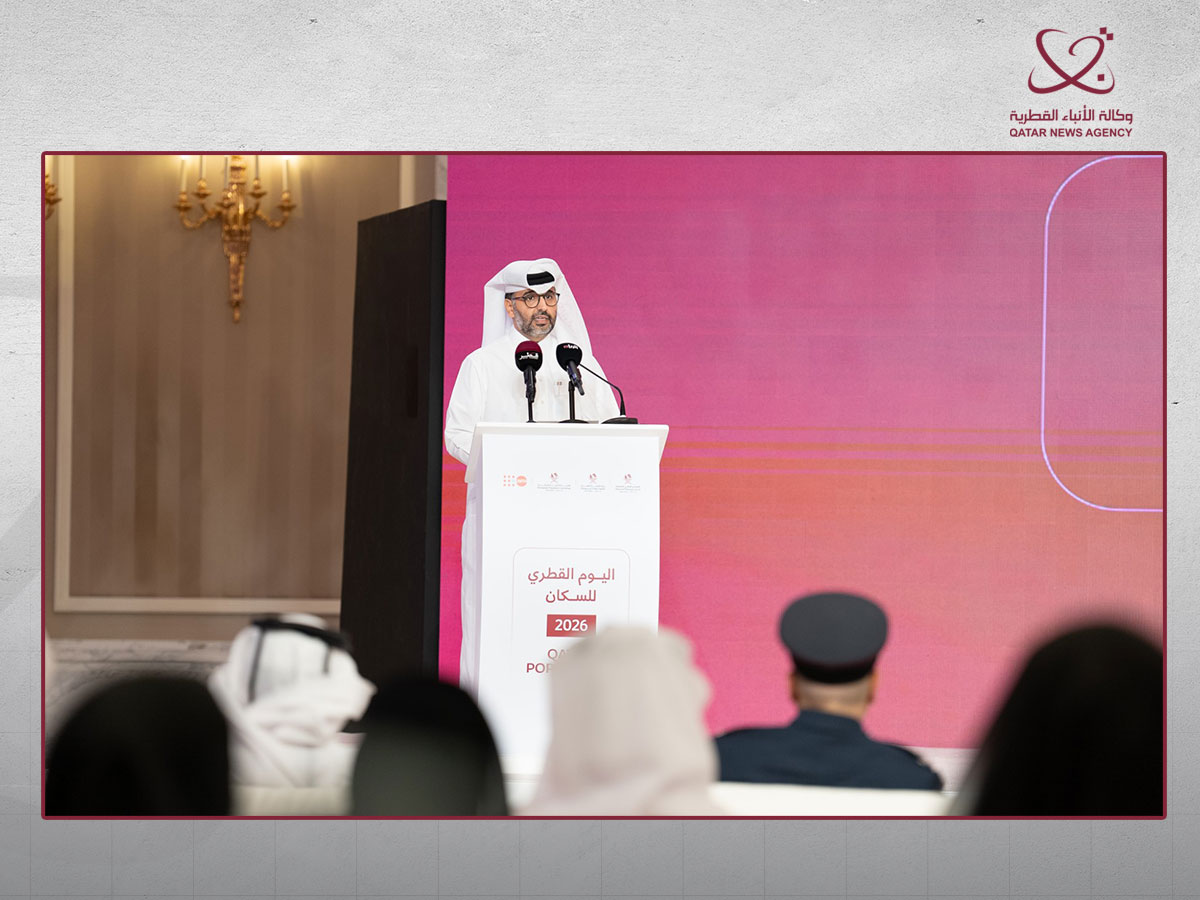
Doha, October 18 (QNA) – The Permanent Population Committee (PPC) held an event to mark Qatar Population Day on Sunday under the theme “Population and Quality of Life in a Changing World: For Better Health and a Sustainable Future.”
Organized in collaboration with the Ministry of Public Health and the United Nations Population Fund (UNFPA), the event brought together a distinguished group of experts, policymakers, and representatives of national entities.
HE Secretary-General of the National Planning Council and Chairman of the Permanent Population Committee Dr. Abdulaziz bin Nasser bin Mubarak Al Khalifa opened the event with welcoming remarks. He said: “Enhancing quality of life in the State of Qatar lies at the heart of our comprehensive development journey. Through Qatar National Vision 2030 and the Third National Development Strategy, the human, social, economic and environmental dimensions of development come together to build a prosperous society in which people enjoy high levels of well-being and quality of life.”
His Excellency added: “The importance of data- and evidence-based population policies is increasingly evident, not only in monitoring demographic shifts but also in anticipating their implications and translating them into actionable, measurable policies and programs. The establishment of the National Statistics Centre within the General Secretariat of the National Planning Council, together with the launch of the National Data and Statistics Strategy, has strengthened our capacity to provide accurate, timely and reliable data and transform it into knowledge that supports decision-making.”
Highlighting Qatar’s progress across global human development and quality-of-life indicators, His Excellency noted that these achievements reflect sustained, integrated national efforts that Qatar’s Third Population Policy (2023–2027) continues to build upon by striking a balance between population growth and development requirements.
In his remarks, HE Minister of Public Health Mansoor bin Ebrahim Al Mahmoud highlighted the importance of healthy longevity as a key pillar of quality of life and a sustainable future, particularly in light of increasing life expectancy.
His Excellency indicated that healthy longevity is a holistic concept encompassing a way of life shaped by multiple factors, including mental health, the role of the family, proper nutrition and the environment.
HE the Minister of Public Health underscored the importance of cooperation and coordination between government entities and the private sector in promoting healthy longevity. He also highlighted the role of statistics and data provided by the National Planning Council in supporting future planning. He reaffirmed the Ministry of Public Health’s commitment to supporting these efforts and strengthening preventive health services throughout the life course, from childhood through older age, by developing a highly skilled healthcare workforce and harnessing modern technologies and artificial intelligence to further enhance health services.
For his part, UNFPA Representative for the Gulf Cooperation Council (GCC) States Jocelyn Fenard delivered remarks in which he underscored the importance of the strategic partnership with the State of Qatar and its role in supporting evidence-based population policies. He also commended Qatar’s significant development achievements, highlighting its success in leveraging its resources to achieve tangible gains in human development, education and healthcare over recent decades.
Qatar Population Day 2026 featured two panel discussions bringing together a distinguished group of officials, experts, and representatives of national entities. The first session examined the impact of demographic shifts on the health sector, highlighting key national policies and initiatives aimed at promoting health, strengthening preventive efforts, and improving well-being and quality of life. The second explored the role of national partnerships and development policies in advancing quality of life and anticipating future priorities, with a view to strengthening cross-sectoral integration.
The event concluded with a set of recommendations aimed at supporting national efforts to enhance quality of life, promote health and well-being, and further embed evidence-based planning in addressing demographic transformations and future development needs.
The recommendations called for strengthening national partnerships among government entities, the private sector and civil society; developing an integrated system for population, social and health data; strengthening the integration of demographic variables into health planning; expanding prevention and healthy lifestyle programs to reduce disease prevalence; promoting mental health and social well-being; leveraging digital transformation and artificial intelligence in the health sector; and establishing a permanent national mechanism for dialogue and coordination on population and quality-of-life issues.
The event forms part of the PPC’s ongoing efforts to foster public dialogue on population issues in alignment with sustainable development plans and evolving demographic and social trends. It also supports the development of national policies and initiatives aimed at enhancing quality of life and contributing to a healthier, more sustainable society. (QNA)