
Jordan’s Q2 2026 GDP Expands 3.0%, Outperforming Regional Headwinds, International Forecasts
ENV-KUWAIT-SUSTAINABLITYKuwait strengthens environmental sustainability through strategic initiativesBy Zahra Al-Kadhmi

HLT-KUWAIT-SURGERYKuwait advances health sector with robotic, remote surgeryBy Mohammad Al-Moseb

Saudi Arabia’s Voluntary Carbon Market Fuels the Shift to a Low-Carbon

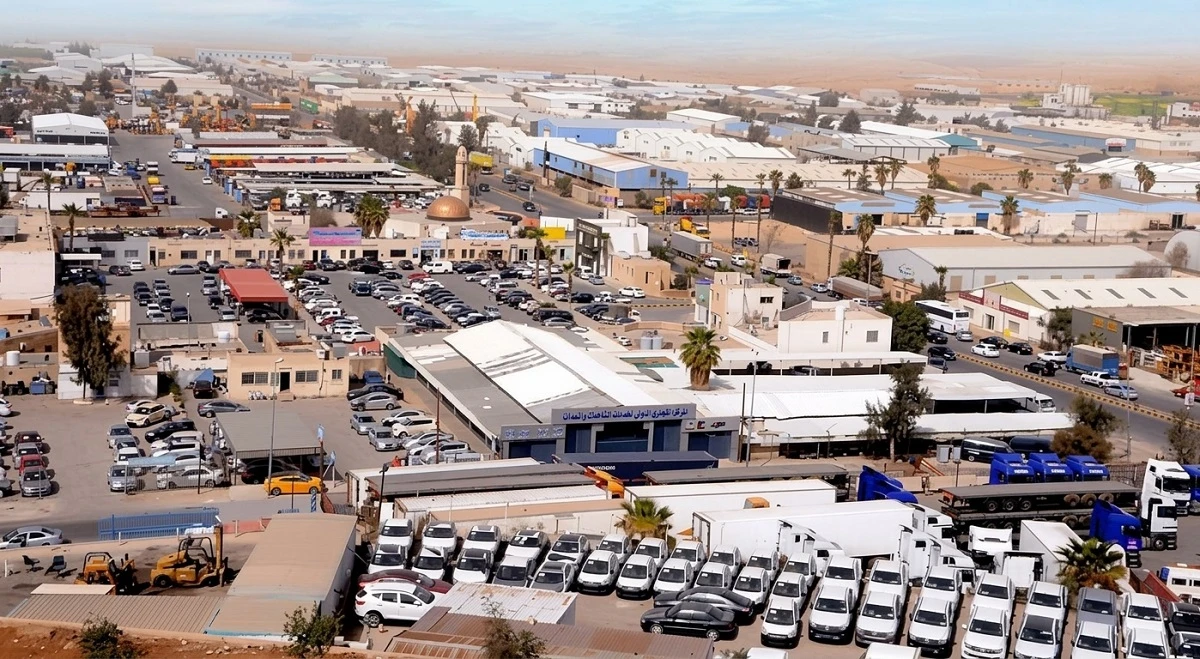
Zarqa, Oct 21 (Petra) – Zarqa Free Zone increasingly establishes
itself as “a vital strategic economic pillar” with an impact on the
flow of goods into both the local market and countries across the
region, according to officials.
The growth in commercial activity recorded by the zone since the
start of the year highlights the government’s efforts to foster an
attractive investment climate that bolsters the zone’s commercial and
industrial infrastructure, facilitates the movement of goods, and
enhances overall economic activity, they said.
Zarqa Free Zone indicators underscore its pivotal role within the
regional and international trading ecosystem, said Abdul Hamid
Al-Gharaibeh, Director General of Jordan Free and Development Zones
Group.
He noted the zone’s capacity to attract investments and create a
business environment backing commercial, industrial, and logistical
activities.
The Group constantly develops infrastructure, enhances the efficiency
of services to investors, expands digital transformation, and
automates procedures, he pointed out.
These efforts aim to simplify business operations, improve
operational efficiency, and bolster the competitiveness of Jordan’s
free zones, enabling them to keep pace with economic shifts and
market demands, he added.
The next phase requires leveraging existing resources to attract
high-quality investments and broaden the scope of economic
activities, thereby boosting Jordan as a regional hub for trade,
re-export, and logistics, while supporting economic growth and job
creation, said Al-Gharaibeh.
He also highlighted the strategic importance of the free zone at
Queen Alia International Airport as an aerial gateway for
export-oriented industries, particularly for high-value, precision,
food, pharmaceutical, and electronic goods, benefiting from its
proximity to air cargo facilities and its role in facilitating
re-exports to regional and global markets.
Zarqa Free Zone is a cornerstone of the international trade ecosystem
and regional supply chains, said Fares Hamoudeh, President of the
Zarqa Chamber of Industry.
The total trade volume recorded in the zone has reached JD2.789
billion since the start of the year, underscoring its significance to
trade activity both in the Kingdom and across the region, said
Hamoudeh.
The importance of the Zarqa free zone transcends commercial activity
as it hosts leading factories across various sectors, notably in food
production and engineering that export to a wide range of Arab and
international markets, he said.
This places it as a catalyst for national economic growth and a
platform for industrial exports, he said.
The growth in investment contracts and trade volume, whether destined
for the local market or intended for re-export, demonstrates the
Zarqa Free Zone’s resilience and an ability to maintain operations
despite regional and international challenges, such as supply chain
disruptions and regional tensions, Hamoudeh pointed out.
He added that the shifting dynamics offer new opportunities for
industrial and commercial firms to boost their presence and expand
operations in the future.
Ayman Hanandeh, head of the Zarqa Chamber of Commerce committee, said
re-exports reached about JD58 million in September, compared to about
JD38 million in the same month last year.
During this period, the Chamber, along with its office located within
the Free Zone, issued 568 certificates of origin, covering a total
value of 57,994,297 dinars, he said.
Hanandeh said automobiles and automotive accessories topped
re-exported goods, followed by construction materials,
pharmaceuticals, food products, apparel, and electrical and
electronic appliances.
//Petra//SS