Jordan’s Q2 2026 GDP Expands 3.0%, Outperforming Regional Headwinds, International Forecasts
ENV-KUWAIT-SUSTAINABLITYKuwait strengthens environmental sustainability through strategic initiativesBy Zahra Al-Kadhmi

HLT-KUWAIT-SURGERYKuwait advances health sector with robotic, remote surgeryBy Mohammad Al-Moseb

Saudi Arabia’s Voluntary Carbon Market Fuels the Shift to a Low-Carbon

New York, October 23 (QNA) – The State of Qatar has reaffirmed its steadfast commitment to the purposes and principles of the United Nations Charter, foremost among them the peaceful settlement of disputes, pointing out that it is a constitutional commitment as 2003 Permanent Constitution; Article 7 stipulates that Qatar’s foreign policy shall be based on the principle of consolidating international peace and security by promoting the peaceful resolution of international disputes.
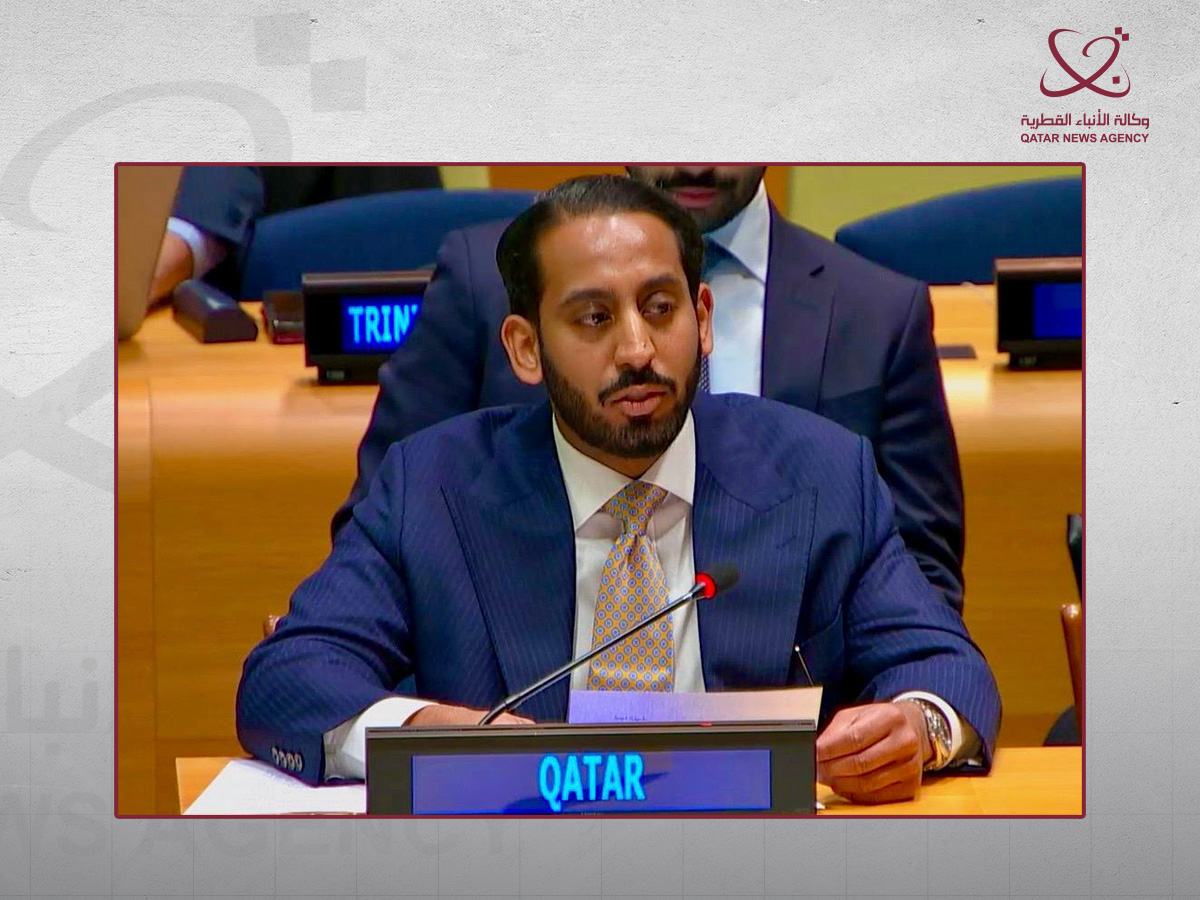
This was stated by Second Secretary at the Permanent Mission of the State of Qatar to the United Nations Abdulaziz Fadala Al Sulaiti during a meeting of the Sixth Committee of the UN General Assembly during its 81st session, under agenda item 83 on “Report of the Special Committee on the Charter of the United Nations and on the Strengthening of the Role of the Organization”, held at the UN headquarters in New York.
Al Sulaiti noted that the State of Qatar continues to serve as a reliable partner in regional and international mediation efforts, advocating for peaceful dialogue as the cornerstone of conflict resolution, and supporting all endeavors aimed at settling disputes through dialogue and diplomatic means.
He further emphasized the growing necessity of upholding and respecting the rule of law, particularly as the world faces mounting challenges that threaten the foundations of the international order, most notably the respect for state sovereignty and territorial integrity, and the prohibition of the threat or use of force. These are the very principles that were directly challenged during the events involving the member states of the Gulf Cooperation Council (GCC).
In this regard, he added that since February 28, 2026, the State of Qatar has condemned the acts of aggression committed by the Islamic Republic of Iran against its own sovereignty, territorial integrity, and territorial waters—as well as against brotherly nations. Such acts constitute a blatant violation of international law, international humanitarian law, and the United Nations Charter.
He reaffirmed Qatar’s insistence on compliance with the provisions of UN Security Council Resolution 2817 (2026), particularly concerning navigational rights and freedoms under international law, especially regarding vital maritime routes, noting that Qatar’s primary objective remains containing the escalation and creating space for diplomatic efforts, while emphasizing that Qatar will continue to engage with partners to bridge differences and build common ground among the parties, with the ultimate goal of reaching a peaceful resolution that preserves freedom of navigation in the Strait of Hormuz and addresses the concerns of regional states.
He also pointed out that the State of Qatar condemned the Houthi group’s targeting of King Fahd International Airport in Dammam, Saudi Arabia, an attack that resulted in two deaths, several injuries, and material damage. Qatar described this as a grave violation of Saudi Arabia’s sovereignty and a direct threat to regional security, the safety of civilians and civilian infrastructure, and air navigation. Qatar reiterated its full solidarity with Saudi Arabia, affirming its support for all legitimate measures taken by the Kingdom to safeguard its sovereignty, security, territorial integrity, and interests. Furthermore, it underscored that the security of Saudi Arabia is an integral part of the security of the State of Qatar and the collective security framework of the GCC states.
In conclusion, Al Sulaiti indicated that the State of Qatar reaffirms its continued support for the work of the Special Committee, as well as for all efforts aimed at strengthening the role of the organization and implementing the purposes and principles of the Charter, thereby consolidating trust in the international system and promoting international peace and security. (QNA)