
Saudi Arabia’s Voluntary Carbon Market Fuels the Shift to a Low-Carbon

Under UAE President’s directives, UAE launches urgent relief response for Ghana flood victims

Combating Desertification and Drought: Qatar a Model in Preserving Natural Resources, Establishing Environmental Stability
UAE allocates US$30 million for emergency humanitarian response in El Obeid, calls for civilian protection, safe humanitarian aid access in Sudan

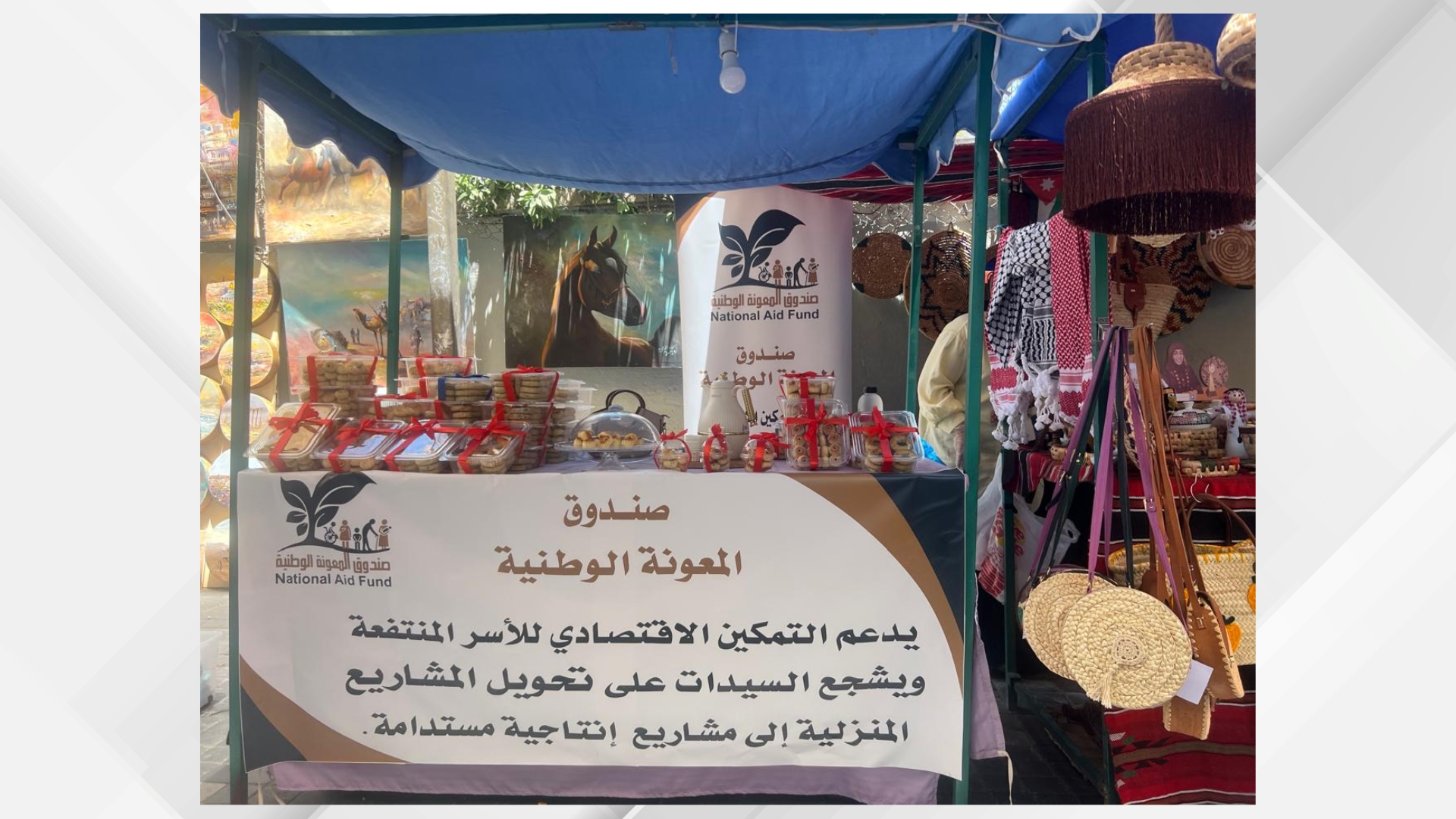
AMMAN, August 1 (Petra) — Amid the historic alleys of Souk Jara in
downtown Amman, display tables lined with handcrafted goods reflect a
profound transition: Jordanian women stepping out of traditional
welfare dependency and into active economic self-sufficiency.
The vibrant marketplace serves as more than a showcase for local
crafts and homemade delicacies; it acts as a tangible narrative of
women transforming their skills into sustainable livelihoods. Twelve
female beneficiaries of the National Aid Fund’s economic empowerment
programs, hailing from various governorates across the Kingdom, are
currently exhibiting their products at the market through free,
dedicated spaces provided for the summer season.
National Aid Fund Director-General Khitam Shenikat emphasized that
the initiative aligns directly with the National Social Protection
Strategy, which prioritizes shifting from passive financial
assistance to human capital investment and sustainable self-reliance.
Shenikat noted that the fund delivers a comprehensive developmental
pipeline spanning initial vocational training and project incubation
to financing access and direct marketing support.
Addressing a primary hurdle for micro-enterprises, Shenikat explained
that limited market access often restricts the growth of high-quality
home-based businesses. By integrating participants into high-traffic
community spaces like Souk Jara, the fund enables female
entrepreneurs to engage directly with consumers, scale their
operations, and refine their products based on real-time market
feedback.
She added that these efforts are backed by a broader network of
institutional partnerships involving the Ministry of Agriculture, the
Development and Employment Fund, the Jordan Enterprise Development
Corporation (JEDEC), and the Vocational Training Corporation.
The transformative impact of these programs is mirrored in the
personal journeys of participating artisans. Zainab, a beneficiary
who launched a beadwork enterprise, noted how specialized training
programs helped her convert a lifelong hobby into a commercial
venture. Having evolved from a trainee into a beadwork instructor,
she credits the initiative with providing the marketing exposure
necessary to build a loyal customer base.
Similarly, Sawsan leveraged the fund’s training framework to master
punch-needle embroidery, turning her passion for sewing into an
income-generating project that supports her household. For Raghad, an
independent mother running a home kitchen enterprise, the structured
market access provided through bazaars and Souk Jara offered a vital
stepping stone toward financial independence and her long-term
aspiration of becoming a professional chef.
Another participant, Abeer, highlighted how capacity-building
workshops boosted her confidence and taught her critical
commercialization skills, empowering her to contribute meaningfully
to her family’s financial stability.
These success stories underscore the broader efficacy of Jordan’s
national empowerment frameworks, demonstrating that targeted
institutional support equips women with the tools needed to transcend
economic vulnerability and drive community-level development.
//Petra// AA