UAE sends 30 tonnes of food aid to support drought-affected communities in Kenya

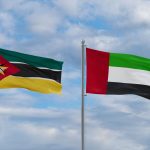
UAE provides urgent relief to support flood-affected communities in Mozambique
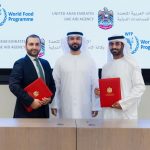
UAE signs cooperation agreement with UN World Food Programme to support humanitarian efforts in sudan
UAE reopens Sheikh Zayed Child Care Complex in Istanbul following comprehensive redevelopment

GCC
Conformity Experts Gather to Discuss Enhancing Product Safety
Muscat,
7 Dec 2025 (ONA) —- The meetings of the GCC Conformity
Assessment Bodies Working Teams for 2025 commenced today in Muscat, with the
participation of over 110 experts to discuss enhancing product safety and the
mechanisms for applying unified GCC technical regulations.
The
GCC Standardization Organization (GSO) in cooperation with the Ministry of Commerce,
Industry, and Investment Promotion organizes the five-day meetings. National
standardization bodies from the GCC member states and a number of international
organizations are also participating.
These
meetings aim to reinforce the implementation of Technical Council Decision No.
(59) and the decisions issued by the 10th Ministerial Committee for
Standardization Affairs meeting in Kuwait in October 2025. These decisions
concern the completion of the adoption and application of sectoral technical
regulations within the unified GCC Conformity Mark system. This contributes to
achieving the highest levels of product safety in the GCC common market and
facilitating inter-trade among member states.
Emad
Khamis Al Shukaili, Director General of Standards and Metrology at the Ministry
of Commerce, Industry, and Investment Promotion, affirmed that Oman’s hosting
of these meetings translates the close partnership with the GSO and supports
efforts to build an advanced quality infrastructure that boosts competitiveness
and protects consumers and the environment.
In
his speech, he explained that joint GCC action has seen a clear transition from
the planning stage to implementation, through a unified platform for the GCC
Conformity Mark and the application of the “One Application – Two
Outputs” principle for issuing GCC and national conformity certificates
via the “Hazm” platform. Hazm is an integrated digital compliance
system that provides a register of approved products and a directory of
conformity assessment bodies, along with direct technical support to ensure
easy integration with participating entities.
The
meetings will continue over the coming days through specialized working
sessions discussing the technical requirements for sectors subject to GCC
regulations, including electrical appliances, energy efficiency, and water
rationalization tools. They will also study operational challenges and the
development of smart supporting services via the Hazm platform.
Experts
will review best practices and member states’ experiences in the field of
conformity assessment, and ways to support economic operators and enhance
control procedures at ports, ensuring a balanced and uniform application of
technical regulations across all GCC states.
The
meetings will conclude with a joint session to review the working teams’
outputs and approve the future work plan, thereby enhancing GCC integration in
quality infrastructure, raising market efficiency, and supporting the
trajectory of industrial and commercial development in the GCC countries.
—Ends/AG