Saudi Arabia’s Voluntary Carbon Market Fuels the Shift to a Low-Carbon

Under UAE President’s directives, UAE launches urgent relief response for Ghana flood victims
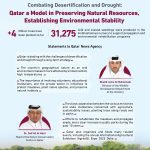
Combating Desertification and Drought: Qatar a Model in Preserving Natural Resources, Establishing Environmental Stability
UAE allocates US$30 million for emergency humanitarian response in El Obeid, calls for civilian protection, safe humanitarian aid access in Sudan


GCC Countries Attract 75.7
Million Tourists in 2025
Muscat, 31 Aug 2026 (ONA) — The
GCC Statistical Center organized in Muscat today the eighth Regional Workshop
on Innovation in Tourism Statistics, held under the theme “Innovation in
Tourism Statistics: Data Integration and Trend Analysis”. The workshop
forms part of the Center’s ongoing efforts to strengthen joint Gulf statistical
collaboration in the field of tourism statistics and to highlight the economic
and developmental role of the tourism sector across the member states.
The two-day workshop is being
attended by officials and 30 specialists involved in the production of tourism
statistics, representing the statistical authorities of the GCC countries.
The workshop aims to introduce
the concept and significance of integrating data and statistics from multiple
sources, inventory tourism data sources and assess their suitability for
statistical use, and understand the requirements for data exchange, including
methodologies for linkage, matching, calibration, and reconciliation of
results. It also seeks to evaluate the quality and consistency of produced
statistics and to leverage integrated data for trend analysis and tourism
demand forecasting.
Discussions throughout the
workshop address several core themes, including the challenges of relying on a
single source in producing tourism statistics, the tourism data source
ecosystem, the legal, institutional, and technical prerequisites for data
exchange, and integration methodologies that enhance the quality, consistency,
and comparability of statistics across GCC states.
In her address, Intisar Abdullah
Al Wahaibi, Director General of the GCC Statistical Center, affirmed that the
tourism sector in the GCC countries is experiencing sustained growth and
occupies a prominent position within national development plans and strategies.
She noted that tourism statistics have become an indispensable tool for
measuring the sector’s economic contribution, analyzing its trajectories, and
informing public policy, investment, and development decisions.
She further observed that tourism
indicators reflect the scale of transformation the sector has undergone across
the GCC in recent years, with its economic contribution growing at an average
annual rate of 7.3 percent between 2019 and 2025, surpassing the global growth
rate of 6.7 percent.
She indicated that the GCC
countries received approximately 75.7 million tourists during 2025, with
inbound visitor expenditure reaching around USD 131.9 billion, while the total
economic contribution of the tourism sector amounted to approximately USD 254.7
billion.
Gulf tourism has also solidified
its position on the international tourism map, with the GCC countries
accounting for approximately 5 percent of international tourist movements and
6.9 percent of global tourism receipts—a testament to a tourism presence in
terms of value and yield that outstrips their share of tourist arrivals.
This growth has coincided with an
average implementation progress rate of approximately 73.8 percent toward the
objectives of the Gulf Tourism Strategy through 2025.
It is noteworthy that the workshop will serve as a pivotal
platform for several key objectives. These include facilitating the exchange of
specialized expertise and practical experiences among participating entities,
identifying existing statistical gaps and data deficiencies, and strengthening
coordination mechanisms between data-producing authorities and data-owning
institutions. Furthermore, the workshop aims to generate actionable
recommendations that will enhance the quality and methodological consistency of
tourism statistics across the region. Ultimately, these efforts are expected to
support the formulation of more effective and evidence-based tourism policies,
while reinforcing the sector’s strategic contribution to sustainable economic
development throughout the GCC member states.
— Ends/AH