Saudi Arabia’s Voluntary Carbon Market Fuels the Shift to a Low-Carbon

Under UAE President’s directives, UAE launches urgent relief response for Ghana flood victims

Combating Desertification and Drought: Qatar a Model in Preserving Natural Resources, Establishing Environmental Stability
UAE allocates US$30 million for emergency humanitarian response in El Obeid, calls for civilian protection, safe humanitarian aid access in Sudan

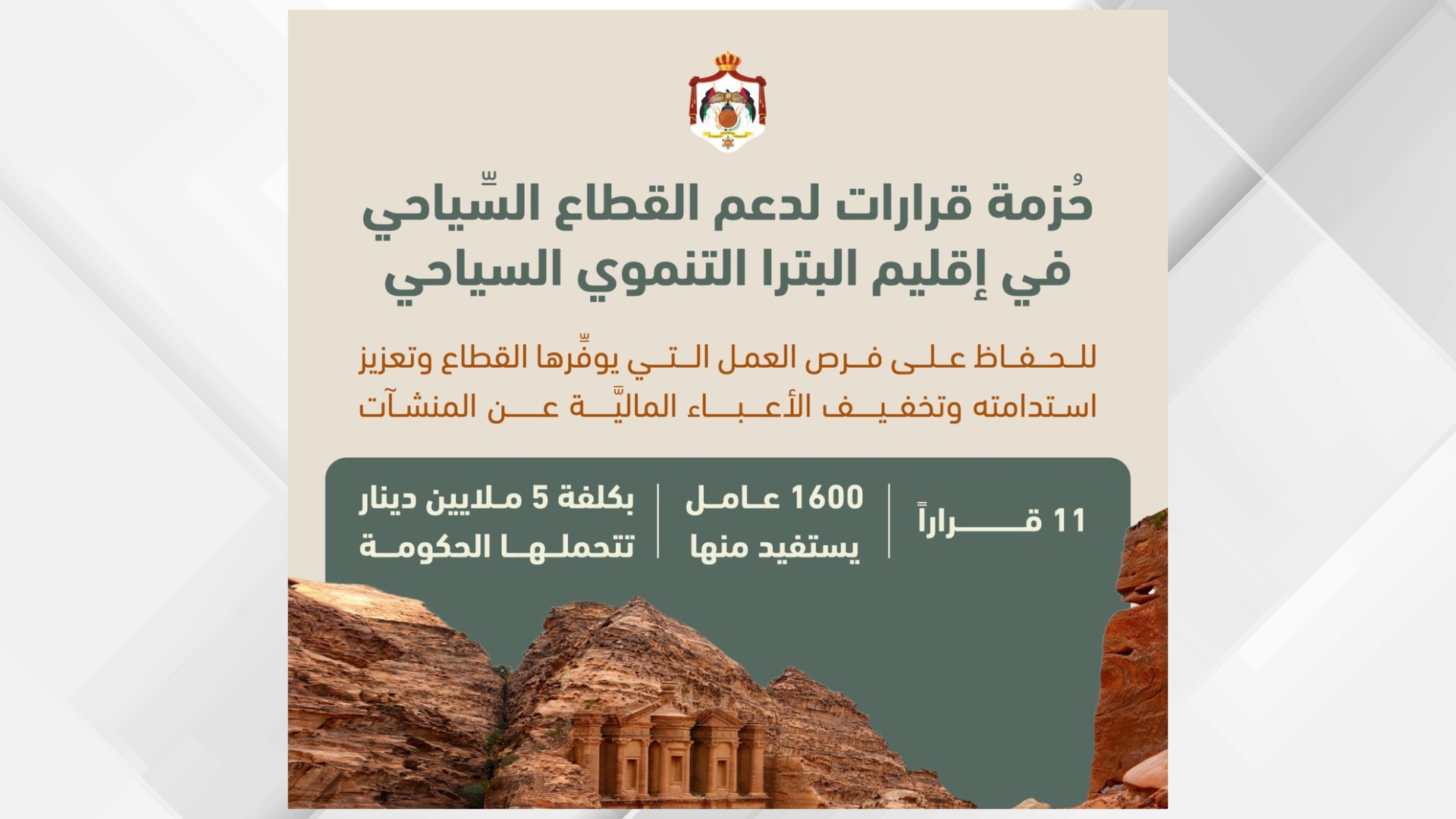
Petra, July 28 (Petra) – The package of decisions approved by the
Cabinet to support the tourism sector in the Petra region reflects a
government approach to mitigating effects of the decline the sector
has witnessed in recent years.
These measures aim to support tourism establishments, preserve jobs,
and enhance sustainability of tourist activity, paving the way for
its recovery.
Funded by the government, the package includes 11 decisions at an
estimated cost of JD5 million and encompasses programs to support
employee wages, postpone loan installments, and reschedule tax
payments and electricity and water fees.
Under the Cabinet’s move, new tourist programs will be launched to
increase the length of visitors’ stays and expand activities that
target Arab and international markets.
In a statement Tuesday, Adnan Sawa’ir, Chairman of Petra Development
and Tourism Region Authority (PDTRA), stated Petra has faced
“cumulative” challenges since 2019, beginning with repercussions of
the COVID-19 pandemic and continuing with regional crises and unrest,
which have directly impacted tourism.
He added that the government package represents an “unprecedented”
step and has been widely welcomed by the region’s residents and the
sector workers, given its “direct” impact on supporting tourism
establishments and stimulating economic activity.
He noted that the decisions will help protect jobs of more than 1,700
workers in various tourism-related activities, which is a “priority”
under the current circumstances.
As for its scope, Sawa’ir said support targeted hotels and various
components of the tourism sector, including camps, tourist
facilities, and supporting sectors.
He noted Petra is the “most affected” destination by the decline in
foreign tourism, as the Rose City emerges in approximately 85% of
travel reservations of foreign tourists visiting Jordan’s
archeological sites.
He said this trend means that any decrease in air travel and tourism
directly impacts Petra region’s economy.
The PDTRA, in parallel with Cabinet decisions, has taken a package of
measures to support investors and businesses operating in the region,
he pointed out.
These measures, he noted, exempted tenants in the new commercial
market from a 10% service charge on their leases, totaling JD24,000
to date.
He added that PDTRA also relieved tourism and commercial sectors and
businesses operating in the region from waste collection fees and
exempted these entities from 95% of the planned rent hikes for 2026.
Furthermore, he said PDTRA has waived late payment penalties for
tenants on rent and other financial dues, totaling JD30,000, all
aimed at easing their financial burdens and enhancing the
sustainability of their businesses.
For his part, Dr. Sami Hasanat, an expert in tourism crisis
management, described the government decisions as a “direct” rescue
package, which addresses the liquidity crisis and operational costs,
and support stability of businesses and employees.
He noted these measures will “directly” protect more than 1,600 jobs
and reinstate hundreds of workers under the social security umbrella.
//Petra// AG