Saudi Arabia’s Voluntary Carbon Market Fuels the Shift to a Low-Carbon

Under UAE President’s directives, UAE launches urgent relief response for Ghana flood victims

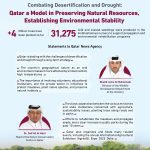
Combating Desertification and Drought: Qatar a Model in Preserving Natural Resources, Establishing Environmental Stability
UAE allocates US$30 million for emergency humanitarian response in El Obeid, calls for civilian protection, safe humanitarian aid access in Sudan

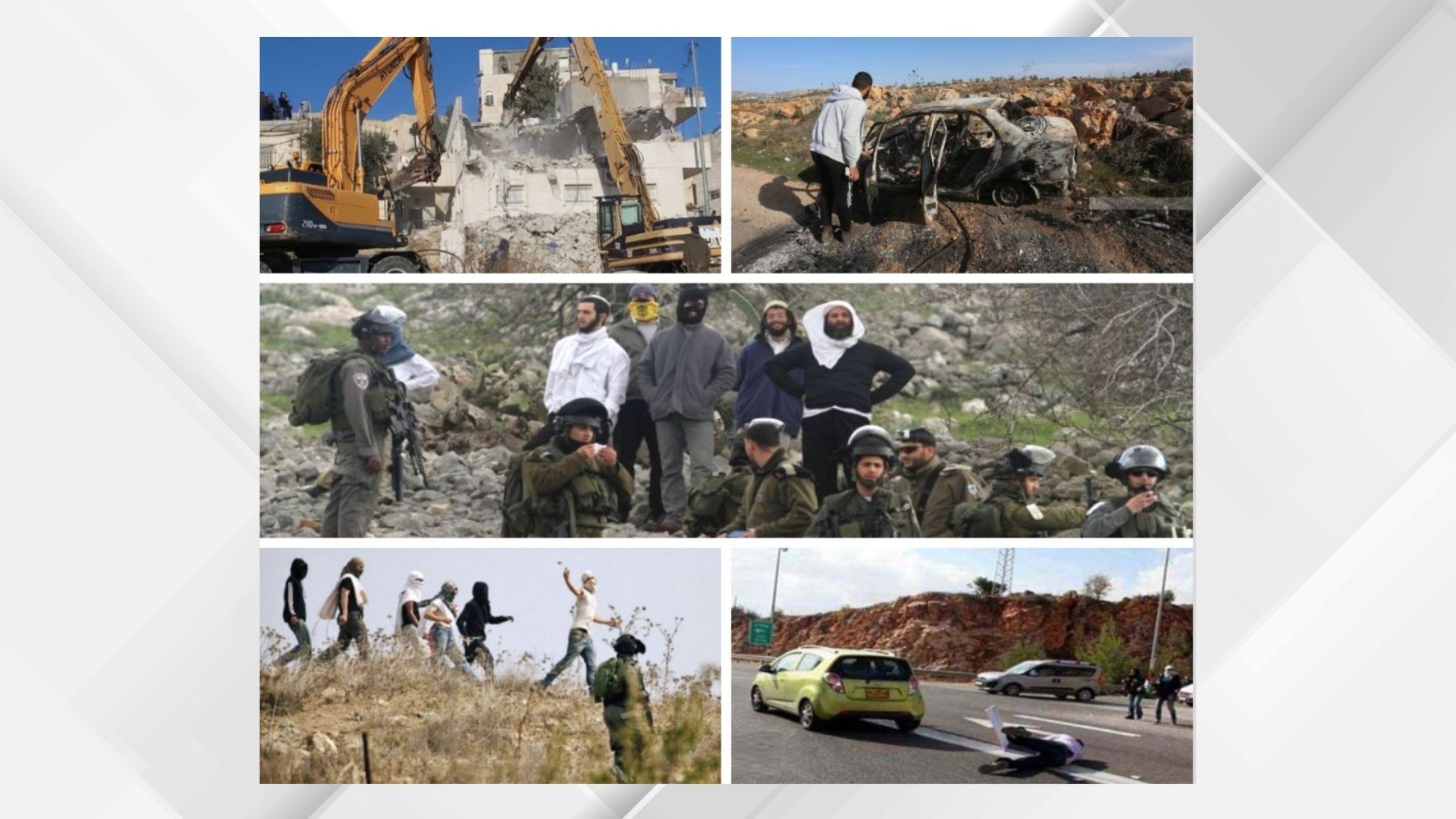
Ramallah, July 6 (Petra) – Israeli occupation forces and settlers
carried out 11,074 attacks against Palestinian communities, property,
and religious sites in the first six months of 2026, according to the
Palestinian Authority’s Colonization and Wall Resistance Commission
(CWRC).
The figures underlined a significant escalation in the scope and
methodology of attacks, coinciding with the broader Israeli military
offensives across Gaza, said Moayyad Shaaban, CWRC Chairman.
Land grabs, settlement expansion, forced displacement, and
extrajudicial killings were among incidents detailed in a CWRC
report. Additionally, Israeli measures included the destruction and
bulldozing of property and land, uprooting trees, confiscating
assets, and tightening West Bank movement restrictions through new
checkpoints and road closures.
Hebron recorded the lion’s share of incidents with 2,224, followed by
Ramallah and Al-Bireh, 2,175, Nablus, 2,095, and Bethlehem, 1,137
attacks.
Rather than a mere territorial expansion, Israel’s settlement policy
now exposes a deeper scheme to reshape the West Bank’s political,
legal, and administrative landscape toward de facto annexation,
according to Shaaban.
Shaaban said the first half of the year brought unprecedented
legislation and government decisions prioritizing settlement
expansion.
The report detailed accelerated planning, the creation of new
outposts and buffer zones, redrawn settlement boundaries, and stepped
up land seizures, alongside a surge in demolitions and settler
attacks against Palestinians and their property.
Shaaban suggested that Israel is transitioning from managing the
occupation to actively administering annexation, arguing that
measures previously framed as temporary security policies are now
implemented as permanent sovereign governance over occupied
Palestinian territory.
The report also mentioned that the administrative measures are
accompanied by strategic initiatives to divide Palestinian population
centers, consolidate Israeli control over critical infrastructure and
natural resources, and undermine the territorial and political
viability of a future Palestinian state.
//Petra// HA