Mother of the Nation Endowment for Orphans’ initiative raises AED3.3bn during Ramadan; launches AED1 bn ‘Mother of the Nation City’ project

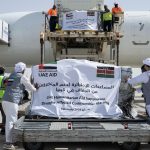
UAE sends 30 tonnes of food aid to support drought-affected communities in Kenya
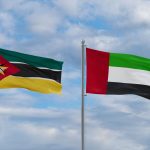
UAE provides urgent relief to support flood-affected communities in Mozambique
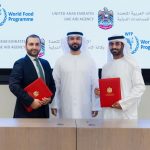
UAE signs cooperation agreement with UN World Food Programme to support humanitarian efforts in sudan
Amman, Dec. 2 (Petra) — Minister of Social Development Wafaa Bani Mustafa on Tuesday patronized the first-ever Regional Open Day on Women, Peace, and Security in the Arab States, organized by UN Women with the participation of experts and representatives of civil-society organizations.
Bani Mustafa said the Women, Peace, and Security (WPS) Agenda is not merely a UN document but a vision for a more stable global future, underscoring the importance of enabling women to take part in peace processes, post-conflict reconstruction, and security and political decision-making.
She stressed the WPS agenda’s relevance for Arab states given the region’s protracted crises, noting that many rank among the world’s highest in numbers of internally displaced persons, reflecting significant humanitarian and social pressures on women and girls.
Bani Mustafa highlighted the work of national, regional, and global mediation networks, particularly the Arab Women Mediators Network, in advancing women’s leadership, supporting peace efforts, and enhancing implementation of the UN Secretary-General’s initiative to expand diplomacy for peace.
She noted that among 113 countries that have adopted national action plans (NAPs) for UN Security Council Resolution 1325, only eight are Arab states, and just 29 countries have attached budgets to their plans, including Jordan.
She added that peace agreements shaped by women achieve higher implementation rates and endure longer, contributing to justice, inclusion, and more effective peace outcomes.
The minister said the gathering represents an important step toward strengthening regional partnerships, exchanging expertise, and building stronger alliances to address shared challenges. She emphasized priorities such as advancing women’s participation in formal and informal peace processes, securing flexible and long-term funding for women-led organizations, particularly local ones, and establishing regional solidarity networks that enhance women’s roles in protection, prevention, response, and recovery.
Bani Mustafa stressed that advancing the WPS Agenda is a collective responsibility requiring political will and sustained investment in protecting women and ensuring their effective participation, noting that women’s empowerment in peace and conflict settings is essential to achieving security, development, and stability in the region and beyond.
UN Women Regional Director for the Arab States Moez Doraid expressed appreciation to Jordan for hosting the first Arab regional open day on WPS and thanked supporting partner countries.
He said the event offers an open and inclusive space bringing together all actors working on the WPS Agenda, including government officials, civil-society representatives, Arab League member states, and UN agencies, to renew commitments to Resolution 1325, adopted 25 years ago.
Doraid noted that the agenda provides an opportunity for critical assessment of regional implementation since 2000 and to determine how to advance it with greater urgency, particularly ensuring meaningful women’s participation in peacebuilding and peace-making efforts.
The three-day program features seven in-depth dialogue sessions focused on strengthening women’s contributions to peace and security. The first examines 25 years of UNSCR 1325 in the Arab region; the second discusses ensuring effective women’s participation; the third addresses coalition-building and cross-border cooperation; and the fourth focuses on safeguarding shared narratives.
The fifth explores linkages between the WPS Agenda and the Youth, Peace, and Security Agenda; the sixth examines women’s roles in achieving comprehensive security; and the final session tackles the challenge of securing sustainable financing for the WPS Agenda and women’s organizations.
The discussions are expected to produce key recommendations aimed at concrete implementation through evidence-based exchanges and presentation of outcomes and findings.
//Petra// AO
02/12/2025 15:39:58