Jordan’s Q2 2026 GDP Expands 3.0%, Outperforming Regional Headwinds, International Forecasts
ENV-KUWAIT-SUSTAINABLITYKuwait strengthens environmental sustainability through strategic initiativesBy Zahra Al-Kadhmi

HLT-KUWAIT-SURGERYKuwait advances health sector with robotic, remote surgeryBy Mohammad Al-Moseb

Saudi Arabia’s Voluntary Carbon Market Fuels the Shift to a Low-Carbon

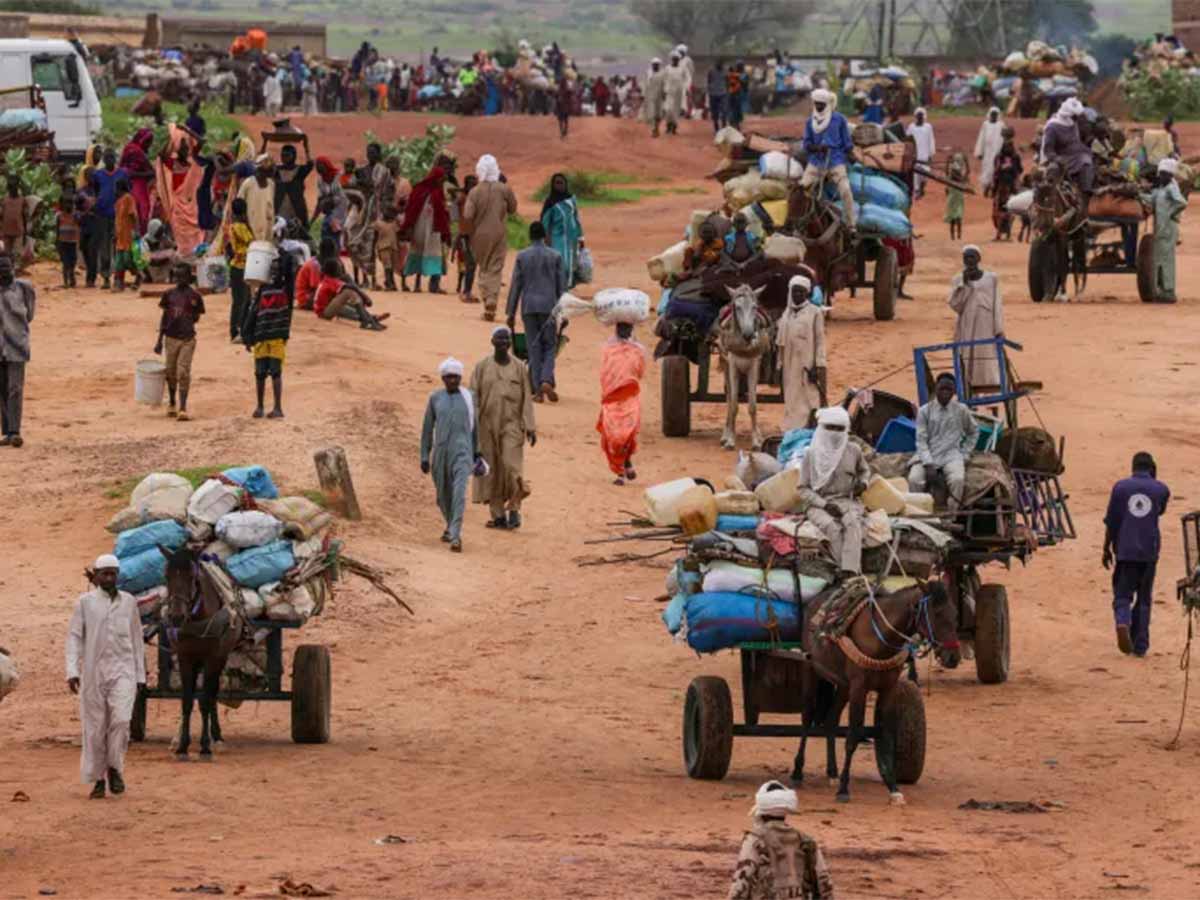
Geneva, February 19 (QNA) – In a report released on Thursday, the Independent International Fact-Finding Mission for the Sudan said the evidence establishes that at least three underlying acts of genocide were committed: “killing members of a protected ethnic group; causing serious bodily and mental harm; and deliberately inflicting conditions of life calculated to bring about the group’s physical destruction in whole or in part.”
“The scale, coordination, and public endorsement of the operation by senior RSF leadership demonstrate that the crimes committed in and around El Fasher were not random excesses of war,” said Mohamed Chande Othman, Chair of the mission.
“They formed part of a planned and organized operation that bears the defining characteristics of genocide.”
Genocidal intent, the mission said, was “the only reasonable inference” from the RSF’s “systematic pattern of ethnically targeted killings, sexual violence, destruction, and public statements explicitly calling for the elimination of non-Arab communities.”
The findings focus on events in and around El Fasher, the capital of North Darfur, during the RSF takeover in late October 2025, after what the mission described as an 18-month siege that progressively cut off civilians from food, water, medical supplies and humanitarian assistance.
The report said the siege “systematically weakened the targeted population through starvation, deprivation, trauma and confinement,” leaving many unable to flee when the assault came.
The Sudan conflict erupted on 15 April 2023, when fighting broke out between the Sudanese Armed Forces (SAF) and the paramilitary RSF.
The war has since spread across large swathes of the country, with civilians repeatedly bearing the brunt of urban warfare, shifting front lines and the collapse of basic services.
The fact-finding mission said the conduct in El Fasher was “an aggravation of earlier patterns” of attacks on other non-Arab communities elsewhere in Sudan, “but on a far more lethal scale.”