Saudi Arabia’s Voluntary Carbon Market Fuels the Shift to a Low-Carbon

Under UAE President’s directives, UAE launches urgent relief response for Ghana flood victims

Combating Desertification and Drought: Qatar a Model in Preserving Natural Resources, Establishing Environmental Stability

UAE allocates US$30 million for emergency humanitarian response in El Obeid, calls for civilian protection, safe humanitarian aid access in Sudan

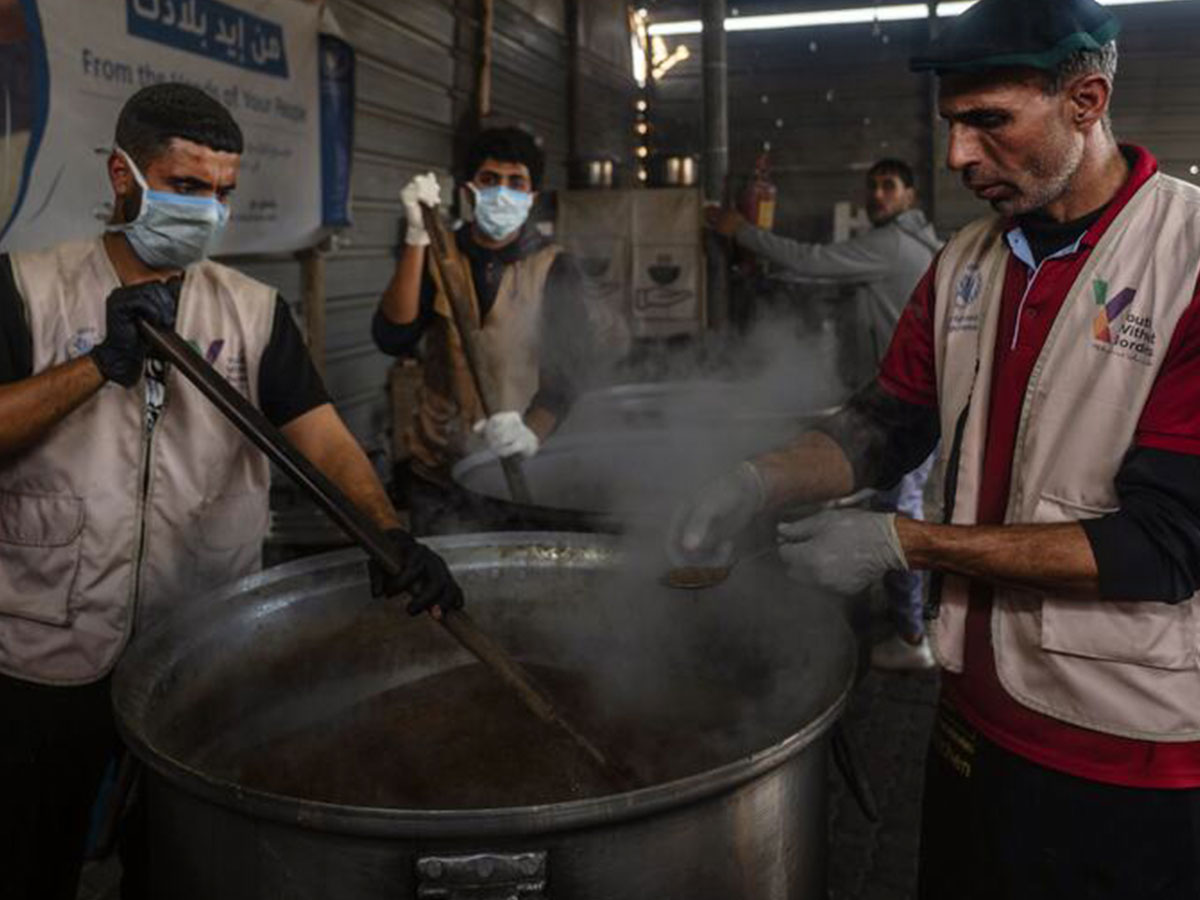
New York, June 18 (QNA) – UN Under-Secretary-General for Humanitarian Affairs Tom Fletcher stated that the Gaza Strip continues to face a severe crisis six months after the ceasefire, with Palestinians in the Strip suffering from insecurity and lack of access to clean water, healthcare, and education.
Fletcher added, during a UN Security Council session today, that the agreement between the United States and Iran and the hopes for an immediate ceasefire in Lebanon should bring renewed attention to Gaza. He explained that the Gaza Strip is the most dangerous place in the world to deliver aid, recalling the killing of nearly sixty aid workers during the three years of war.
The UN Under-Secretary-General further explained that 70 percent of Gaza’s population is in need of adequate shelter, that not a single hospital is fully operational, and that the sanitation situation is deteriorating. He also noted that the Israeli occupation forces are obstructing the entry of generators, engine oil, and spare parts.
The UN official urged the opening of all border crossings and the removal of Israeli restrictions on essential supplies. He also called for exempting humanitarian aid from border restrictions, granting long-term visas to humanitarian workers, resuming the convoys coordinated by the Jordanian and Palestinian governments, and expanding medical evacuations.
The UN official noted that since the ceasefire, Gaza is no longer classified as a state of famine (Phase 5), although it remains in a severe crisis (Phase 4). He added that 21,000 truckloads of aid have been collected, water and health services have been expanded, tens of thousands of children have been vaccinated, 100 classrooms have been rehabilitated, and shelter has been provided for more than 600,000 people.
Fletcher explained that this was not enough, adding that Gaza was holding on thanks to temporary humanitarian solutions and the resilience of the Palestinians, “and this is an unsustainable situation.” He emphasized that the population remained deprived of basic necessities such as security, shelter, clean water, healthcare, and education, adding that civilians continued to be killed and injured, noting that nearly 1,000 Palestinians had been killed since the ceasefire.
Fletcher concluded his briefing with three key demands for the Security Council: the protection of civilians and humanitarian workers, ensuring safe, sustained, and unimpeded access for aid, and providing sufficient funding. (QNA)