Jordan’s Q2 2026 GDP Expands 3.0%, Outperforming Regional Headwinds, International Forecasts
ENV-KUWAIT-SUSTAINABLITYKuwait strengthens environmental sustainability through strategic initiativesBy Zahra Al-Kadhmi

HLT-KUWAIT-SURGERYKuwait advances health sector with robotic, remote surgeryBy Mohammad Al-Moseb

Saudi Arabia’s Voluntary Carbon Market Fuels the Shift to a Low-Carbon

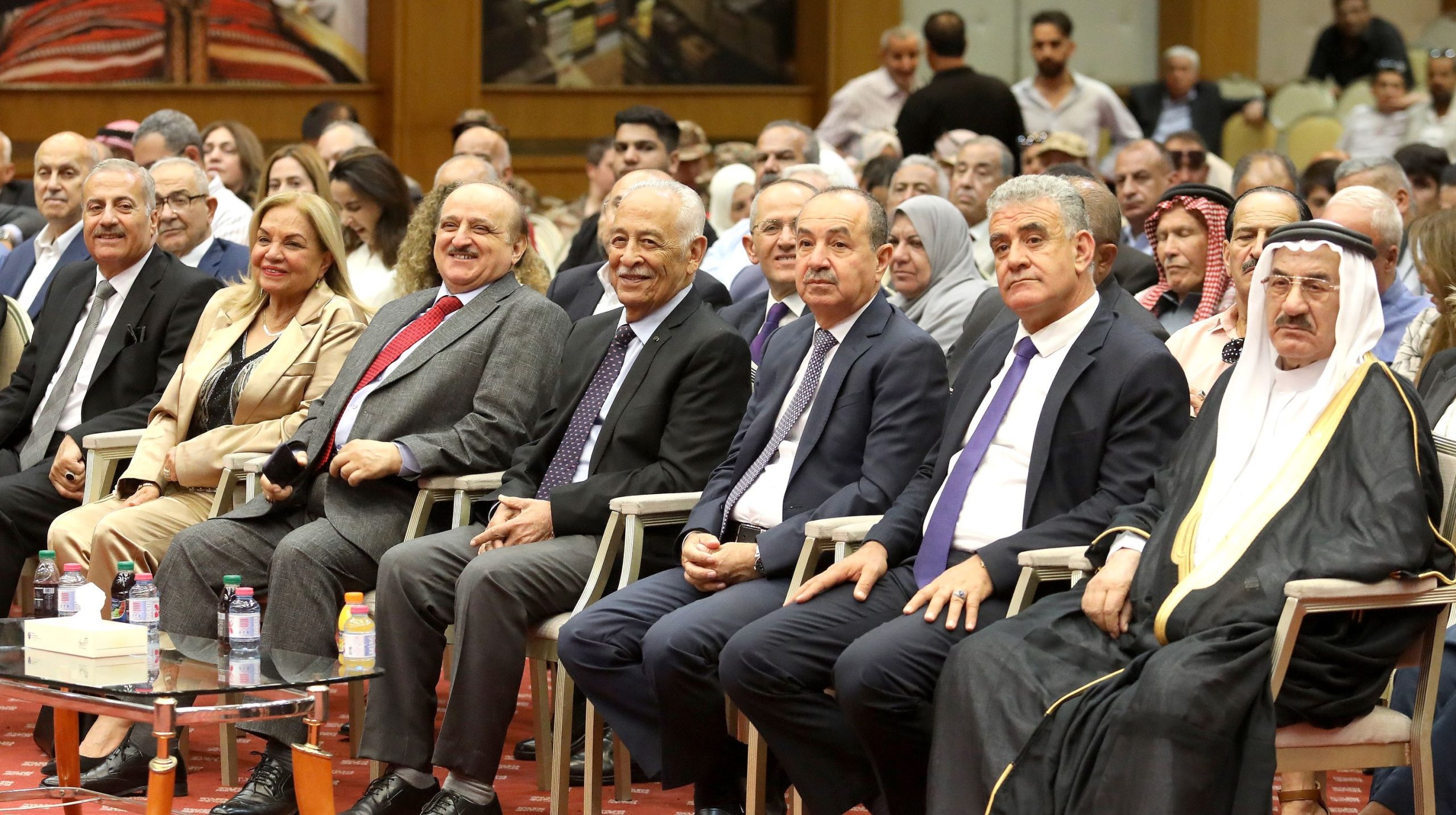
Amman, June 1 (Petra) — Under the patronage of Royal Hashemite Court
Chief Yousef Issawi, the National Construction Party, in cooperation
with the Jordanian Family Care Association and the Ministry of
Culture, held a national celebration on Monday at the Royal Cultural
Center to mark the 80th anniversary of the independence of the
Hashemite Kingdom of Jordan.
The event was attended by official, political, cultural and social
figures.
Speaking during the ceremony, National Construction Party
Secretary-General Barakat Awajan said the kingdom was built on the
awareness of its people and the wisdom of the Hashemite leadership.
He noted that Jordanians achieved independence through their own
determination and efforts, becoming partners in building the state,
strengthening its institutions and safeguarding its achievements.
Awajan said the Jordan Armed Forces – Arab Army had written some of
the nation’s most distinguished chapters in defending the homeland
and the Arab nation. He added that the 1922 decision by the League of
Nations to exempt the Emirate of Transjordan from the provisions of
the Balfour Declaration, through the efforts of the late King
Abdullah I, represented a historic achievement and a genuine
precursor to Jordan’s independence.
He reviewed key milestones in Jordan’s history, beginning with Sharif
Hussein bin Ali, leader of the Great Arab Revolt, followed by King
Abdullah I, the late King Talal bin Abdullah, the late King Hussein
bin Talal, and concluding with His Majesty King Abdullah II, who has
continued the path of national development, modernization and
achievement.
For his part, Khaled Attiyat, chairman of the Jordanian Family Care
Association, said independence was more than a political event,
describing it as the foundation of national identity, human dignity
and the values of belonging and responsibility. He emphasized that
the Hashemite leadership had played a central role in safeguarding
national sovereignty and strengthening Jordan’s stability and
standing.
Historian Omar Al-Armouti reviewed milestones in Jordan’s
independence journey, including events surrounding Independence Day
on May 25, 1946. He noted that the Marka area witnessed a major
military parade involving different branches of the Arab Army and
attended by Arab and foreign delegations and diplomats.
Al-Armouti said Jordan’s development over the past decades reflected
the wisdom of the Hashemite leadership, the awareness of the
Jordanian people and the vigilance of the armed forces and security
agencies, enabling the kingdom to confront regional and international
challenges while safeguarding its national interests.
The celebration featured a short documentary chronicling Jordan’s
independence journey, as well as a heritage performance by the
Knights of the Badia Troupe.
Several prominent Jordanians who contributed to the building of the
nation and the consolidation of its independence were honored during
the event. Those recognized included former prime minister Ibrahim
Hashem, Falah Al-Madadha, Sheikh Nazzal Al-Armouti, retired Major
General Ahmad Al-Jundi, Sheikh Ahmad bin Alawi Al-Saqqaf, and retired
Major General Hikmat Mihyar. Commemorative shields were received on
their behalf by family members and representatives in recognition of
their national contributions.
The ceremony also included patriotic and poetic performances by poets
Ali Al-Faouri, Adnan Al-Saudi and Sarah Al-Suheil. Their poems
celebrated Jordan, its leadership and people, recalled the sacrifices
of Jordanians throughout history, and highlighted the role of the
Hashemites in building the state and preserving its security and
stability. The poems emphasized the values of independence and
national unity and portrayed Jordan as a continuing oasis of security
and stability.
On the sidelines of the event, the military band of the Jordan Armed
Forces presented patriotic performances. A photo exhibition
documenting the history of the Arab Army and major milestones of
Jordan’s independence was also inaugurated, alongside an art
exhibition by Jordanian artist Nidal Abu Zeina.
//Petra// AF