Jordan’s Q2 2026 GDP Expands 3.0%, Outperforming Regional Headwinds, International Forecasts
ENV-KUWAIT-SUSTAINABLITYKuwait strengthens environmental sustainability through strategic initiativesBy Zahra Al-Kadhmi

HLT-KUWAIT-SURGERYKuwait advances health sector with robotic, remote surgeryBy Mohammad Al-Moseb

Saudi Arabia’s Voluntary Carbon Market Fuels the Shift to a Low-Carbon

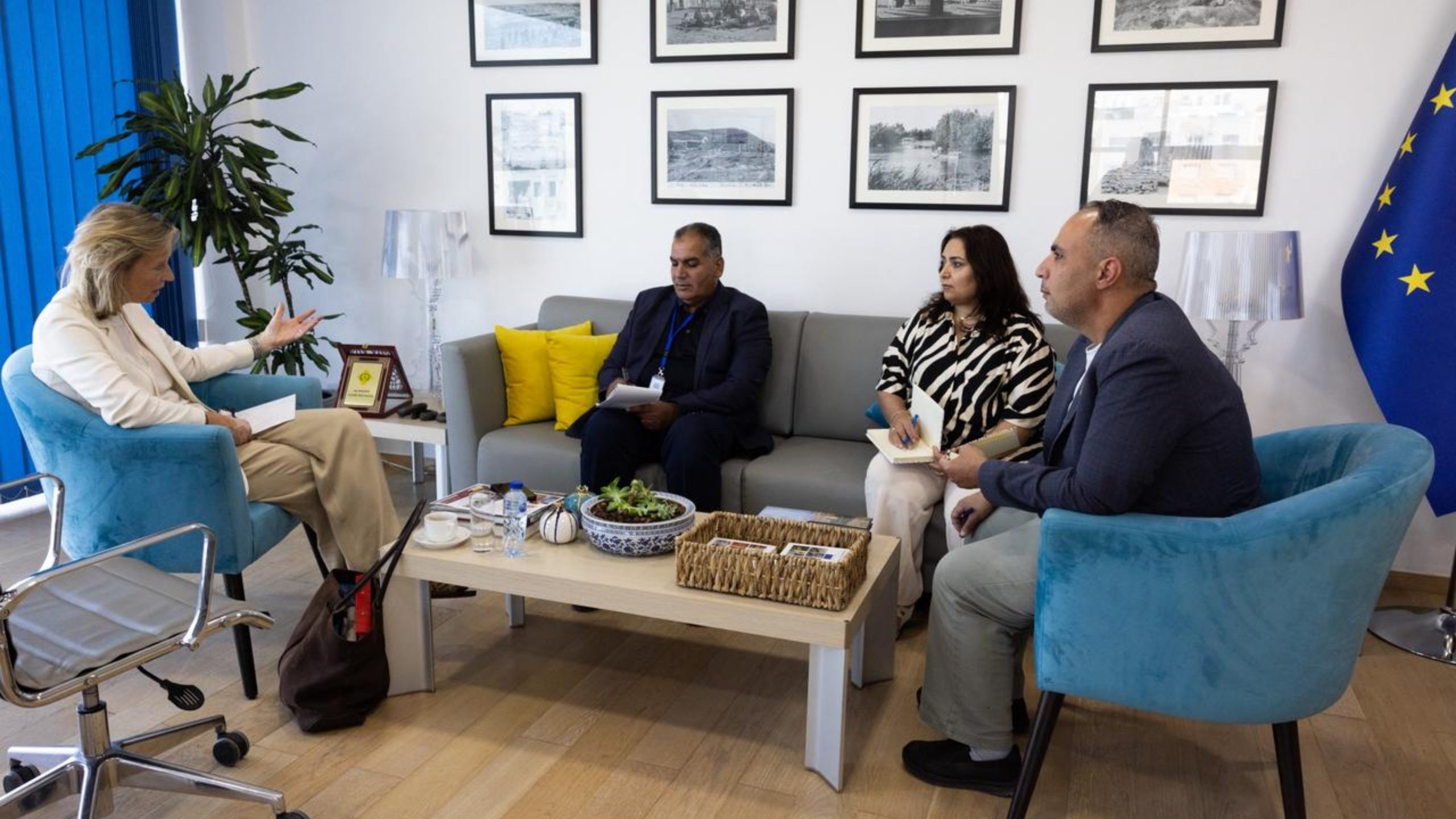
Amman, June 7 (Petra) – The European Union’s Special Representative
for Human Rights, Kajsa Ollongren, described Jordan as an
indispensable strategic partner and a vital pillar of stability
during a press briefing in the capital on Sunday, marking the
conclusion of an official visit focused on regional crises,
international law, and ongoing governance dialogues.
Ollongren stressed that Brussels holds its relationship with Amman in
high regard, pointing to a robust, comprehensive partnership
sustained by frequent high-level diplomacy and close alignment on
security and displacement challenges, particularly the fallout from
the long-running Syrian conflict.
The Fragmented International Order and Trust Deficits
Speaking on the fast-moving geopolitical landscape, the EU envoy
mounted a firm defense of the multilateral system, calling a
rules-based international order the most effective mechanism for
protecting global populations and maintaining balance. However, she
acknowledged a deepening crisis of confidence among the youth
regarding the efficacy of global institutions.
“The current global crises have exposed a growing trust deficit among
young people toward the international system as humanitarian
emergencies persist in Gaza, Ukraine, and Sudan,” Ollongren observed.
She reiterated that freedom of expression and the right to peaceful
assembly are fundamental pillars of human rights, while noting that
access to information is vital for building institutional trust.
Addressing the failure to protect civilians in modern warfare,
Ollongren remarked that the issue does not lie within the frameworks
of international humanitarian law itself, but rather in a pervasive
lack of state commitment and compliance. “Dialogue and open
diplomatic engagement remain our most effective tools,” she said,
describing her institutional consultations with Jordanian officials
on democracy and governance as exceptionally frank and productive.
Managing the Asylum Crisis Amid Funding Cuts
During her visit, the Special Representative met with officials from
the United Nations Relief and Works Agency for Palestine Refugees
(UNRWA) and the UN Refugee Agency (UNHCR) to evaluate the
vulnerabilities facing Palestinian and Syrian refugee populations.
Ollongren noted that while the EU remains the largest financial
contributor to global humanitarian efforts, a sharp decline in
international funding has created structural bottlenecks.
She warned that the next phase of displacement management requires
long-term, sustainable solutions rather than stopgap measures,
particularly given the constant threat of fresh regional escalations
driving new migration waves.
On the domestic front, Ollongren recognized Jordan’s civil society as
exceptionally vibrant and noted that the country has increasingly
become a safe haven and operational base for regional journalists
displaced by nearby conflicts.
Economic Barriers to Women’s Empowerment
Turning to social development, the envoy praised the high educational
attainment of Jordanian women, pointing to their significant presence
in university classrooms. She added that translating these academic
credentials into broader workforce participation is critical for
national economic and social development.
While she welcomed recent political gains – including increased
female representation in the House of Representatives – Ollongren
pinpointed clear structural barriers that continue to hold back
economic mobility. She emphasized that targeted investments in public
transit networks, childcare infrastructure, and foundational public
utilities are necessary prerequisites for unlocking broader economic
participation for women.
The Palestinian Question and Sovereign Accountability
Ollongren characterized the Palestinian issue as one of the most
pressing and complex human rights challenges in the world today,
affirming that self-determination and a viable future for the
Palestinian people must anchor any lasting settlement.
She stated that the EU is monitoring human rights conditions across
Gaza and the West Bank, expressing firm support for international
accountability mechanisms and the independence of the International
Criminal Court. Ollongren highlighted that the EU has already enacted
sanctions against violent settlers in the West Bank and continues to
formally condemn illegal settlement expansions.
Concluding her remarks, the EU envoy underscored that human rights
are universal, indivisible principles that must be applied equitably
across all borders, demanding a fair and uniform adherence to global
standards by the international community.
//Petra//AA