Jordan’s Q2 2026 GDP Expands 3.0%, Outperforming Regional Headwinds, International Forecasts
ENV-KUWAIT-SUSTAINABLITYKuwait strengthens environmental sustainability through strategic initiativesBy Zahra Al-Kadhmi

HLT-KUWAIT-SURGERYKuwait advances health sector with robotic, remote surgeryBy Mohammad Al-Moseb

Saudi Arabia’s Voluntary Carbon Market Fuels the Shift to a Low-Carbon

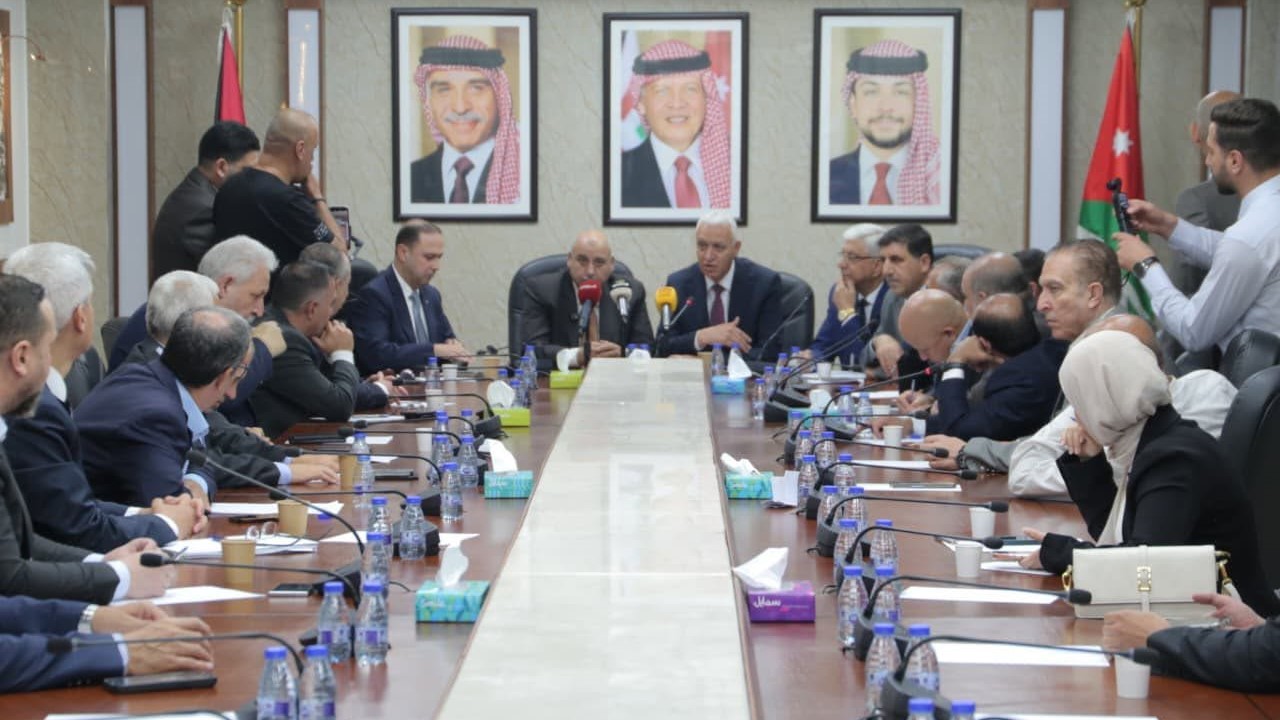
Amman, June 8 (Petra) – House Speaker Mazen Qadi affirmed that the
Jordanian press has long been a fundamental partner in the national
development process, contributing to the delivery of Jordan’s
positions and issues to the public with professionalism and
responsibility.
Qadi’s remarks came during a meeting held Monday by the Parliamentary
Committee on National Guidance, Media and Culture, chaired by MP
Hussein Amoush, to discuss the state of print journalism and the
challenges facing the sector.
The meeting was attended by Minister of Government Communication
Mohammad Momani, Editor-in-Chief of Al Dustour newspaper Yanal
Barmawi, and the general managers of Al Rai, Al Dustour and Al Ghad
newspapers.
Qadi said His Majesty King Abdullah II places great importance on
national media and consistently stresses the need to support and
empower it to fulfill its mission.
He added that the press’s oversight role is one of the pillars of the
modern state, noting that public institutions and officials must
remain subject to evaluation and accountability to strengthen
transparency and safeguard the national interest.
Amoush, in turn, said the committee convened the meeting to assess
the situation of daily newspapers and identify the most pressing
challenges facing the sector, particularly financial and
administrative issues.
He called for developing practical and sustainable solutions that
would strengthen media institutions and enable them to continue
performing their national role.
He added that journalists serve as a frontline channel for conveying
Jordanians’ concerns to decision-makers, making it essential to
address media-sector challenges through a long-term strategic
approach that takes into account rapid changes in the global media
landscape.
Committee members Jihad Abawi, Firas Qablan, Ahmed Hmeisat, Raed
Qatamin, Mohammad Sabaileh, Ibrahim Tarawneh, Mohammad Roud, Abdul
Rahman Awaisha and Ali Ghazawi called for coordinated official and
institutional efforts to address the crisis facing the press sector.
They said the national press is engaged in a critical battle for
public awareness and continues to play a central role in
strengthening national identity, promoting belonging and countering
rumors and misinformation.
Momani described the press as a responsible watchdog and a key
partner in shaping public opinion, analysing events and interpreting
local, regional and international developments.
He said journalists and media professionals are partners in
protecting the homefront and strengthening national resilience.
He said that the government is committed to the independence of media
institutions, emphasising that its role is to provide a supportive
environment, modernise media tools and enhance the sector’s ability
to carry out its mission.
He expressed the ministry’s readiness to consider proposals that
would help newspapers overcome challenges.
Momani said newspapers would continue to serve as a pillar of the
state, a guardian of national awareness and a trusted source of
information. He paid tribute to the Jordan Armed Forces and security
agencies for their role in safeguarding the nation’s security,
sovereignty and interests.
Yanal Barmawi, Editor-in-Chief of Al Dustour, said Jordanian
journalism has entered a phase of recovery, although it has yet to
achieve full stability.
He said that print newspapers remain a national necessity rather than
a media luxury, arguing that support for the sector is an investment
in preserving national awareness and protecting the national
narrative against misinformation and rumour campaigns.
He noted that national newspapers continue to play a vital role,
particularly during crises and in confronting attempts to undermine
Jordan’s interests, including during the recent regional conflict.
Hassan Jazazi, General Manager of Al Rai, reviewed the newspaper’s
digital transformation efforts, saying the institution’s strategy
focuses on strengthening its digital presence while maintaining its
print edition.
He noted that Al Rai operates 14 social media platforms, advanced
production studios and produces content in both Arabic and English.
Jazazi highlighted the development of technologies that convert
written content into audio formats, while noting that declining
government and municipal advertising remains one of the sector’s most
significant challenges.
Al Dustour General Manager Ghassan Shaalan said the newspaper had
recorded operating profits over the past three years and succeeded in
paying off nearly half of its debts.
He said, nonetheless, the decline in government and municipal
advertising continues to threaten the sustainability of journalistic
operations.
Shaalan added that Al Dustour had lifted all outstanding financial
liens through settlements with creditors, reducing its debt burden
and allowing the institution to resume commercial operations in
several traditional revenue streams, particularly commercial printing
services.
Bilal Sabah, General Manager of Al Ghad, reviewed the major
challenges facing the newspaper industry, including rising
production, printing and distribution costs, limited financial
resources and tax and customs burdens on production inputs.
//Petra// AK