Jordan’s Q2 2026 GDP Expands 3.0%, Outperforming Regional Headwinds, International Forecasts
ENV-KUWAIT-SUSTAINABLITYKuwait strengthens environmental sustainability through strategic initiativesBy Zahra Al-Kadhmi

HLT-KUWAIT-SURGERYKuwait advances health sector with robotic, remote surgeryBy Mohammad Al-Moseb

Saudi Arabia’s Voluntary Carbon Market Fuels the Shift to a Low-Carbon

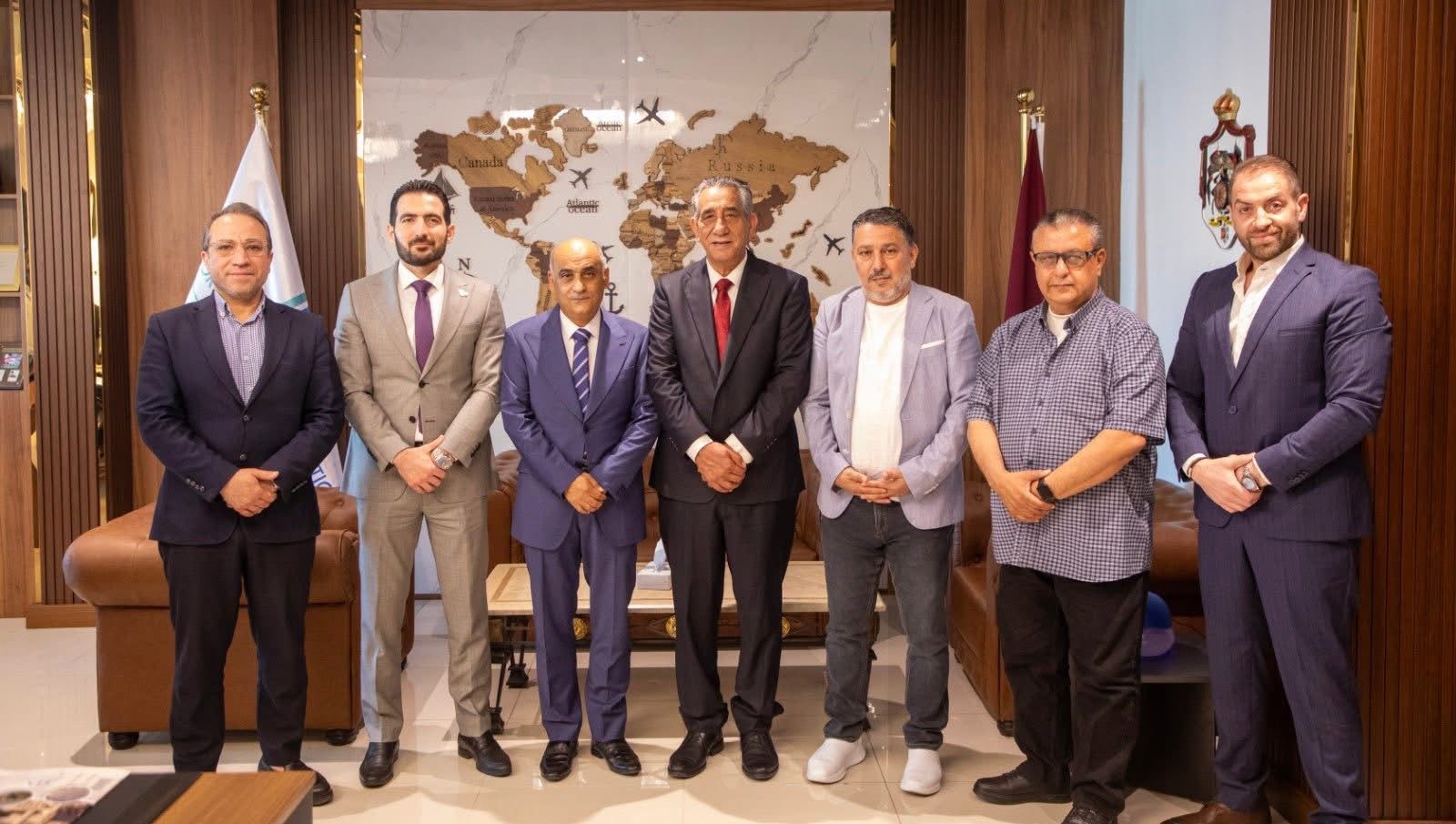
Amman, June 9 (Petra) — The Board of Directors of the Jordan Hotels
Association (JHA) on Tuesday met with a delegation from the Chamber
of Tourism for the Northern Region (Aleppo – Idlib) of the Syrian
Arab Republic to discuss strengthening tourism and hospitality
cooperation and exchanging industry expertise.
The visiting Syrian delegation included the President of the Chamber
of Tourism for the Northern Region, Ahmed Al-Mulla, Vice President
Mohammad Wajih Hammash, General Assembly member for the restaurant
sector, Abdul Fattah Najjar, and Chamber Advisor, Basel Mawass. They
were received by JHA President Hussein Hilalat, Board Member Hassan
Madi, and Board Member and Acting JHA Director General Mohammad
Al-Qasim, alongside the JHA technical team.
Both sides reaffirmed the depth of fraternal ties between Jordan and
Syria, emphasizing the importance of building effective partnerships
between hospitality institutions to advance the tourism sector and
stimulate joint economic and investment cooperation.
The two parties reviewed the current state of the hospitality sector,
its challenges, and emerging opportunities. They underscored the
value of exchanging successful practices in hotel management,
operations, and service quality control, while aligning with
international hospitality benchmarks.
Furthermore, the officials highlighted the necessity of training and
qualifying the hospitality workforce, attracting top talent, and
integrating them effectively into the labor market to satisfy
industry demands and elevate human resource efficiency as the
backbone of the hospitality sector.
The meeting also explored available investment opportunities in
Jordan and Syria, looking into potential collaboration to attract
hospitality investments by leveraging the diverse cultural,
historical, and tourism assets of both countries to boost their
presence on the regional tourism map.
Additionally, discussions covered hotel classification standards and
the implementation of modern professional criteria to raise
hospitality service levels and enhance the competitiveness of tourist
facilities, alongside sharing expertise in quality control systems
and institutional development.
Concluding the meeting, both sides expressed their commitment to
maintaining ongoing communication and coordination to pave the way
for joint initiatives serving the tourism sectors in both nations.
The Syrian delegation expressed appreciation to the JHA for the warm
reception, praising Jordan’s experience in hospitality development,
while Hilalat reiterated the JHA’s keenness to support joint Arab
cooperation.
//Petra// AF