Jordan’s Q2 2026 GDP Expands 3.0%, Outperforming Regional Headwinds, International Forecasts
ENV-KUWAIT-SUSTAINABLITYKuwait strengthens environmental sustainability through strategic initiativesBy Zahra Al-Kadhmi

HLT-KUWAIT-SURGERYKuwait advances health sector with robotic, remote surgeryBy Mohammad Al-Moseb

Saudi Arabia’s Voluntary Carbon Market Fuels the Shift to a Low-Carbon

Amman, June 11 (Petra) — The Ministry of Labour has stepped up its
efforts to combat child labour through a nationwide awareness and
inspection campaign launched in conjunction with the World Day
Against Child Labour, reaffirming its commitment to protecting
children’s rights and promoting access to education.
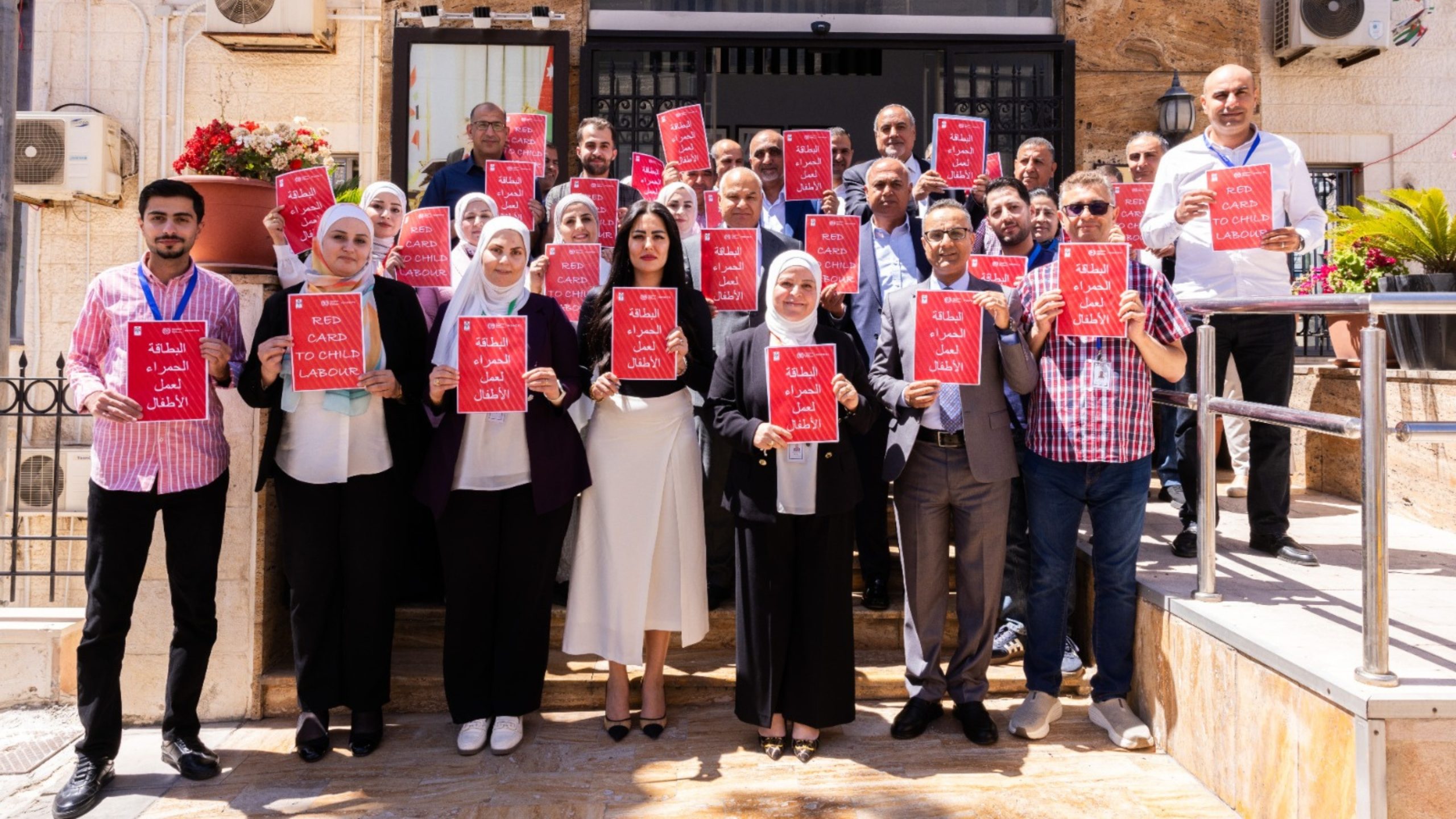
The ministry marked the occasion by organizing a symbolic “Red Card
to Child Labour” event attended by Labour Minister Khaled Al-Bakkar,
Secretary-General Abdul Halim Dujan and ministry staff, as part of
broader initiatives aimed at raising awareness about the risks and
consequences of child labour.
Al-Bakkar described child labour as a critical humanitarian and
development challenge, stressing that children should be protected
from exploitation and provided with opportunities to learn, develop
and build a better future.
He emphasized the ministry’s commitment to enforcing labour laws that
safeguard children’s rights, including measures aimed at removing
underage workers from the labour market, rehabilitating them and
facilitating their return to education.
The minister noted that the Kingdom is participating in the global
observance of the World Day Against Child Labour, held annually on
June 12, which this year coincides with the international “Red Card”
campaign calling for an end to child labour.
At the national level, the National Working Group on Child Labour has
adopted the slogan “Childhood Without Work… A Future Without
Limits” as the theme for awareness activities marking the occasion.
Al-Bakkar said national labour legislation is aligned with key
international labour standards, including Convention No. 138
concerning the minimum age for employment and Convention No. 182 on
the elimination of the worst forms of child labour.
Current legislation prohibits the employment of children under the
age of 16 and bans individuals under 18 from working in hazardous,
strenuous or health-threatening occupations.
The law also regulates working conditions for juveniles by limiting
working hours and prohibiting employment during nighttime periods,
public holidays and weekly rest days.
Highlighting the importance of collective action, Al-Bakkar said
addressing child labour requires cooperation among government
institutions, employers, workers’ organizations, civil society
groups, communities and families.
As part of its enforcement efforts, the ministry recently conducted a
two-week inspection campaign covering various economic sectors, with
particular focus on wholesale and retail trade establishments and
vehicle repair workshops to ensure compliance with child labour
regulations.
The ministry has also launched awareness activities across all
governorates, including educational workshops targeting employers,
children vulnerable to entering the labour market and their families.
The sessions focus on national legislation, occupational risks
associated with child labour and mechanisms designed to strengthen
coordination among institutions responsible for child protection.
Al-Bakkar said the National Strategy to Reduce Child Labour 2022-2030
serves as a comprehensive framework for coordinating efforts among
public institutions and non-governmental stakeholders.
He noted that the strategy promotes a unified national approach to
reducing child labour and strengthening protection mechanisms, while
ensuring that all relevant partners contribute to achieving its
objectives.
//Petra// RZ