Jordan’s Q2 2026 GDP Expands 3.0%, Outperforming Regional Headwinds, International Forecasts
ENV-KUWAIT-SUSTAINABLITYKuwait strengthens environmental sustainability through strategic initiativesBy Zahra Al-Kadhmi

HLT-KUWAIT-SURGERYKuwait advances health sector with robotic, remote surgeryBy Mohammad Al-Moseb

Saudi Arabia’s Voluntary Carbon Market Fuels the Shift to a Low-Carbon

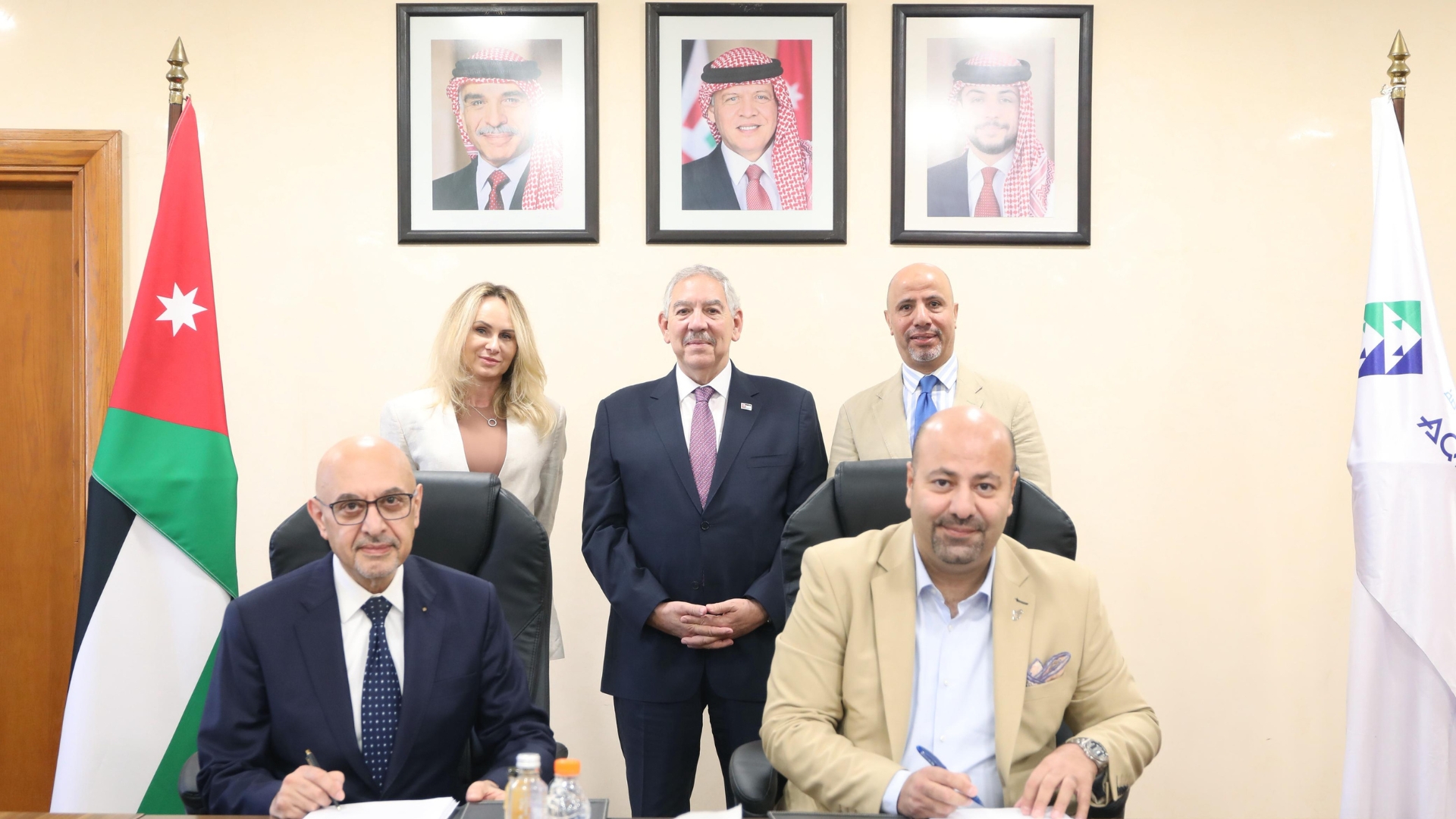
Aqaba, June 18 (Petra) –The Aqaba Special Economic Zone Authority
(ASEZA) and the Jordan Green Ammonia Company (JGA) have signed a land
lease agreement to establish a green ammonia production facility in
southern Aqaba, marking a strategic step to strengthen the city’s
role as a regional hub for clean energy and green industrial
development.
The agreement was signed in the presence of ASEZA Chairman Shadi
Ramzi Majali, Senator Sharhabil Madi, and members of the Board of
Commissioners. Mohammad Abu Omar, Commissioner for Economic Affairs
and Investment at ASEZA, signed on behalf of the authority, while CEO
Wael Suleiman signed for the company.
Abu Omar described the project as a high-value investment aligned
with ASEZA’s strategy to attract sustainable, environmentally
friendly projects. He said it will reinforce Aqaba’s position as a
regional center for clean energy and green fuels, supporting Jordan’s
transition toward a green economy and improving its international
competitiveness.
He added that the project represents a key milestone in Aqaba’s
ambition to become a sustainable green city, as it will utilize
low-emission technologies and is expected to generate direct and
indirect employment during both construction and operation phases,
with wider positive economic and developmental impacts.
Suleiman said the project is the first commercial green ammonia
production initiative in Jordan and will be located in a strategic
industrial area near Aqaba Port. It is designed to produce up to
100,000 tons of green ammonia annually.
He explained that the facility will run entirely on renewable energy,
powered by a 550-megawatt solar plant and supported by advanced
energy storage systems, ensuring operations without reliance on
fossil fuels.
He further added that the project is currently in the front-end
engineering design (FEED) and environmental impact assessment (EIA)
stages, with financial closure expected in 2027. He noted that
Aqaba’s strategic location, developed infrastructure, and
international port make it an ideal export gateway for green ammonia
to European and Asian markets, further integrating Jordan into global
clean energy supply chains.
//Petra// WH