
Jordan’s Q2 2026 GDP Expands 3.0%, Outperforming Regional Headwinds, International Forecasts
ENV-KUWAIT-SUSTAINABLITYKuwait strengthens environmental sustainability through strategic initiativesBy Zahra Al-Kadhmi

HLT-KUWAIT-SURGERYKuwait advances health sector with robotic, remote surgeryBy Mohammad Al-Moseb

Saudi Arabia’s Voluntary Carbon Market Fuels the Shift to a Low-Carbon

Amman, June 22 (Petra) — Tunisian Minister of Foreign Affairs,
Migration, and Tunisians Abroad Mohamed Ali Nafti on Monday
underscored his country’s commitment to advancing economic relations
with Jordan to broader levels, in line with the directives of both
countries’ leaderships to strengthen and diversify bilateral ties.
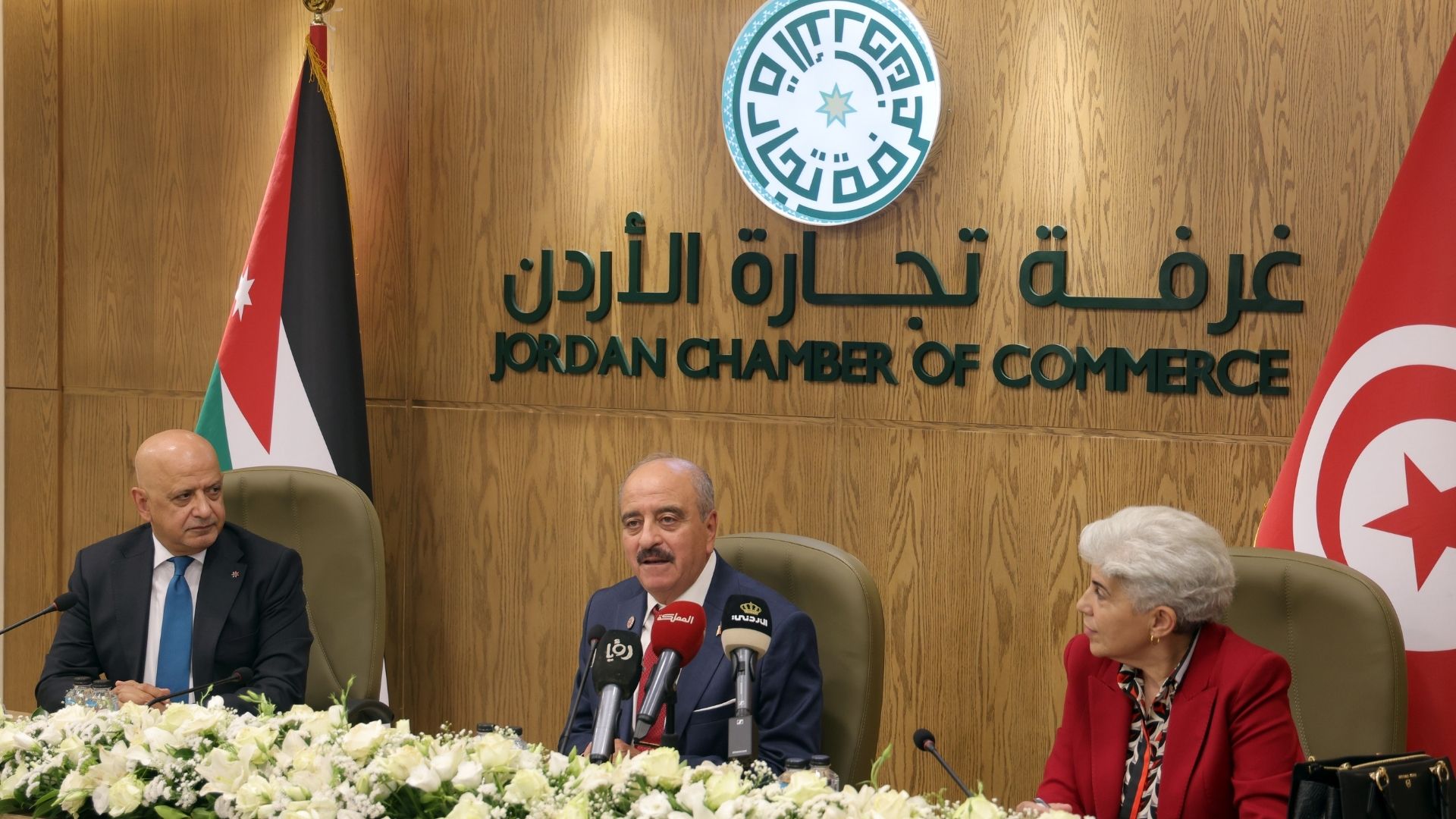
Speaking during a meeting organized by the Jordan Chamber of Commerce
in Amman, Nafti highlighted the private sector’s role in translating
the longstanding historical relationship between the two countries
into tangible economic outcomes through joint projects that serve
mutual interests. He noted that diplomacy remains a key driver in
advancing bilateral economic cooperation.
Nafti said economic relations between Jordan and Tunisia are built on
a solid foundation established over decades, stressing that chambers
of commerce and the private sector have played a pivotal role in
promoting the products of both countries and opening channels of
cooperation between their business communities.
He noted that bilateral trade exchange, which saw Jordanian exports
to Tunisia reach JD10 million and imports from Tunisia stand at JD13
million last year, remains below the aspirations of both sides and
does not reflect the opportunities and capabilities of their
economies. He cited Tunisian olive oil as an example of a product
that has successfully met demand in the Jordanian market in recent
years.
Nafti called for injecting new momentum into Jordanian-Tunisian
economic relations by accelerating the reactivation of the
Jordanian-Tunisian Joint Business Council, holding regular meetings
between business leaders, and organizing reciprocal economic forums
in Amman and Tunis to capitalize on available opportunities and boost
trade and investment flows.
He also stressed the importance of leveraging Jordan’s and Tunisia’s
strategic locations as gateways to the Levant, North Africa, and
African markets. He called for strengthening air and logistical
connectivity and expanding cooperation in trade, investment, tourism,
and services to create new opportunities for the private sector in
both countries.
Nafti further highlighted the need to keep pace with digital
transformation by establishing a joint digital platform for
trade-related institutions in Jordan and Tunisia to facilitate
information exchange and communication among businesses. He also
called for updating regulatory frameworks governing the movement of
goods and the mutual recognition of conformity certificates to
facilitate trade and broaden economic cooperation.
The Tunisian minister invited the Jordan Chamber of Commerce to
participate in an investment forum that Tunisia will host in the
coming days, describing it as an opportunity to hold direct business
meetings with companies, institutions, and economic stakeholders from
participating countries and to strengthen Jordan’s presence at
Tunisian economic events.
For his part, Jordan Chamber of Commerce President Khalil Haj Tawfiq
said the next phase requires translating the deep-rooted ties between
Jordan and Tunisia into practical and institutional measures that
enhance economic, trade, and investment cooperation.
He announced plans to launch a program positioning Jordan as a
gateway to the Levant and Tunisia as a gateway to the Maghreb,
enabling Tunisian companies to access markets in Palestine, Iraq,
Syria, and the Gulf states through Jordan, while allowing Jordanian
companies to expand into Maghreb and African markets through Tunisia.
Haj Tawfiq added that the Jordanian-Tunisian Joint Business Council,
established in 1996, will soon be reactivated and restructured,
providing a comprehensive framework for private-sector cooperation
and helping identify opportunities and address challenges facing
businesses and investors.
Tunisian Ambassador to Jordan Mufida Zaribi said her country attaches
special importance to economic cooperation with Jordan and seeks to
expand it in ways that serve mutual interests. She stressed the
embassy’s commitment to strengthening engagement with the private
sector to support this goal.
Zaribi expressed hope that the coming period would mark a new phase
in bilateral economic relations, enabling both countries to
capitalize on available opportunities and increase trade exchange.
During the meeting, members of the Jordan Chamber of Commerce board
and Tunisian importers presented proposals to strengthen economic
cooperation, including utilizing industrial cities and free zones for
joint investments, enhancing cooperation between exchange companies,
expanding tourism partnerships, and addressing obstacles facing
Jordanian pharmaceutical exports.
Participants also highlighted opportunities for cooperation in
reconstruction projects in Syria, medical tourism, information
technology, education, and healthcare, while calling for lower
airfare costs, broader trade diversification, and initiatives to
strengthen ties between young people in both countries.
//Petra// AJ