Jordan’s Q2 2026 GDP Expands 3.0%, Outperforming Regional Headwinds, International Forecasts
ENV-KUWAIT-SUSTAINABLITYKuwait strengthens environmental sustainability through strategic initiativesBy Zahra Al-Kadhmi
HLT-KUWAIT-SURGERYKuwait advances health sector with robotic, remote surgeryBy Mohammad Al-Moseb

Saudi Arabia’s Voluntary Carbon Market Fuels the Shift to a Low-Carbon

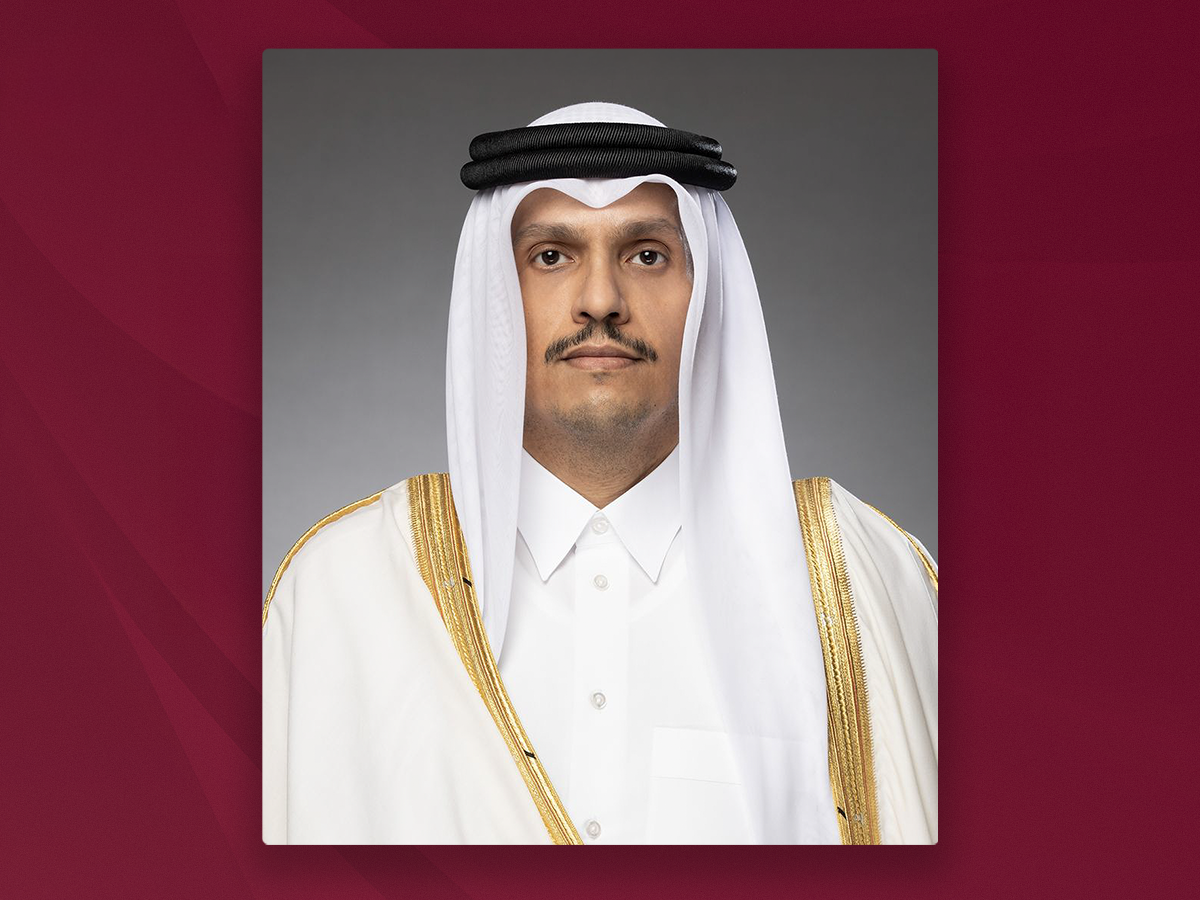
Doha, June 22 (QNA) – HE Prime Minister and Minister of Foreign Affairs Sheikh Mohammed bin Abdulrahman bin Jassim Al-Thani affirmed that the memorandum of understanding signed between the United States of America and the Islamic Republic of Iran has laid the foundation for ending the war and establishing a negotiation track that paves the way toward a final agreement between the two sides.
In an interview with Al Jazeera TV on Monday, His Excellency said the memorandum is the outcome of extensive efforts that continued for weeks of continuous work with partners in the Islamic Republic of Pakistan, and with the support of several regional countries and international partners, aimed at creating a conducive environment for launching these negotiations.
He stated that the purpose of the memorandum is to stop the war, in addition to establishing a framework for negotiations, expressing hope that these efforts will succeed in reaching a final agreement.
His Excellency noted that the memorandum established a clear institutional framework for the negotiation process, designed based on previous experiences to ensure continuity of the talks through political-level commitments to hold regular meetings to address challenges facing technical teams and reach understandings on interim issues, pointing out that the process includes both technical and political dimensions.
He added that the institutional framework presented and discussed during Sunday’s meeting is very good, expressing hope that technical discussions between the parties will continue and yield results.
HE the Prime Minister and Minister of Foreign Affairs indicated that ongoing discussions between the Iranian and American sides focus on the nuclear file, while other issues between Iran and regional countries will be addressed within a regional framework, including regional security and the Strait of Hormuz, stressing coordination between Qatar, GCC states, and Arab and regional countries to work toward lasting solutions in accordance with a unified Gulf vision.
He said the current phase represents a stage of building toward the final agreement, following the establishment of its foundation.
His Excellency noted that the past period witnessed several challenges from the memorandum of understanding to the start of the negotiation round, particularly regarding Lebanon and the Strait of Hormuz, explaining that mechanisms have been put in place to avoid such issues in the future and ensure focus on the negotiation track.
He added that there is political will among all parties to engage in negotiations despite external influences on the negotiating environment, pointing out that Qatar, in partnership with Pakistan, has worked to establish a framework that safeguards the negotiation process and makes it more robust and stable in the coming phase.
Regarding Qatar’s mediation role, he said Qatar will continue this role in partnership with Pakistan through joint working teams and committees comprising representatives from both sides, working to bring viewpoints closer and bridge gaps between the parties.
He stressed that the next phase will require intensive work, stating that Qatar’s core message in this regard is that it has strived to establish a framework that protects this negotiation process.
HE the Prime Minister and Minister of Foreign Affairs stressed that the priority of HH the Amir Sheikh Tamim bin Hamad Al-Thani, as well as the priority of the leaders of the countries of the region, is to extinguish the flames in the region and reach a stage of calm and stability, indicating that Qatar’s move came based on this vision.
His Excellency said that all countries in the region are suffering from problems and disputes, especially with Iran after this war and the attacks that were carried out against GCC countries, but in the end they are all part of one region, and the solution must be a diplomatic one.
His Excellency added that the continued escalation in the region will have repercussions that are not limited to the region, but extend to the global economy, which necessitates working to protect and make the negotiation process a success.
Regarding concerns related to the next stage, His Excellency noted that negotiations by their very nature include multiple points of contention, explaining that there are parties that may seek to influence its course, whether from within the countries concerned or from outside them, but the general indicator reflects the existence of determination and perseverance among the concerned parties to reach solutions.
His Excellency emphasized the significance of providing a suitable environment for the continuation of the negotiation process, stressing that any escalation in the region, whether in Lebanon or other areas, directly affects the course of the negotiations and the atmosphere surrounding them.
Regarding the steps that Israeli Prime Minister Benjamin Netanyahu might take to influence the negotiations, HE the Prime Minister and Minister of Foreign Affairs said that this is not the first time that Netanyahu has tried to create such a situation. He reiterated the need to end the continued Israeli occupation of Lebanese territories immediately and to respect the sovereignty of Lebanon.
His Excellency added that since 2024, Israel has continued to occupy parts of Lebanon and is also expanding into these territories, in addition to the illegal presence in Syrian territory and the encroachment into it, as well as the Israeli government’s failure to withdraw from the Gaza Strip and its failure to fulfill its obligations in the agreement. He noted that these constitute factors that contribute to increasing tension in the region.
His Excellency indicated that the establishment of a special working group for Lebanon, comprising the concerned parties, aims to avoid escalation and address any developments before they occur, and to ensure the proper implementation of the ceasefire agreement. He pointed out that it is unacceptable that there have been 100 deaths in Lebanon during the last three days, while the ceasefire is in effect.
HE the Prime Minister and Minister of Foreign Affairs stressed the need to respect the agreement and to address matters diplomatically. In this regard, he said that the United States is making a great effort now in the diplomatic track, hoping that these efforts will succeed.
Regarding the Strait of Hormuz, His Excellency affirmed that the State of Qatar’s stance is firm and is to reject any change to the status of the strait from what it was before the war, indicating that the current understandings include a commitment to ensure safe and free passage for commercial vessels during the 60-day period, with arrangements during the first period to remove mines, in addition to establishing a hotline to address any dispute that may arise in the strait.
His Excellency highlighted that, according to the understandings, a dialogue will later be opened between Iran, the Sultanate of Oman and the countries of the region regarding the mechanism for managing the strait in the future. He stressed that the State of Qatar considers it an international waterway that must remain open for navigation.
His Excellency pointed out that the State of Qatar is one of the countries most affected by the closure of the strait, as it is its main sea outlet. In this context, he said that everyone has witnessed the impact that has occurred during the last four months.
Regarding regional relations, HE the Prime Minister and Minister of Foreign Affairs said that the attacks that occurred during the war were unacceptable, underscoring Gulf coordination and shared vision for dialogue with Iran aimed at resolving outstanding issues through peaceful means.
On the Palestinian issue, His Excellency expressed hope that the current momentum would also extend to the Palestinian dossier, leading to the establishment of an independent and sovereign Palestinian state.
In a message directed to the negotiating parties, His Excellency stressed that the outcomes of any agreement between the United States and Iran would not only affect the two sides themselves but also the security of the entire region, which requires handling the matter with a high sense of responsibility to spare the people of the region from further conflicts.
Regarding the region’s future, HE the Prime Minister and Minister of Foreign Affairs noted that the Middle East has been undergoing profound transformations since Oct. 7, 2023. He added that the region entered a new phase after October 7, having unfortunately witnessed various conflicts and Israel opening multiple fronts across the region, in addition to the US-Iran-Israel war and the Iran-Gulf war, all of which will reshape the Middle East.
His Excellency reiterated that the State of Qatar’s priority is to protect its national security and strengthen its defensive capabilities. Qatar’s defense system has been among the strongest in the region in terms of intercepting missiles and responding to military threats, with the Qatar Armed Forces demonstrating a high level of professionalism, he noted.
The State of Qatar is working with its partners across the region and is looking forward to a unified vision among the member states of the Gulf Cooperation Council and to a new regional security framework that achieves stability, based on the difficult events the region has experienced in recent years, His Excellency said.
HE Prime Minister and Minister of Foreign Affairs Sheikh Mohammed bin Abdulrahman bin Jassim Al-Thani further stressed that complete stability in the region cannot be achieved without a just and comprehensive solution to the Palestinian issue, which requires international efforts.
His Excellency hoped that the current momentum between the United States and Iran, and between Iran and the region, would also encompass the issue of the brotherly Palestinian people, ending their suffering and granting them their own state. Only then would the region witness full stability, where Israel is part of the region, and Palestine is an independent and sovereign state, he added. (QNA)