Jordan’s Q2 2026 GDP Expands 3.0%, Outperforming Regional Headwinds, International Forecasts
ENV-KUWAIT-SUSTAINABLITYKuwait strengthens environmental sustainability through strategic initiativesBy Zahra Al-Kadhmi

HLT-KUWAIT-SURGERYKuwait advances health sector with robotic, remote surgeryBy Mohammad Al-Moseb

Saudi Arabia’s Voluntary Carbon Market Fuels the Shift to a Low-Carbon
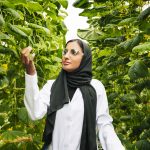
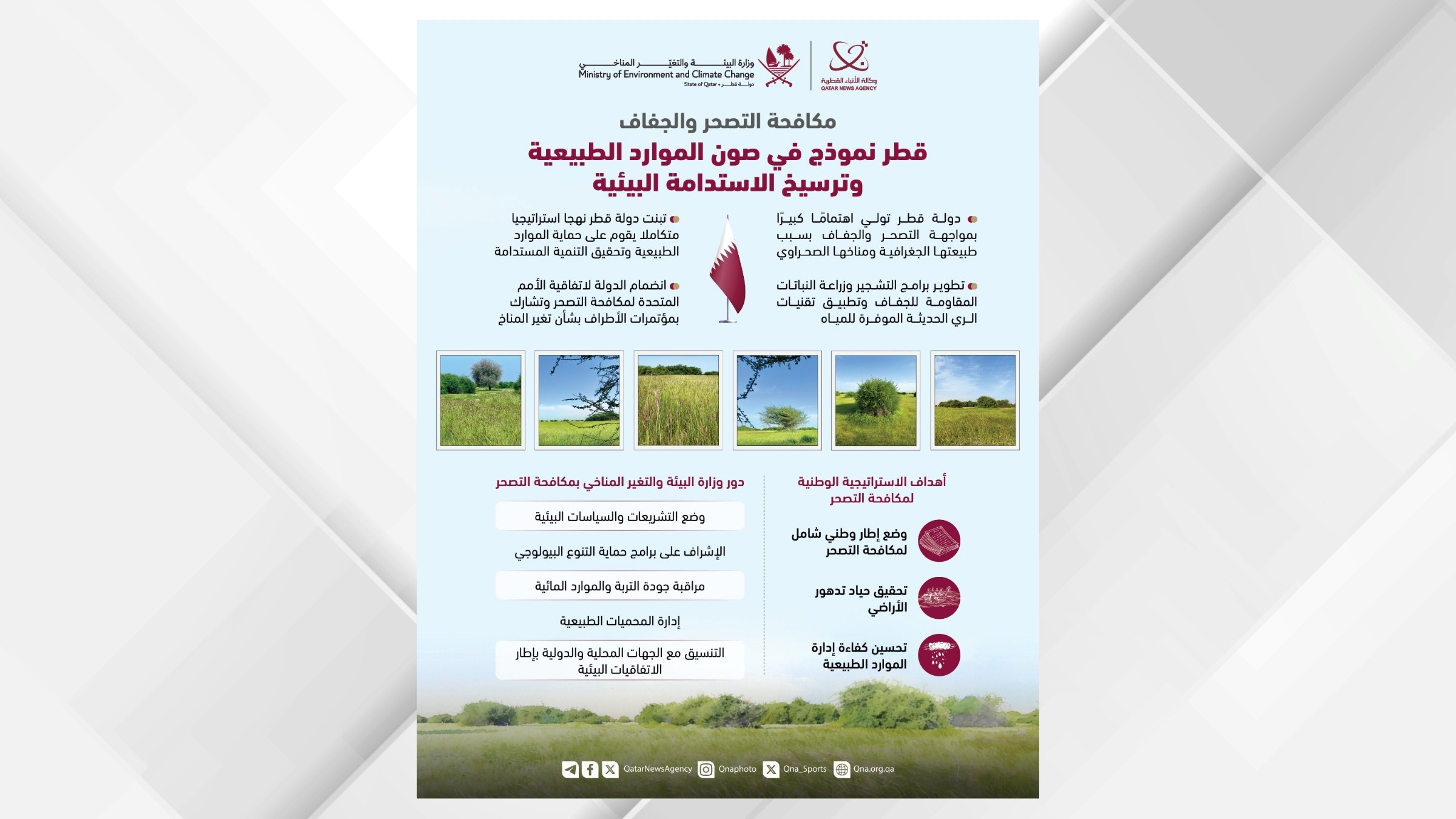
Doha, July 14 (Petra & FANA) — Desertification and drought represent
an increasing environmental and developmental challenge at the global
level, in light of the accelerating pace of climate change and the
continued pressures resulting from human activities, and the
resulting degradation of land and natural resources, which threatens
food security and biodiversity and undermines efforts to achieve
sustainable development.
The State of Qatar recognizes these challenges by paying close
attention to combating desertification and drought, given its
geographical nature characterized by a hot and dry desert climate,
limited surface water resources, and the unique nature of its
vegetation cover.
Within the framework of Qatar National Vision 2030, the country has
adopted an integrated strategic approach to address these challenges
based on protecting natural resources and achieving sustainable
development through developing afforestation programs, planting
drought-resistant plants, applying modern water-saving irrigation
techniques, rehabilitating degraded lands and improving soil
properties, along with enhancing the environmental monitoring and
follow-up system using modern technologies.
At the regional and international levels, Qatar pursues an active
policy in the field of combating desertification and promoting
environmental sustainability through its commitment to relevant
international agreements and its participation in global efforts to
address environmental challenges, including joining the UN Convention
to Combat Desertification and adhering to its requirements. In
addition, the state participates in the Conferences of the Parties
negotiations on climate change, along with supporting and financing
regional environmental projects through the Qatar Fund for
Development, enhancing cooperation with the Gulf Cooperation Council
countries in the areas of joint environmental management, as well as
hosting international conferences and events related to the
environment and climate.
The ministry continues to contribute to its initiative to plant 10
million trees by 2030, which was announced by the State of Qatar as
part of the Middle East Green Initiative, where more than four
million trees have been planted so far, equivalent to more than 40%
of the national target.
During 2025, 19,580 local wild and coastal seedlings were cultivated,
and 31,275 wild and coastal seedlings were produced in the
Al-Ghashamiya nursery to support propagation and environmental
rehabilitation programs.
To reinforce this trend, the Ministry of Environment and Climate
Change launched the National Strategy to Combat Desertification
2025-2030 as part of the State of Qatar’s efforts to protect its
natural resources, enhance their sustainability, and mitigate land
degradation and the impacts of drought, in line with Qatar National
Vision 2030 and the Third National Development Strategy 2024-2030.
The strategy aims to establish a comprehensive national framework to
combat desertification and achieve land degradation neutrality by
improving the efficiency of natural resource management and
strengthening supportive legislation and policies, thereby
contributing to the protection of ecosystems and the achievement of
sustainable development.
The strategy encompasses six key outcomes, including protecting
ecosystems and reducing factors contributing to desertification and
drought; promoting sustainable management of natural resources;
strengthening vegetation cover and rehabilitating affected
environments; building capacity and supporting scientific research
and innovation; developing legislation, policies, and effective
governance; and enhancing community participation and national and
international partnerships.
In this context, the ministry is implementing a number of programs
and initiatives aimed at reducing land degradation and enhancing
vegetation cover. This includes afforestation programs and planting
plant species adapted to the Qatari environment, environmental
monitoring programs that rely on advanced systems to track indicators
of land and vegetation degradation, in addition to initiatives to
rehabilitate land, improve its quality and reduce the effects of
desertification.
The ministry also attaches particular importance to employing
technology and innovation in its environmental efforts through the
use of geographic information systems and remote sensing technologies
in monitoring environmental changes, developing smart irrigation and
sustainable agriculture applications, supporting research related to
adaptation to drought, and improving the ability of ecosystems to
cope with climate challenges.
These efforts are based on an integrated legislative and regulatory
system aimed at protecting the environment and natural resources.
This includes laws and regulations governing the protection of
agricultural lands, water resources and biodiversity, in addition to
environmental assessment requirements for various projects in order
to achieve a balance between development and environmental
preservation.
In terms of awareness, the ministry is keen to promote environmental
awareness and community participation through the implementation of
awareness and afforestation programs, support for research
initiatives, and encouragement of various segments of society and the
private sector to contribute to protecting the environment and
preserving natural resources, which supports the State of Qatar’s
commitment to achieving sustainable development and enhancing its
ability to face future environmental challenges.
For his part, Assistant Undersecretary for Protection and Natural
Reserves Affairs Dr. Ibrahim Abdul Latif Al Muslimani explained in a
special statement to Qatar News Agency (QNA) that the Ministry of
Environment and Climate Change is implementing the National Strategy
to Combat Desertification 2025-2030 includes programs and projects to
rehabilitate degraded lands, protect natural habitats and meadows,
develop vegetation cover, ensure biodiversity sustainability, and
combat invasive plant species. He pointed out that the strategy aims
to restore and rehabilitate at least 30% of degraded natural
habitats.
Dr. Al Muslimani added that nature reserves represent a fundamental
pillar in the state’s efforts to protect biodiversity and reduce land
degradation. He explained that terrestrial reserves cover about 27%
of the country’s area, with work underway to raise the percentage of
protected terrestrial and marine areas to 30% by 2030.
He reported that the ministry carried out protection and
rehabilitation works in 76 gardens and natural sites, with a total
area of 16.72 square kilometers from 2019-2026, through fencing,
regulating use, cultivating local plants and scattering seeds, with a
plan to expand protection and rehabilitation programs to include 500
gardens and natural sites by 2030.
Regarding modern technologies, Dr. Al Muslimani pointed to the use of
geographic information systems, remote sensing and drones in
monitoring the condition of the land and vegetation cover, indicating
that these efforts contributed to the inventory and documentation of
1,573 parks, and the establishment of the first integrated national
spatial database for parks and natural sites, in addition to studying
the use of AI applications to enhance the efficiency of environmental
monitoring and support decision-making.
Regarding national partnerships, Dr. Al Muslimani stressed that
combating desertification requires the combined efforts of various
parties. He noted the participation of more than 25 national bodies
in the relevant technical consultations, as well as the contribution
of private sector institutions in supporting projects to fence,
cultivate and rehabilitate the meadows within the framework of social
responsibility.
In turn, Director of the Wildlife Development Department at the
ministry Khalid Juma Al Muhannadi confirmed in a similar statement to
QNA that the State of Qatar is dealing with the challenges of
desertification and drought through a long-term strategy based on the
sustainable management of lands, the restoration of degraded areas,
and the enhancement of local vegetation cover, which contributes to
increasing the ability of ecosystems to adapt to climate changes.
Al Muhannadi explained that the country’s geographical nature as an
arid environment makes it more affected by limited rainfall, high
temperatures and scarcity of water resources. He added that global
climate changes impose additional challenges that require the
adoption of proactive solutions based on scientific foundations.
He added that the ministry is working to protect natural habitats,
develop environmental monitoring systems, and utilize modern
technologies, geographic information systems and remote sensing to
monitor the condition of lands and make data-driven decisions, as
well as integrating environmental considerations into national
planning to ensure the sustainability of natural resources for future
generations.
Regarding the most prominent current projects and initiatives, he
noted that the ministry is implementing a number of programs aimed at
protecting the environment and adapting to climate change, including
the Qatari land rehabilitation project, programs to protect the
meadows and restore degraded lands, combating invasive plant species,
and producing and propagating local wild plants.
Al Muhannadi stressed that protecting the environment is a shared
societal responsibility. He emphasized the ministry’s keenness to
promote environmental awareness through the implementation of
awareness campaigns and educational programs targeting various
segments of society, and involving volunteers, educational
institutions and the private sector in initiatives to protect
meadows, plant local plants and preserve natural habitats.
Concluding his statement to QNA, Al Muhannadi pointed out that the
ministry is also working to consolidate the culture of rational use
of natural resources and encourage positive environmental behaviors,
such as adherence to environmental instructions and the preservation
of vegetation and natural habitats, which enhances community
participation in national efforts to combat desertification and adapt
to climate change, and supports the achievement of development and
sustainability goals in the State of Qatar.
For his part, Head of the Nature Conservators Centre in Qatar Dr.
Saif Ali Al Hajri confirmed that the country indeed succeeded in
transforming the barren desert environment into green lands and
spaces within the framework of ambitious plans and programs and
effective regional and international cooperation and partnerships.
Dr. Al Hajri told QNA that the close cooperation between the various
ministries and state institutions concerned with agriculture,
sustainability issues, planting trees along roads and in parks, and
addressing the challenges and climate changes that affect the
environment in general, as well as the great community awareness of
these issues, as green spaces and public and home gardens have
doubled. This also includes afforestation initiatives, including the
planting of one million trees, followed by a similar initiative with
a regional dimension, which is the planting of 10 million trees
within the framework of the Middle East Green Initiative.
He pointed out that the State of Qatar also adopted, in the process
of transforming the desert and arid environment into a productive and
green land that contributes to the issue of food security, modern
methods and technologies that it has employed properly and correctly
in the fields of irrigation, agriculture and soil treatment, in
addition to efforts to rehabilitate the meadows and propagate seeds,
and a clear increase in public parks during the past 10 years, as
well as planting large areas of the Qatari desert with local and
coastal plants such as the mangrove plant, which is characterized by
the property of absorbing greenhouse gases.
Concluding his statement to QNA, Dr. Al Hajri pointed out Qatar also
organizes and hosts many related events, including the annual
International Agricultural Exhibition (AgriteQ), Expo 2023 Doha with
its slogan Green Desert, Better Environment,” and other activities,
events and initiatives related to combating desertification and
drought, all of which provide a healthy, green and sustainable
environment for current and future generations, which is in line with
Qatar National Vision 2030, the ministry’s strategy in this regard,
and the objectives of the National Strategy to Combat Desertification
2025-2030.
//Petra//