Jordan’s Q2 2026 GDP Expands 3.0%, Outperforming Regional Headwinds, International Forecasts
ENV-KUWAIT-SUSTAINABLITYKuwait strengthens environmental sustainability through strategic initiativesBy Zahra Al-Kadhmi

HLT-KUWAIT-SURGERYKuwait advances health sector with robotic, remote surgeryBy Mohammad Al-Moseb

Saudi Arabia’s Voluntary Carbon Market Fuels the Shift to a Low-Carbon

NRAA
Documents Omani Presence in Mombasa
Mombasa,
22 July 2026 (ONA) — The National Records and Archives Authority (NRAA) continues
the implementation of its project to document the oral narrative of the Omani
presence in the city of Mombasa, Republic of Kenya.
This
comes within the framework of its ongoing efforts to trace the paths of Omani
history beyond the nation’s borders and complete the documentation of the Omani
cultural legacy in East Africa. Such efforts contribute to preserving
historical memory and enhancing the sources of research and study regarding the
historical relations that brought together the Sultanate of Oman and the
countries of the African coast.
This
project serves as an extension of the Authority’s approach to collecting and
documenting various historical sources. The oral narrative constitutes an
important tributary that complements the thousands of documents and manuscripts
related to the history of East Africa preserved by the Authority. The
testimonies of narrators contribute to evoking the details of daily life and
historical events that were not recorded in written sources, thereby remaining
a living witness to the depth of the Omani presence in the region.
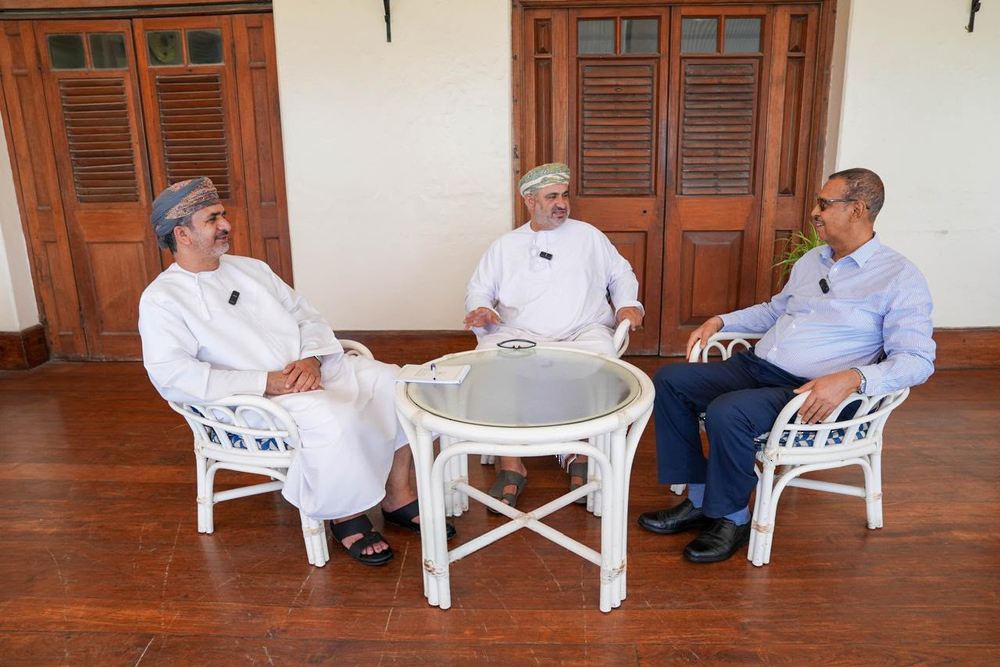
Through
a series of field interviews, the team from the Oral History Department at the
Authority is documenting the testimonies of several narrators among the
residents of Mombasa. They recall what they experienced or inherited from their
fathers and grandfathers regarding events, situations, and stories that embody
the Omani presence in the city and the cities of the Kenyan coast, as well as
the cultural impact it left on various aspects of political, economic,
cultural, social, and urban life.
These
interviews aim to document the oral memory of the Omani presence in Mombasa and
highlight the historical role played by Omanis in East Africa across various
historical stages. This enhances the documentation of the shared cultural
legacy and provides authentic scientific material that supports historical and
research studies.
In
this context, Abdulaziz Humaid Al Mahdhouri, Director of the Oral History
Department at the National Records and Archives Authority, stated that
documenting the oral narrative in East Africa represents one of the main
pillars of the Authority’s projects aimed at completing the historical picture
of the Omani presence outside the Sultanate of Oman.
He
added that the accounts provided by the narrators constitute an authentic
historical source that contributes to preserving details unavailable in written
documents. It also enhances researchers’ understanding of the nature of the
human, social, and cultural relations that developed between Omanis and the
peoples of East Africa over the centuries.
He
clarified that the project is not limited to merely collecting narratives;
rather, it seeks to preserve them according to a scientific methodology that
ensures their sustainability and accessibility for future generations. This
contributes to enriching the national repository of historical sources and
supporting specialized academic studies on the shared history between the
Sultanate of Oman and East African countries.
The
field mission has resulted in the collection of a large number of testimonies
and valuable historical information documenting multiple aspects of the Omani
presence in Mombasa. These will be added to the documentary and historical
repository maintained by the Authority, forming an important reference for
researchers and those interested in the history of Oman and its cultural
relations with East Africa.
The
city of Mombasa and the Kenyan coast abound with numerous historical landmarks
that confirm the depth of the Omani presence, ranging from historical forts,
mosques, and archaeological cemeteries to old neighborhoods and markets, as
well as ports, boats, and traditional sailing ships.
—Ends/AG