
Saudi Arabia’s Voluntary Carbon Market Fuels the Shift to a Low-Carbon

Under UAE President’s directives, UAE launches urgent relief response for Ghana flood victims

Combating Desertification and Drought: Qatar a Model in Preserving Natural Resources, Establishing Environmental Stability

UAE allocates US$30 million for emergency humanitarian response in El Obeid, calls for civilian protection, safe humanitarian aid access in Sudan

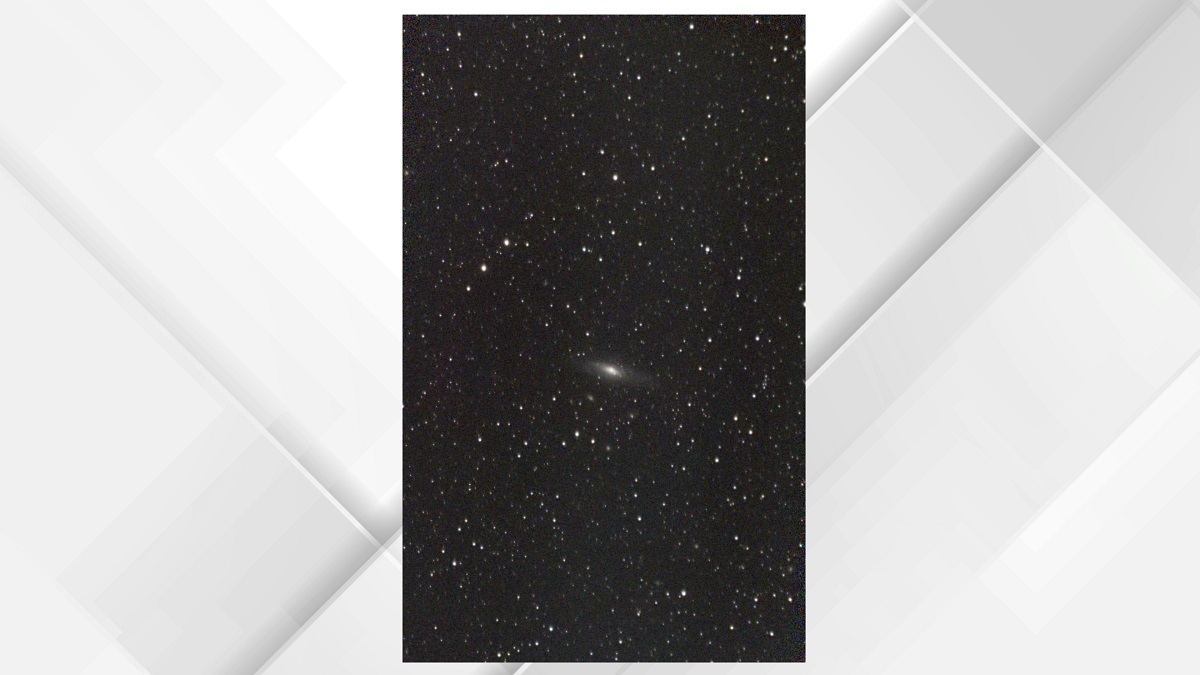
Amman, Sept. 6 (Petra) — The Jordanian Astronomical Society has
captured observations of a newly discovered supernova some 40 million
light-years from Earth, documenting the stellar explosion only days
after it was first detected.
Known as “SN 2026aaiv”, the supernova appeared in the spiral galaxy
“NGC 7331” in the constellation Pegasus and was observed from Jordan
Saturday night.
Jordanian Astronomical Society President Ammar Sakaji said the
supernova was first detected on Sept. 1 by the Asteroid
Terrestrial-impact Last Alert System (ATLAS) survey, when it had an
apparent magnitude of about 17.3.
It brightened considerably over the following days to approach
magnitude 14, allowing observations from Jordan to capture a
relatively early stage in the evolution of the explosion.
Sakaji said the light detected from northern Amman had traveled
roughly 40 million years before reaching Earth, meaning the stellar
explosion itself occurred around 40 million years ago.
“SN 2026aaiv” has been classified as a Type Ia supernova, a class of
stellar explosions that plays an important role in astronomy. Because
of their predictable luminosity, Type Ia supernovae are used as
“standard candles” to determine cosmic distances and help scientists
study the expansion of the universe.
The society plans to continue observing the supernova over the coming
nights to track changes in its brightness and contribute data from
Jordan to observations being compiled by astronomers worldwide.
//Petra// RZ