ENV-KUWAIT-SUSTAINABLITYKuwait strengthens environmental sustainability through strategic initiativesBy Zahra Al-Kadhmi

HLT-KUWAIT-SURGERYKuwait advances health sector with robotic, remote surgeryBy Mohammad Al-Moseb

Saudi Arabia’s Voluntary Carbon Market Fuels the Shift to a Low-Carbon

Under UAE President’s directives, UAE launches urgent relief response for Ghana flood victims

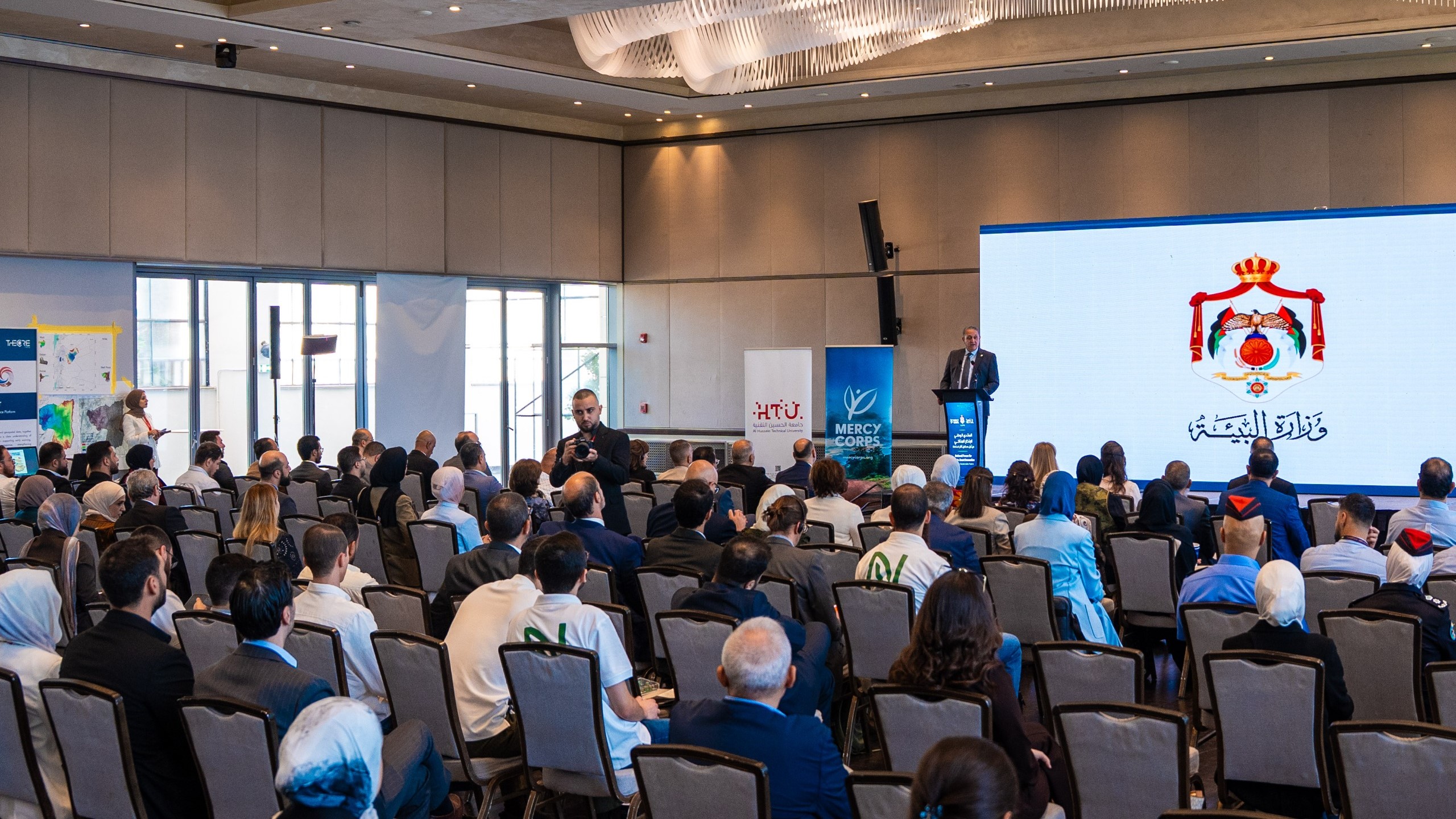
Amman, Sept. 28 (Petra) — Climate challenges are affecting families
and essential services across the Kingdom, making innovation
necessary for future planning, Environment Minister Ayman Suleiman
said on Monday.
Speaking at the Climate-Smart Innovation Forum, held under the Tabeaa
(Nature) Project and organized by Mercy Corps in cooperation with Al
Hussein Technical University (HTU), Suleiman stressed the importance
of moving from planning to implementation and adopting an integrated
approach to technological, social, and entrepreneurial solutions to
strengthen climate change adaptation.
He highlighted the Environment Ministry’s preparations to participate
in the UN Climate Change Conference (COP) in Antalya, Türkiye,
commending the Swiss Embassy’s support in enabling six participants
to learn about the conference’s proceedings and take part in
negotiations.
Suleiman called on institutions and international organizations to
support broader participation, strengthen their presence, and ensure
the continued engagement of Jordanian stakeholders in such forums.
Swiss Ambassador to Jordan Emilija Georgieva underscored the
importance of platforms that bring together government entities,
communities, and the private sector to address shared climate
challenges, highlighting the partnership between Switzerland and
Jordan in building climate resilience.
She expressed hope for expanding public-private partnership models in
Jordan, noting their potential to generate positive impacts.
The forum highlighted the role of innovation in developing solutions
to address climate challenges in Jordan and strengthen communities’
resilience to the effects of climate change, while exploring
opportunities to turn these solutions into scalable and investable
projects.
It also provided a platform for dialogue, knowledge exchange, and
partnership-building among public- and private-sector entities and
financing institutions to support the transition of innovative ideas
into practical applications.
The forum featured presentations of 10 projects participating in the
Climate Tech Innovation Bootcamp, implemented by The CORE at Al
Hussein Technical University under the Tabeaa Project.
The bootcamp combines prototype development, specialized mentorship,
business model development, and investment readiness to help
innovators turn their solutions into viable and scalable projects.
The program will enable two selected projects to proceed to the pilot
implementation phase through grants totalling JD100,000 for the two
projects, allocated according to their pilot implementation needs,
alongside technical and operational support.
The phase aims to test solutions in their local context and build
evidence of their commercial viability and contribution to
strengthening community resilience, supporting future climate
investment opportunities.
HTU President Ismail Al-Hinti stressed the importance of providing an
environment that enables ideas to be transformed into prototypes and
developed into practical solutions that can become products and
companies with tangible impact.
Mercy Corps Jordan Program Director Candice Branchoux said the
innovation bootcamp’s challenges were based on needs and priorities
identified by communities.
She explained that the approach focuses on defining the problem while
leaving innovators free to propose solutions, ensuring that their
responses address challenges identified by communities without
imposing predetermined technological solutions.
The Tabeaa Project, titled “Enhancing Community Resilience and
Response to Climate Change,” is implemented by Mercy Corps Jordan
with support from the Z Zurich Foundation and the Swiss Embassy in
Jordan. It aims to strengthen communities’ capacity to adapt to
climate change, floods, and heatwaves through local and sustainable
solutions.
//Petra// AF