ENV-KUWAIT-SUSTAINABLITYKuwait strengthens environmental sustainability through strategic initiativesBy Zahra Al-Kadhmi
HLT-KUWAIT-SURGERYKuwait advances health sector with robotic, remote surgeryBy Mohammad Al-Moseb

Saudi Arabia’s Voluntary Carbon Market Fuels the Shift to a Low-Carbon

Under UAE President’s directives, UAE launches urgent relief response for Ghana flood victims
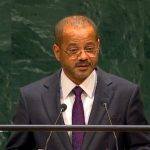
New York, (SUNA) – Sudan expressed its appreciation for the positions of brotherly and friendly countries that support Sudan’s sovereignty and unity, safeguard its national institutions, and support the roadmap and Sudan’s peace initiative, as well as for the humanitarian assistance they have provided to the Sudanese people. It specifically commended Saudi Arabia, Egypt, Qatar, Türkiye, Kuwait, Oman, Iraq, Japan, Pakistan, Russia, China, Indonesia, Malaysia, Morocco, and Algeria. Addressing the United Nations General Assembly today, Minister of Foreign Affairs and International Cooperation Ambassador Mohi-Eddin Salem called on the international community to advance legal processes to hold perpetrators accountable, particularly following the global momentum of solidarity with Darfur after the Dagalo family militia seized El-Fashir and in light of the conclusive evidence and testimony presented by the Sultan of the Masalit to the UN Security Council. He described this as one of the effective avenues for halting escalation and curbing the wave of violations committed by the militia in Darfur, Kordofan, and Blue Nile, with substantial support from its regional and foreign sponsors. He noted that, despite this, the Security Council had failed to condemn and name the sponsors, which contributed to concealing those atrocities. He added that these sponsors had also sought to bring in foreign mercenaries on an ongoing basis and provide political cover for the militia’s political wing, while spearheading the fabrication of accusations against the Sudanese Armed Forces, backed by regionally funded media platforms operated by the militia’s sponsors that promote misinformation, baseless accusations, and fabricated condemnations aimed at damaging the reputation of the professional Armed Forces. The Minister of Foreign Affairs and International Cooperation explained that during the war of aggression, the Armed Forces adhered to the principles of civilian protection in accordance with the approved national plan submitted by Sudan to the Security Council. He said this included distinguishing at all times between combatants and civilians, civilian objects and military targets; respecting the freedom of movement of civilians and humanitarian convoys; allowing civilians to leave areas of hostilities; protecting essential items necessary for civilian survival; prohibiting looting, pillage, and destruction; complying with evacuation requirements; respecting and protecting private and public facilities and refraining from using them for military purposes; refraining from recruiting children; and not engaging in enforced disappearance or arbitrary detention of civilians, while adhering to humanitarian truces. The Minister noted that ending the war requires exerting pressure on regional sponsors and some neighboring countries that have not only facilitated the transfer of weapons, military equipment, and supplies to the militia through their territories, but have also opened fronts for fighting and allowed repeated attacks by the militia and mercenaries from within their territories in broad daylight, in addition to establishing hospitals along their borders to treat wounded militia members. The Minister said that the Palestinian cause remains the central issue in the Middle East and that the Palestinian people should be enabled to exercise their right to self-determination and establish their independent state with Al-Quds Al-Sharif as its capital, and to secure the return of refugees, in accordance with international legitimacy resolutions. He added that Sudan emphasizes the importance of stability in the Red Sea, Bab Al-Mandab, and the Gulf region, which affects the entire region, and of ending the current situation in a manner that spares the peoples of the region the ravages of war and its repercussions. He affirmed Sudan’s full support for the countries of the region in preserving their sovereignty, security, and stability, and stressed the importance of respecting international law and the UN Charter and refraining from interfering in the internal affairs of states.BH/BH